

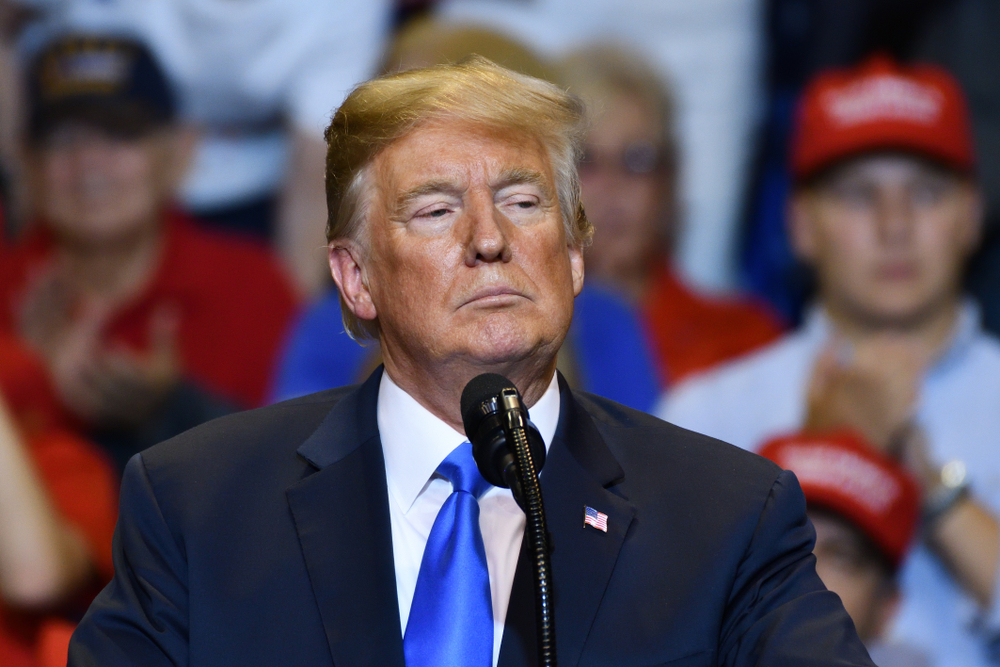
President Donald Trump has granted clemency to a remarkable number of individuals during his second term, with a clear pattern emerging around white-collar offenses. Research from NBC News shows that more than half of the 88 pardons issued have gone to people involved in financial crimes, such as money laundering, bank fraud, and wire fraud.
Wealthy Recipients of Clemency
The pardon recipients include high-profile business leaders and political figures. Among those granted clemency were a former healthcare CEO, Puerto Rico’s ex-governor, and two siblings with fraud convictions, one of whom had already received a prior Trump pardon for separate charges.
Notable billionaires on the pardon list include Changpeng Zhao, the Binance founder who admitted guilt in a money laundering case involving his cryptocurrency exchange. Joe Lewis, who owns an English soccer club, received clemency after pleading guilty to insider trading. Banker Julio M. Herrera Velutini was pardoned while still awaiting sentencing for campaign finance law violations.
These clemency grants followed the roughly 1,500 pardons Trump issued on inauguration day for those convicted in connection with the January 6 Capitol riot.
Financial Implications of Pardons
The financial stakes tied to these presidential pardons are substantial and cannot be understated. Over the past year, a total of 87 individuals and one corporation received clemency, collectively owing more than $298 million in fines, restitution, and related penalties. This figure surpasses the total fines associated with all pardon recipients during Trump’s first presidency and far exceeds the corresponding amounts seen under recent Democratic administrations, highlighting the unprecedented scale of these actions.
White House Press Secretary Karoline Leavitt has defended the process, explaining that each case undergoes a thorough and detailed review by attorneys from both the Justice Department and the White House Counsel’s office. She emphasized that the former president focuses particularly on cases where he believes the Biden administration may have overprosecuted or politically targeted certain individuals, underscoring the rationale and intentions behind these high-profile pardons.
Concerns Over Corruption and Influence
The prominence and wealth of many pardon recipients has sparked questions about possible corruption and whether money influences the clemency system. Critics warn these pardons may threaten public safety and prevent victims from receiving owed compensation. House Judiciary Committee Democrats issued a memo expressing concern that these pardons might drain resources from the Victims of Crime Act.
Trump’s clemency strategy has centered on political allies and business figures, frequently justifying decisions by portraying recipients as victims of partisan prosecution. During a CBS News interview, Trump defended the Zhao pardon, saying he had been told Zhao was targeted by the Biden administration.
Historical Context of Presidential Pardons
Trump is not alone in issuing controversial pardons. Presidents historically have tended to use this power later in their terms when political consequences are less immediate. Barack Obama, for example, pardoned just three people owing over $100,000 across two terms, while Joe Biden has pardoned two during his first term.
By comparison, Trump pardoned more individuals in one year than Biden has in four, with nullified fines and restitution from his first term alone surpassing $276 million.
Conclusion: The Impact of Trump’s Pardons
The continued use of presidential pardon power carries far-reaching implications for both the justice system and public trust. The focus on wealthy recipients, combined with potential political motivations, raises important questions about the fairness and integrity of clemency. As scrutiny and criticism grow, the debate over these high-profile pardons will likely remain a lasting flashpoint in American political discourse.
The recent wave of pardons highlights the complex interplay between wealth, politics, and justice, prompting a critical reassessment of how clemency is granted and who ultimately benefits. These developments underscore the need for ongoing discussion about transparency, accountability, and the standards that should govern the use of such extraordinary presidential authority.
Source: NBC News
