


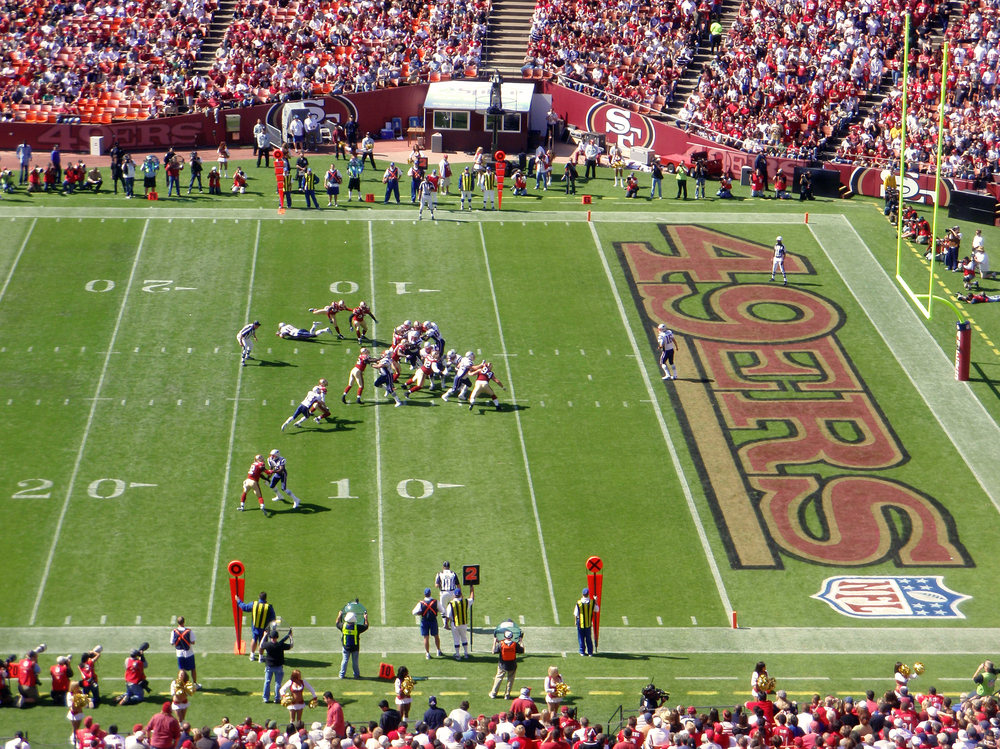
The San Francisco 49ers are heading to Mexico City in December to play a regular-season home game at the newly renovated Estadio Banorte, continuing the NFL’s aggressive international expansion while simultaneously forcing the Niners to sacrifice valuable home-field advantage. The league announced Wednesday that San Francisco will be the home team for the Mexico City game, with the opponent, date, and kickoff time to be revealed when the full NFL schedule drops in spring. The game is part of the league’s record-setting nine international contests planned for 2026 basically the NFL’s most ambitious global season ever. For the 49ers specifically, this Mexico City trip comes alongside another international game in Australia against the Rams at Melbourne Cricket Ground, meaning San Francisco will play back-to-back international games in the same season for the first time in franchise history.
What’s notable about this arrangement is that the 49ers are literally giving up a home game to participate in international marketing strategy. They’ll play two fewer games in San Francisco despite being designated as the “home” team in Mexico City. That’s a real competitive disadvantage. Teams rely on home-field advantage in their stadiums. Playing internationally, even as the “home” team, disrupts that advantage. The 49ers last played in Mexico City in 2022, winning 38-10 against Arizona, and previously visited in 2005. Both times, they’ve managed the trip, but the pattern still represents a sacrifice.
The NFL has strategic reasons for targeting San Francisco specifically
The 49ers have international marketing rights in Mexico City alongside nine other franchises: the Cardinals, Cowboys, Raiders, Broncos, Texans, Chiefs, Rams, Dolphins, and Steelers. The league doesn’t have to schedule an opponent that also holds Mexican marketing rights, but the Niners are set to host five teams with those rights in 2026: Raiders, Broncos, Dolphins, Rams, and Cardinals. That gives San Francisco options for potential matchups while reinforcing the league’s marketing focus in Mexico City.
The Mexico City venue itself has been renovated specifically to host NFL games
Estadio Banorte, formerly known as Estadio Azteca, will serve as host after being updated. The NFL has previously held games there in 2016, 2017, and 2019, with plans for additional games in 2027 and 2028. The league is clearly committing to Mexico City as a permanent international fixture, not just a one-off experiment.
San Francisco’s CEO Al Guido framed the trip as returning to passionate fans rather than acknowledging the home-game sacrifice. “After two unforgettable experiences in 2005 and 2022 in Mexico City, we’re excited to reunite with the Mexico faithful and look forward to the energy the local fans will bring in creating a true home-field advantage for our team abroad.” That’s diplomatic language for: we’re losing a home game but we’re trying to make it feel special anyway.
The back-to-back international trips represent something genuinely unusual for a single franchise. Most teams spread international games across multiple seasons. The 49ers will essentially be international travelers for two consecutive weeks in December Mexico to Australia or vice versa depending on scheduling. That creates logistical challenges and jet lag complications that domestic schedules don’t present.
The 2026 NFL season is basically becoming an international showcase with nine games globally. Beyond Mexico City and Melbourne, the league has scheduled contests in Paris, Munich, Madrid, Rio de Janeiro, and three in London. That’s unprecedented scope for the NFL’s international presence. The 49ers are thrust into that expansion strategy whether they like it or not, sacrificing home-field advantage to support the league’s growth agenda.
For San Francisco, the trade-off is real: two international trips, two fewer home games, and the competitive disadvantage that comes with both.
