


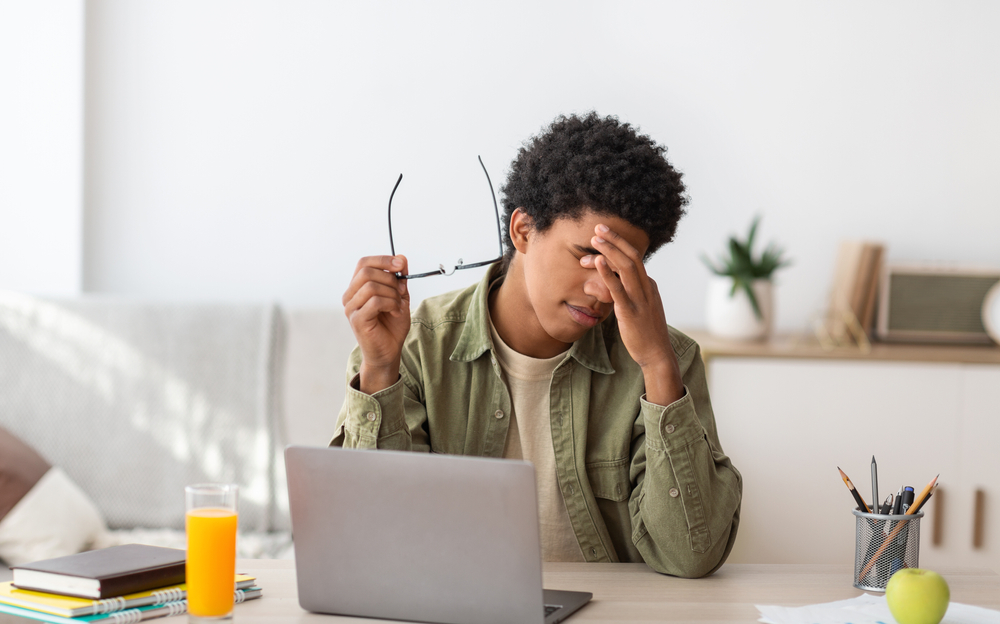
You told yourself it was just a rough week. Then a rough month. Now you can barely look at your laptop without feeling a wave of exhaustion hit before you even open a single tab. That is not stress — that is burnout, and it is more common than most students want to admit.
The Healthy Minds Study for 2024-2025 reported that between 27% and 30% of college students experience high or very high levels of burnout. And unlike stress — which fades once the pressure lifts — burnout is a deeper, slower collapse. Burnout is a state of chronic physical, emotional, and mental exhaustion caused by prolonged stress, where students feel emptied, cynical about their studies, and begin to feel that no amount of sleep or effort will fix the situation.
The scariest part is how quietly it creeps in. Here are the seven signs you are already there — and what you can actually do about it.
1. You Are Exhausted No Matter How Much You Sleep
This is the first and most telling sign. Nearly 45% of undergraduate students report chronic fatigue related to academic stress. If you are sleeping eight hours and still waking up tired, your body is not recovering — it is surviving. That kind of bone-deep fatigue is a hallmark of burnout, not laziness.
2. Everything Feels Pointless
Over 63% of students report that a lack of motivation contributes significantly to their burnout. When you stop caring about assignments you once found interesting, when showing up to class feels like a personal sacrifice — that emotional detachment is your mind raising a red flag.
3. Your Grades Are Slipping Without a Clear Reason
Nearly 48% of students report lowered grades directly tied to exhaustion. Burnout does not just affect your mood — it impairs concentration, memory, and the ability to retain information. If your academic performance is dropping and you cannot pinpoint why, burnout is likely the culprit.
4. You Have Stopped Doing Things You Enjoyed
Students with burnout are 60% less likely to participate in extracurricular activities, leading to increasing isolation. When the hobbies, friendships, and activities that once recharged you start feeling like obligations, you are in deeper than you think.
5. You Are Constantly Anxious About the Future
Career anxiety has been shown to negatively harm academic performance, as uncertainty about post-graduation outcomes weakens motivation and confidence. When every decision feels weighted by the pressure of what comes next, the mental load becomes impossible to carry alongside coursework.
6. Small Tasks Feel Overwhelming
A 2024-2025 study found that 44.5% of college students say procrastination negatively impacted their academic performance — and chronic procrastination is often less about laziness and more about a brain that has simply run out of bandwidth. When replying to a single email feels like climbing a mountain, something is wrong.
7. You Feel Completely Alone In It
Over 62% of students experiencing burnout report feeling socially isolated. The isolation compounds everything else — it makes the exhaustion feel permanent and the struggle feel invisible. If you have been suffering in silence, you are far from alone, even if it does not feel that way.
How to Actually Stop It
Recognizing burnout is step one. Doing something about it is harder — but not impossible.
- Set non-negotiable rest. Sleep is not optional. Recovery happens off the clock, not on it.
- Cut the load before it cuts you. Some students have had to quit jobs, take fewer hours, or drop classes — and that is not failure, it is survival.
- Talk to someone early. Many students wait until they are in crisis before seeking help, even though early support is significantly more effective. Most campuses offer walk-in counseling, peer support groups, and 24/7 crisis lines.
- Move your body. Even a 20-minute walk resets the nervous system in ways that scrolling never will.
- Try mindfulness. Students who practice mindfulness report 35% lower burnout symptoms — and it does not require an app or a subscription, just stillness.
Burnout is not a character flaw. It is what happens when pressure outpaces support for too long. The sooner you name it, the sooner you can fight back.
