


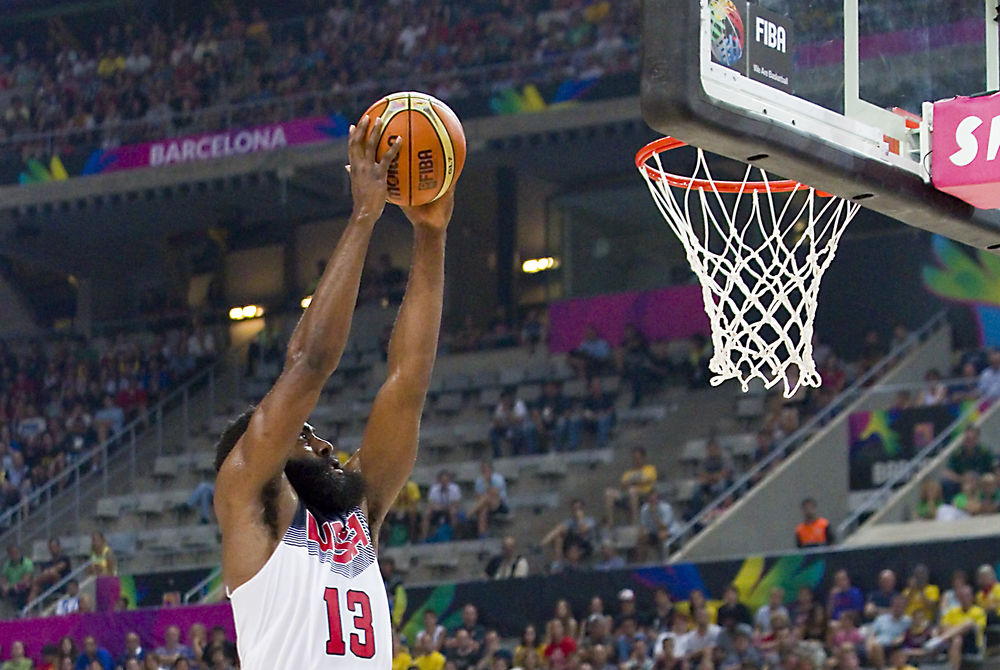
The NBA trade deadline looms just two days away, and James Harden sits at the epicenter of perhaps the most intriguing saga unfolding across the league. The 36-year-old veteran has transformed from hometown hero to potential trade chip as the Los Angeles Clippers wrestle with a decision that could reshape their franchise for years to come.
Cleveland has positioned itself as the frontrunner to land the former MVP, though significant hurdles remain before any deal materializes. The Cavaliers’ pursuit dates back to December, when Los Angeles was drowning in a dismal 6-21 stretch that forced management to reassess their entire roster construction.
Contract Terms Give Harden Ultimate Authority
What makes this situation particularly fascinating is the unusual leverage Harden wields over the entire process. His two-year contract worth $81.5 million includes a player option for the upcoming season that lacks full guaranteed money. Under the current collective bargaining agreement, this structure effectively functions as a no-trade clause. No team can acquire Harden without first obtaining his explicit consent, flipping the traditional power dynamic completely on its head.
The Clippers find themselves boxed into an uncomfortable corner. They reportedly rejected Cleveland’s demand for additional draft compensation as part of a package centered around Darius Garland. The Cavaliers wanted Los Angeles to include their 2030 first-round selection, but the franchise balked at surrendering more assets in a deal they’d already be losing from a talent perspective.
Harden’s recent absences have only amplified the speculation swirling around his future. He missed back-to-back contests against Phoenix and Philadelphia, with the organization citing personal reasons for both scratches. Head coach Tyronn Lue confirmed Harden remained at his Arizona residence during that span, though he refused to provide further details about the circumstances or whether ongoing trade talks played any role in keeping him off the floor.
Why Cleveland Makes Sense for Both Sides
The Cavaliers present a compelling destination for multiple reasons. They’ve posted an impressive 8–2 record over their last ten games and currently sit fifth in the Eastern Conference. However, injuries to their starting point guard have exposed weaknesses in the backcourt that could threaten their playoff momentum.
Garland has appeared in just 26 games this season, missing the last eight with a lingering toe injury. His absence has pushed Donovan Mitchell into heavier playmaking duties for nearly 40 percent of his minutes, a shift that has led to higher turnover rates and slightly reduced scoring efficiency.
Bringing James Harden aboard would address those issues immediately. His elite court vision and ability to control tempo would allow Mitchell to refocus on scoring, potentially unlocking another level for a Cavaliers team already on the rise in the East.
Financial considerations also play a major role. Garland is owed $86 million through 2028, while Cleveland sits roughly $34 million above the luxury tax and well past the second apron. Swapping his long-term deal for Harden’s expiring contract would ease financial pressure while preserving short-term championship upside.
Harden Rediscovers Elite Form at Perfect Time
The irony of these trade discussions intensifying now isn’t lost on anyone following the situation closely. Harden has delivered some of his finest basketball in years, averaging 25.4 points, 8.1 assists and 4.8 rebounds across 44 appearances while converting nearly 42 percent of his field goal attempts. Those numbers alone tell only part of the story.
Advanced metrics reveal his true impact on Los Angeles’ success. The Clippers’ offense improves by almost 12 points per 100 possessions when Harden occupies the floor, a differential that ranks in the 98th percentile among NBA point guards. His ability to bend defenses, create advantages in pick-and-roll situations, and make pinpoint passes to cutting teammates has fueled the team’s remarkable recovery from their nightmare start.
Just weeks ago, Harden spoke glowingly about representing his hometown and expressed genuine optimism about the team’s playoff chances. Those comments now ring hollow against the backdrop of active trade negotiations that could ship him across the country before the week ends.
Draft Pick Limitations Complicate Clippers’ Strategy
Los Angeles operates under severe restrictions when it comes to accumulating future draft capital. The Stepien Rule prevents them from trading first-round selections in consecutive years, limiting their available picks to 2030 and 2032, plus a swap option in 2031. Oklahoma City controls their 2026 pick as part of the Paul George trade compensation, while Philadelphia owns their 2028 selection stemming from the original Harden acquisition.
These constraints mean the Clippers can’t easily rebuild their asset base through draft pick accumulation. They need young players or expiring contracts in return if they’re going to extract meaningful value from a Harden trade. The framework of any Cleveland deal would likely require multiple rotation pieces beyond just Garland to make the math work for both organizations.
This marks Harden’s fifth different franchise after previous tenures in Oklahoma City, Houston, Brooklyn and Philadelphia. The Clippers brought him aboard in 2023 specifically to form a superteam alongside Kawhi Leonard and George, though that vision crumbled when George departed as a free agent last summer and subsequently drew a 25-game suspension for violating the league’s drug policy.
Deadline Day Approaches with Uncertainty Reigning
Milwaukee’s simultaneous exploration of trading Giannis Antetokounmpo injects additional chaos into the deadline landscape. The Bucks have finally begun entertaining offers after years of insisting their franchise cornerstone remained untouchable. Miami, Minnesota, Golden State and New York have all expressed serious interest, creating a domino effect that could influence dozens of other potential deals.
Thursday’s 3 p.m. deadline represents a critical inflection point for multiple franchises across the league. Whether Harden remains in Los Angeles or orchestrates a move to Cleveland or another destination will ripple through the NBA landscape for seasons to come. The Clippers must decide if they’re better off keeping a productive veteran who might walk for nothing this summer or extracting whatever value they can secure before his leverage disappears entirely.
