


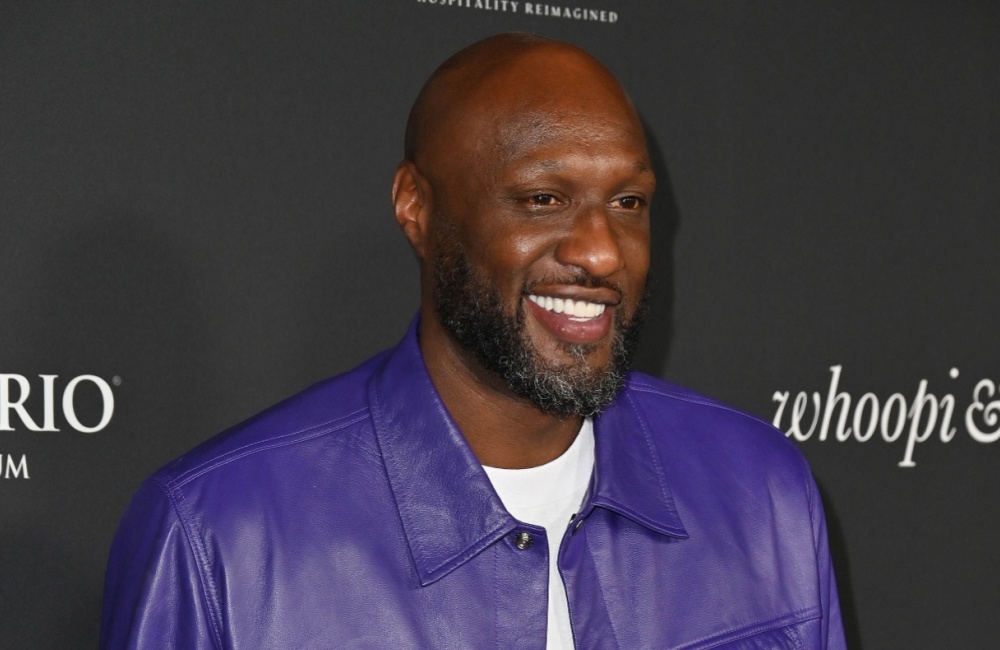
More than a decade after Lamar Odom was found unresponsive at a Nevada brothel and airlifted to a Las Vegas hospital in critical condition, a new Netflix documentary is bringing that period back into sharp focus. Untold: The Death & Life of Lamar Odom pulls together accounts from the people closest to him during those weeks, and what emerges is a portrait of grief, control, and the collision of two families around one man’s bedside.
The docuseries features extended interviews with both Khloe Kardashian, who was legally still Odom’s wife at the time of the 2015 emergency, and Liza Morales, the mother of his children and the woman he was with before his marriage to Kardashian. Their accounts do not always align, and the tension between them gives the documentary much of its emotional weight.
Who controlled the hospital floor
Morales describes arriving at the hospital with family members and being met with an unexpected barrier. Before they were permitted onto Odom’s floor, a security representative connected to the Kardashian family asked everyone in the group to sign a nondisclosure agreement. Morales said the request did not apply to her personally, but the experience left her shaken.
The situation escalated further. Las Vegas police officers arrived on the floor with police dogs, an intervention Morales described as deeply unsettling even if it was intended to maintain order.
Kardashian has offered her explanation for why restrictions were put in place. According to her account in the documentary, she initially allowed visitors freely but changed course after discovering that several people who had come to see Odom were there to collect drug debts and had gone through his personal belongings. After that, she says, she moved to a system where she personally had to authorize anyone who entered.
The two accounts describe the same situation from fundamentally different vantage points. For Morales, the restrictions felt like exclusion. For Kardashian, they were a response to what she describes as a genuinely dangerous environment.
Odom’s surgery and the role of Kobe Bryant
The documentary also addresses one of the most consequential medical decisions of that period. Odom faced a surgery that doctors gave a 10% chance of survival. Kardashian describes being paralyzed by the decision and credits the late Kobe Bryant with helping her move forward and authorize the procedure. Bryant, who had known Odom from their years together on the Los Angeles Lakers, was among those who reached Kardashian during that period and urged her to act.
Odom survived the surgery, but his recovery was neither linear nor complete.
What came after the hospital
Kardashian describes returning to their home during Odom’s rehabilitation period and detecting the smell of crack cocaine. She says she found him smoking while he was supposed to be recovering, a discovery that she describes as a turning point in how she understood their situation.
She had spent months by his side, including helping him relearn basic physical functions. The realization that he had been concealing the extent of his recovery, including hiding a phone, while also returning to drug use pushed her toward a decision she had been delaying. She filed for divorce, which was finalized in December 2016.
Odom’s own account of addiction
Odom has spoken publicly about his relationship with substance abuse in other settings as well, describing a pattern in which he abstained during NBA seasons and used cocaine heavily during the offseason. His framing of that period suggests a level of compartmentalization that allowed him to function professionally while concealing significant drug use from teammates and coaches.
The documentary does not position him as either villain or victim. It presents addiction as something that shaped every relationship around him, not just the one with Kardashian.
What the documentary adds to the record
Untold: The Death & Life of Lamar Odom is the latest in Netflix’s sports documentary strand that places lesser-told chapters of athletic careers at the center of the narrative. In this case, the sporting career is almost beside the point. The story is primarily about what happens to the people around a person in crisis when that person has no voice in the decisions being made about them.
Both Kardashian and Morales emerge from the documentary as women who believed they were doing the right thing and who found themselves on opposite sides of a situation that left little room for either of them.
