


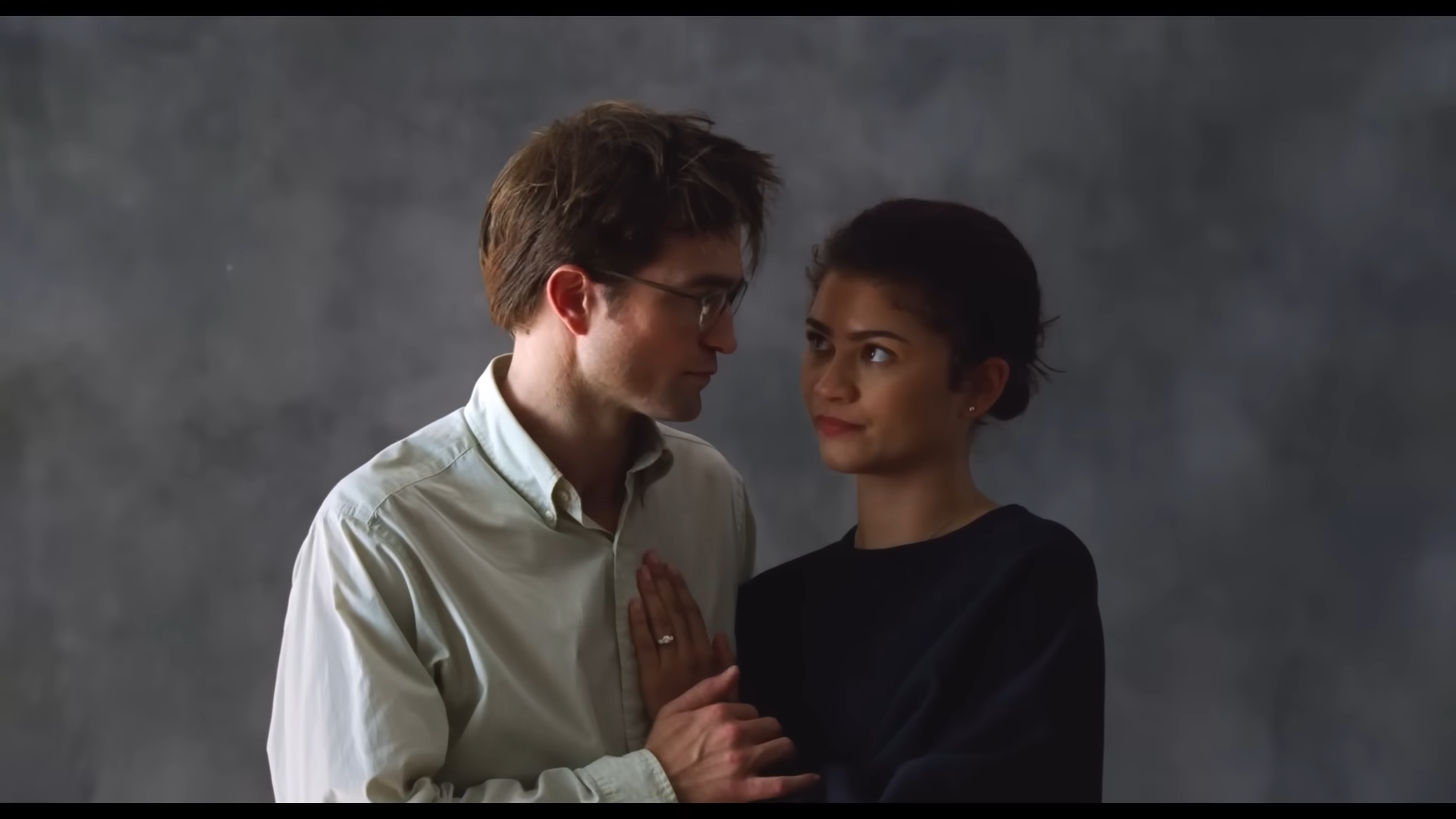
Before anything else, consider this. Is there anything your partner could reveal that would shake the very foundation of your relationship and make you question spending the rest of your life with them? Most people would say infidelity. Norwegian writer and director Kristoffer Borgli has a darker answer in mind.
The Drama opens on Charlie, played by Robert Pattinson, a mild-mannered British museum curator who fell for Emma, played by Zendaya, in the most classically cinematic of ways. A coffee shop, a spark and the kind of easy happiness that makes other people quietly jealous. A few days before their wedding, the blissfully in-love couple joins their married friends Rachel, played by Alana Haim, and Mike, played by Mamoudou Athie, for a boozy wedding menu tasting. Someone suggests a game of worst confessions. Everyone plays along. When Emma’s turn arrives, what she shares does not just ruin the evening. It threatens to unravel everything.
Where the Drama really begins
What follows is not a simple story of betrayal and forgiveness. Borgli, whose previous films Sick of Myself and Dream Scenario established him as one of the sharpest satirists working today, refuses to let the premise coast on its initial shock. The revelation haunts Charlie in the days that follow. His memories of Emma begin to feel contaminated. The image he had built of the woman he loves starts to fracture in real time.
The couple talks. They try to move through it. But as the film quietly insists, some things cannot be undone once they are known.
Pattinson and Zendaya make you care deeply
It would be easy to keep this couple at arm’s length. They are Massachusetts trendies in a suspiciously impressive apartment, sipping natural wine and referencing art house cinema with the confidence of people who have never once been boring at a dinner party. But Pattinson and Zendaya bring a genuine warmth and complexity to their roles that pulls you in against your better judgment. You root for them even as everything quietly falls apart.
Haim is a particular standout as Rachel, the moralistic friend whose reactions often serve as a mirror for the audience’s own discomfort. Her performance is layered, funny and quietly devastating in equal measure, and it further cements her status as a fully formed screen presence.
A dark comedy with sharper teeth than it first appears
The Drama earns real laughs along the way, the kind that make you feel slightly guilty for having them, before pulling you back in for another round. But beneath the wit, Borgli is doing something more ambitious. Wedding culture, performative couplehood and the quiet rigidity of social judgment all get taken apart with elegant precision.
The film is ultimately less interested in resolving its central moral question than in using it to expose something rawer. How much of another person’s darkness are we actually willing to accept? Is transparency always a sign of intimacy, or can it sometimes be a form of destruction? Is the intent behind an action as condemnable as the action itself? Does time genuinely heal, or does it simply bury?
A film that lingers long after the credits roll
The Drama will not be an easy watch for everyone, and that is precisely the point. The best films leave you unsettled in productive ways, and this one does exactly that. It is the kind of movie that generates conversation, the sort you keep returning to days later, rethinking where you stood and why.
It is without question the boldest and most thought-provoking date night film of 2026. Just maybe choose the timing wisely before bringing it up with whoever is sitting next to you on the couch.
