


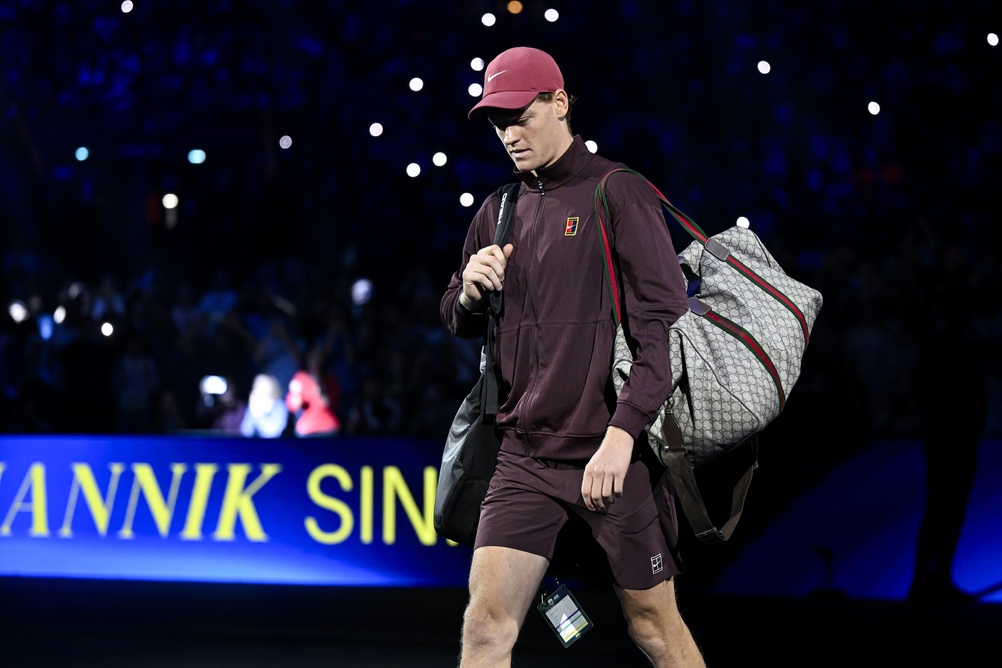
Jannik Sinner defended his Wimbledon title on Sunday, defeating Alexander Zverev 6-7, 7-6, 6-3, 6-4 in a final where the match’s momentum shifted decisively in the third set when Zverev slipped while chasing a drop shot and appeared to injure his right knee, changing the dynamic of what had been an evenly contested match to that point.
The victory gave Sinner his fifth Grand Slam title and his second in a row at the All England Club, completing a fortnight that he entered under different circumstances than any ordinary champion defense. His collapse at the French Open in late May, where he surrendered a match he was one game away from winning in straight sets during a Paris heat wave and had his 30-match winning streak ended, had raised genuine questions about his physical readiness heading to Wimbledon. He answered them emphatically across two weeks at the All England Club.
A match shaped by a single moment
The final was closely contested through the first two sets. Zverev took the opening set in a tiebreaker with a forehand winner up the line, drawing an emphatic celebration that reflected how much breaking through against Sinner, who had won their previous ten meetings, meant to the German. Sinner responded by claiming the second-set tiebreaker far more comfortably as Zverev began to miss forehands he would normally make.
The turning point arrived in the third set. At 3-3, with Zverev holding his only break point of the match, Sinner played a drop shot and Zverev slipped on the grass attempting to change direction, grasping his knee in apparent discomfort. Sinner crossed the net to help his opponent to his feet, a gesture that briefly paused the competitive tension before play resumed. Zverev continued but his movement looked compromised, and when he missed a forehand on a crucial point moments later, Sinner had the first break of the match and a 5-3 lead. He served it out and closed the fourth set for the title.
The records the victory created
The Wimbledon triumph accumulated several historical distinctions. Sinner became only the fifth man in the open era to successfully defend titles at different major tournaments before turning 25, joining an exclusive group of former champions. He also won his 100th career major match victory in the final itself, becoming only the fourth player across both the men’s and women’s tours to achieve that milestone in a Grand Slam final.
Sinner had entered the tournament having survived a five-set first-round match against Miomir Kecmanovic and then did not drop another set until the final, including a dominant semifinal over Novak Djokovic that had previously appeared to be the match of the tournament. His record of not conceding a service game in either the semifinals or the final had not been matched by a men’s champion at Wimbledon since 2003.
What the victory means coming after Paris
Sinner’s coach was characteristically measured in describing what the title meant, noting that each Grand Slam has its own meaning and resisting the temptation to rank this one above others. What he emphasized was the quality of character involved in responding to a public and painful defeat in Paris by winning a major two months later.
Sinner himself connected the victories explicitly. He described the Wimbledon title as meaningful precisely because of how difficult the journey had been after Paris, framing the recovery as something he and his team had worked through together.
Zverev, whose previous best at Wimbledon had been a fourth-round exit, acknowledged the scale of what he had witnessed across the fortnight and across the years of competing against the world’s top player. The defeat will briefly end his Grand Slam winning streak from Roland Garros, but his run to the final was the deepest he had ever gone at the grass-court major.
