


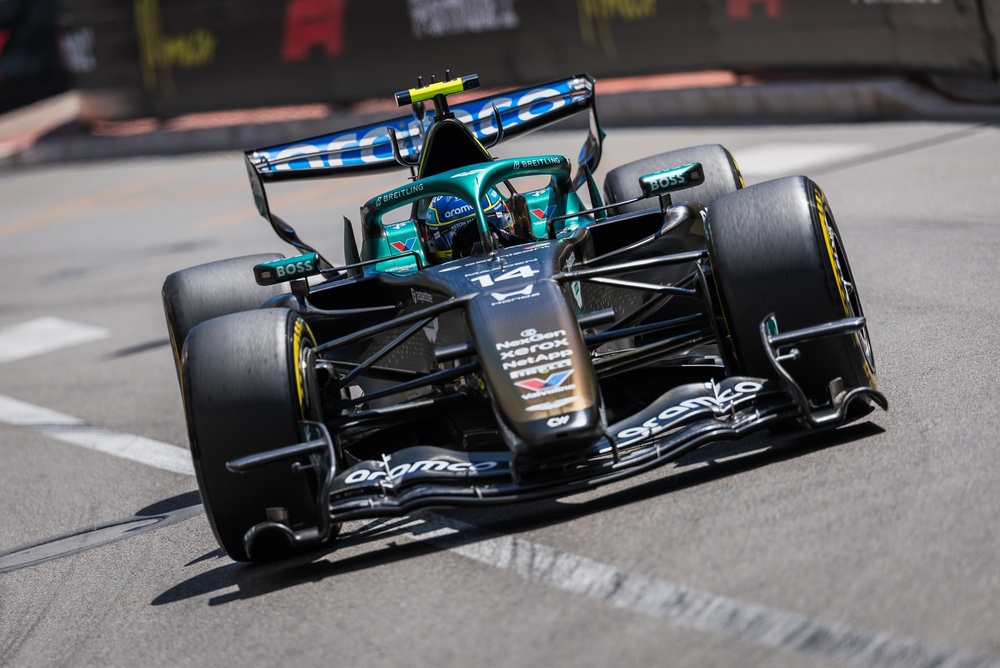
The head of Honda’s Formula 1 power unit project is being replaced as Aston Martin sits second from bottom in the constructors’ standings after a poor start to the 2026 season under the manufacturer’s new engine supply relationship.
Yoichiro Fukao will take over the lead role from Tetsushi Kakuda on Oct. 1. Fukao is currently deputy leader of the power unit project and has been with the company since 2002 in F1, MotoGP and mass production roles. Honda described the change as a planned transition designed to ensure the reliable transfer of technical expertise to the next generation of engineers.
The company said that following the introduction of the new regulations in 2026, and with further regulatory changes expected from 2027 onward, it aims to establish a robust development framework and deliver a highly competitive power unit through the transition to the new structure at an early stage.
The background
The manufacturer joined Aston Martin at the start of the 2026 season under F1’s new power unit regulations, which require 50 percent of overall output to come from the battery. Those regulations were part of what convinced Honda to remain in F1 after it had initially announced plans to exit at the end of 2025.
However, a significant number of engineers who had worked on Honda’s previous power unit design left after that initial 2021 exit announcement, weakening the foundation for the new project. The company spent the 2022-2025 period technically supporting Red Bull under licensing arrangements while simultaneously rebuilding a power unit development operation from a diminished workforce base.
Aston Martin has scored just three constructors’ championship points this season and sits 10th. At the Italian Grand Prix at Monza two weeks ago, the faster of the two Aston Martin cars qualified 0.6 seconds slower than the next slowest car, the Cadillac using a Ferrari engine.
An upgrade was introduced at the Dutch Grand Prix using one of the development allocations available through F1’s catch-up mechanism, known as ADUO, but the team remains significantly adrift of the leading power unit manufacturers.
The Red Bull comparison
The previous era in F1 with Red Bull ended with Max Verstappen winning four consecutive drivers’ championships. That success was built on a power unit development structure that was largely dismantled after Honda’s 2021 exit announcement. The gap between where Honda was at its peak with Red Bull and where it is now with Aston Martin is the measure of what the new leadership must close.
What the change signals
The leadership transition at this stage of the season, less than a year into the Aston Martin partnership, indicates Honda’s recognition that the current trajectory requires change. Whether the issue is primarily organizational, technical or a function of the staff losses from 2021 is not specified in the company’s statement. The restructuring of the development framework ahead of the 2027 regulation changes is the stated reason for moving now rather than waiting.
