


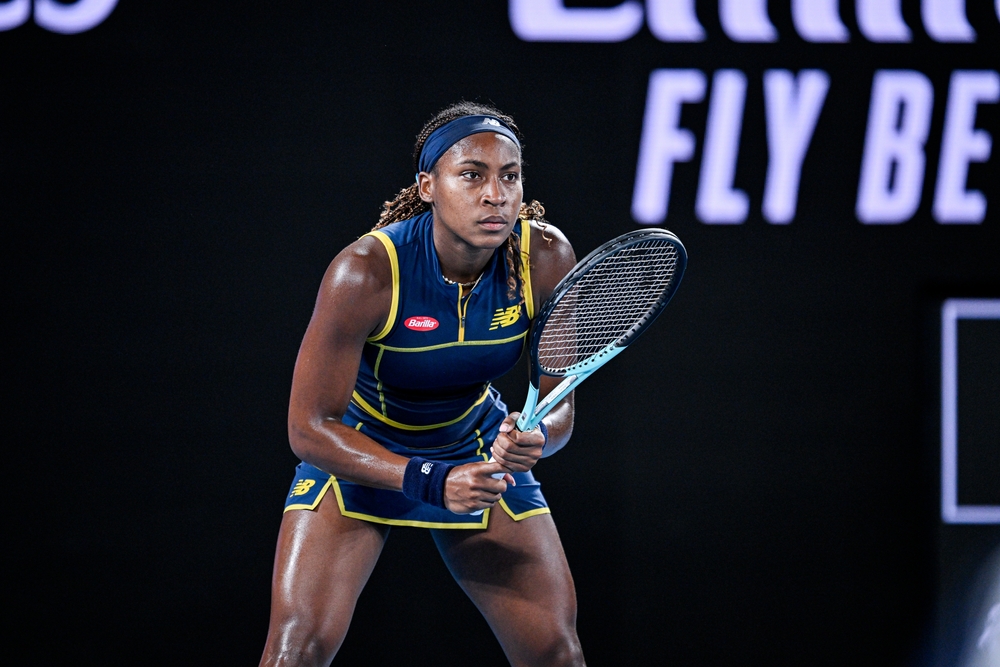
Coco Gauff will compete as a player and an owner when World Team Tennis returns in December, joining the Florida franchise in a dual role that is unusual for an active player at her level.
What is her involvement?
She holds an ownership stake in the Florida Flamingos Racquet Club and is scheduled to play the team’s home matches on Dec. 14 and 15 at Amerant Bank Arena in Sunrise. She grew up in Delray Beach and said she is looking forward to playing in front of family and friends in South Florida, describing the team format as a rare experience for a tennis player and one she expects fans to enjoy.
Why does player ownership matter?
Because of what it signals about commitment. Athletes typically take equity in leagues after retiring, when a stake is an investment rather than a conflict of schedule. A current top player with ownership in a competition she also plays has reason to promote it beyond an appearance fee, and for a league relaunching from nothing, that alignment is worth more than a booking.
What is the league’s history?
World Team Tennis began in 1974 with Billie Jean King among its founders, built around a mixed gender team format at a time when no such competition existed in the sport. The Flamingos were an original franchise. The league operated in various forms for decades before going dormant, and this December marks its return.
Who else is involved?
Three teams to start. New York features Frances Tiafoe and Jessica Pegula. Toronto is built around Canadian players including Denis Shapovalov, Leylah Fernandez, Victoria Mboko and Gabriel Diallo. Gauff’s teammates in Florida include Tommy Paul, Learner Tien, Iva Jovic, Brandon Nakashima and Eva Lys.
What is the format?
Four singles sets covering a men’s and women’s first and second position, followed by a mixed doubles super tiebreaker. Each team starts two men and two women. The equal gender requirement has been the league’s defining feature since 1974 and remains almost unique in professional sport, where men’s and women’s competitions are ordinarily separate even when staged together.
Why December?
Because nothing else is happening. The tennis calendar runs from January through November and leaves a narrow window before preseason training begins. A team event in that gap does not compete with tour points or Grand Slams, which is the only way to attract players of this standing.
What are the challenges?
Scheduling and scale. Three teams is a small league, and exhibition style events with elite fields have a history of launching well and struggling to hold player commitment once the novelty fades. World Team Tennis has itself gone through multiple relaunches. Whether this one holds depends on whether players return in a second year, which is the test no opening weekend can pass.
What comes next?
The December matches. For Gauff, it is two home dates in the state where she grew up. For the league, it is a first look at whether a format built in 1974 finds an audience in a sport that has changed considerably around it.
