


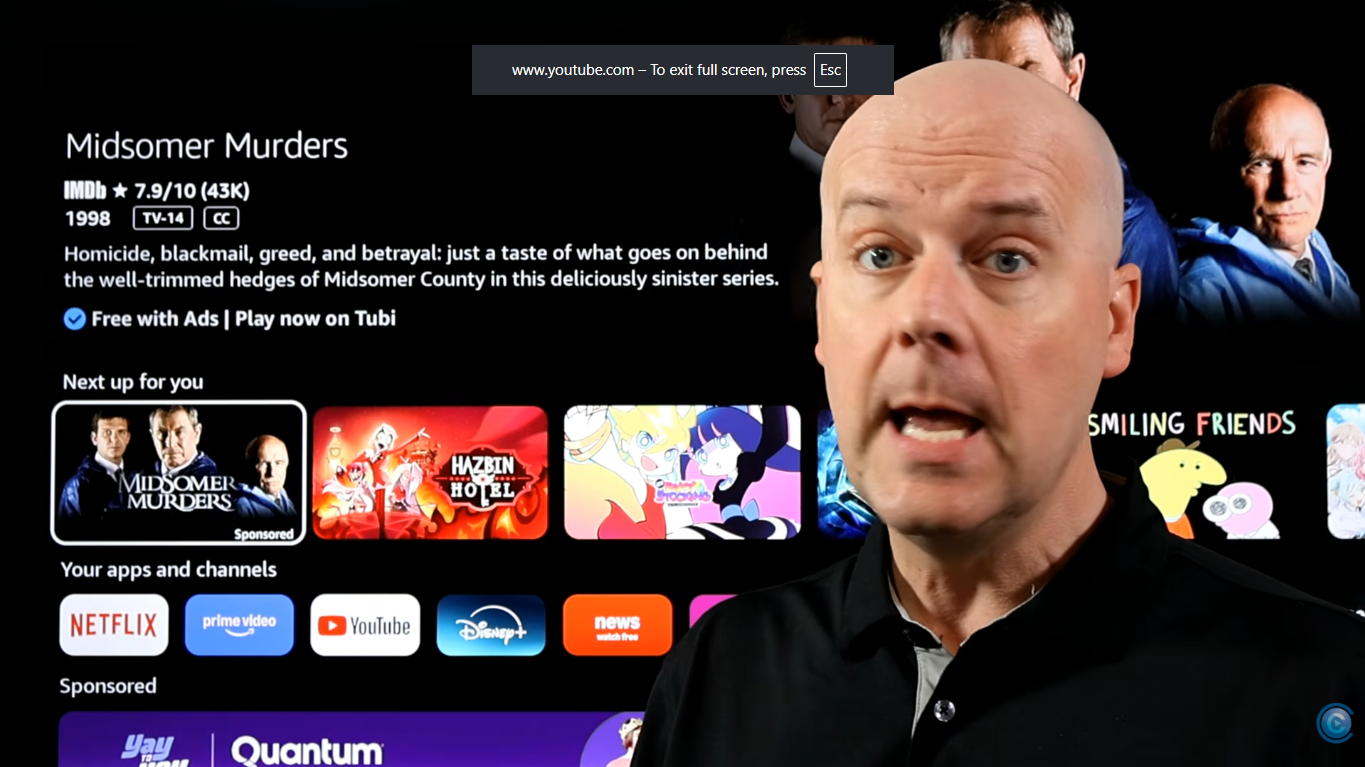
Amazon is rolling out its biggest Fire TV redesign in years, and the new interface is genuinely impressive after Fire TV basically looked the same for what felt like forever. The company debuted the redesigned UI at CES 2026 and is now starting to roll it out to select Fire TV devices in the U.S. The changes are substantial: navigation moved to the top like Google TV, content from all streaming apps (not just Prime Video), up to 20 pinned apps, and performance improvements that could be meaningful depending on your device. This isn’t just a cosmetic refresh. This is Amazon finally admitting Fire TV’s old interface had problems.
The most obvious change is that navigation moved from the middle to the top of the screen
The new top bar includes Menu, Search, and Home buttons, along with tabs for Movies, TV Shows, Sports, News, and Live TV. That’s a cleaner layout that mirrors Google TV’s design philosophy. What’s particularly smart is that these tabs surface content from across all your subscriptions Netflix, Disney+, Hulu, Peacock, everything not just Prime Video content. That’s the kind of change that makes Fire TV actually competitive with Google TV instead of feeling like Amazon’s effort to keep you in their ecosystem.
App pinning got a massive upgrade: from six apps to twenty
That’s three times more shortcuts to your most-used services. If you rotate between Netflix, Disney+, HBO Max, Peacock, and whatever else you subscribe to, you can now have quick access to all of them without digging through menus. The UI looks cleaner overall compared to older Fire TV versions, which is saying something because the old interface was basically a wall of content tiles that felt cluttered after a few minutes of scrolling.
Performance improvements are claimed at 20-30% faster in certain scenarios
That’s meaningful if true. Older Fire TV devices have a reputation for getting sluggish, and if the new OS actually delivers on that promise, it justifies the redesign entirely. Whether you’ll see 30% improvements or something more modest probably depends on your device and what you’re doing, but faster is faster.
Amazon also improved the remote experience with smarter Alexa+ features and better smart home controls. Holding the Home button now opens quick controls for audio, display settings, and connected devices like Ring cameras. That’s genuinely useful integration. You can ask Alexa natural language questions beyond just movies and TV shows you can ask for plot details, season recaps, and use conversational follow-ups. The AI understands context based on what you’re highlighting, which feels like a real feature rather than a gimmick.
The rollout is currently limited to select devices: Fire TV Stick 4K Plus, Fire TV Stick 4K Max (2nd Gen), and Fire TV Omni Mini-LED Series. Other regions will likely get the update in Spring 2026, which means the global rollout is staggered. If you have one of the supported devices, you can check for updates through Settings > My Fire TV > About > Check for Updates.
What’s genuinely impressive is that Amazon finally modernized something that desperately needed modernization. Fire TV’s interface was functional but dated. The new design feels like Amazon actually paid attention to how competitors like Google TV organize streaming content. It’s cleaner, faster, and less focused on pushing Prime Video exclusively. That’s a real improvement that justifies the redesign.
For Fire TV users, this is the kind of update that makes you actually want to update. For people considering whether to buy a Fire TV device, this redesign makes the choice easier. Amazon clearly committed to improving the platform rather than just incrementally tweaking it.
That matters in the streaming device market.
