


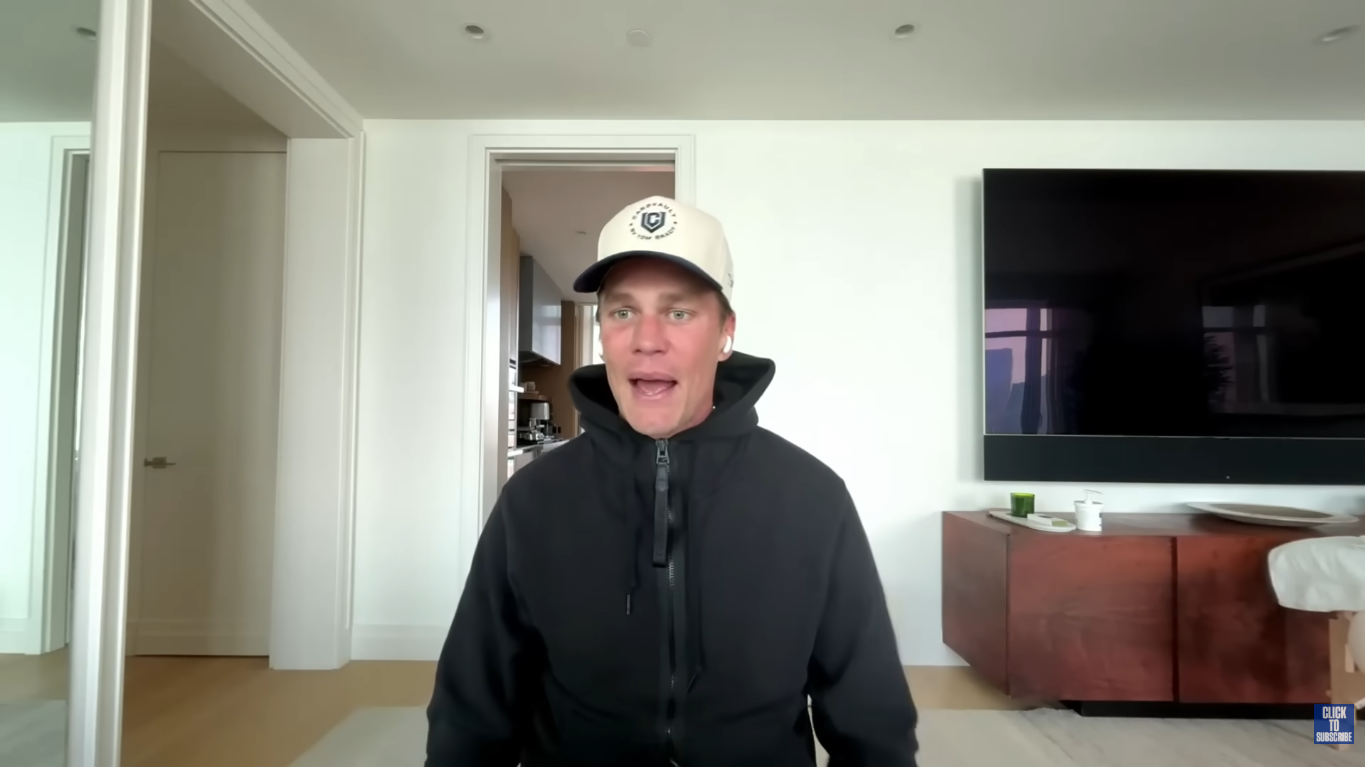
Legendary quarterback pivots from neutral stance to explicitly supporting Robert Kraft’s team in Instagram post following widespread criticism from former and current New England players
Tom Brady just pulled the ultimate Super Bowl reversal. The legendary Patriots star, who spent the early part of the week insisting he didn’t have a “dog in the fight” between New England and Seattle Sunday, did an about-face Friday night with a social media post that made his allegiances crystal clear. Brady’s Instagram story message to Patriots owner Robert Kraft “You know I got your back RKK. Get that seventh ring so we can match” amounted to a full 180 from his earlier neutral stance, signaling he was willing to abandon fence-sitting after facing intense pushback from teammates who felt he’d essentially abandoned his former organization.
The reversal matters because Brady’s initial comments generated genuine outrage. During an appearance on the “Let’s Go!” SiriusXM podcast with Jim Gray earlier in the week, Brady flatly stated he had no stake in the Super Bowl matchup and hoped the better team would simply win. That lukewarm stance didn’t sit well with people who remembered Brady’s six Super Bowl championships in New England or understood the emotional significance of the Patriots reaching the championship game.
The backlash was immediate and brutal. Vince Wilfork, the legendary defensive lineman who won championships alongside Brady, called the stance “bullcrap” blunt language from someone who clearly expected better from his former quarterback. Rob Gronkowski, Brady’s tight end partner for multiple championship runs, openly questioned whether Brady’s neutral position masked some hidden agenda or ulterior motive. And Asante Samuel, who claimed Super Bowl victories in his first two seasons with New England, directly accused Brady of harboring jealousy toward current Patriots quarterback Drake Maye.
The criticism that forced a reversal
The volume and specificity of the criticism couldn’t be ignored. Teammates weren’t just disappointed they were openly questioning Brady’s loyalty and commitment to the organization that defined his career. The timing was particularly bad for Brady, who’d spent nearly two decades building his legacy in New England. Suggesting he had no rooting interest in a Patriots Super Bowl appearance felt like a betrayal of that legacy, especially to players who’d fought alongside him for championships.
Brady’s Friday night Instagram post represented damage control in real time. By explicitly backing Kraft and mentioning the “seventh ring” comment (comparing it to Brady’s own seven championships), he was essentially saying he wanted the Patriots owner to achieve parity with his personal accomplishments. It was a calculated move designed to appease angry former teammates and reset the narrative before the biggest game of the season.
Too little, too late sentiment
But the reversal may have come too late for some. Asante Samuel, commenting after his social media pivot, questioned whether the Instagram post constituted sufficient redemption. Having already expressed his frustration with Brady’s initial neutrality, Samuel’s skepticism suggested that a last-minute social media post couldn’t erase the damage from earlier in the week.
The entire sequence from Brady’s podcast comments to the backlash to Friday’s Instagram reversal highlights the complicated relationship between legendary players and their former organizations. His nearly two decades in New England created expectations that he’d naturally gravitate toward supporting his former team. When he didn’t, it felt like a rejection of that history. The social media post suggests he understood how poorly his neutral stance had landed.
Whether the reversal will satisfy his former teammates remains unclear heading into Sunday’s matchup. What’s certain is that Brady’s Super Bowl LX week took an unexpected turn, transforming from a straightforward broadcasting role into a controversy about loyalty and legacy. The Instagram post may have stopped the immediate bleeding, but it also underscored that some things matter more than neutral positioning when it comes to the Patriots organization and the quarterback who defined its modern era.
