


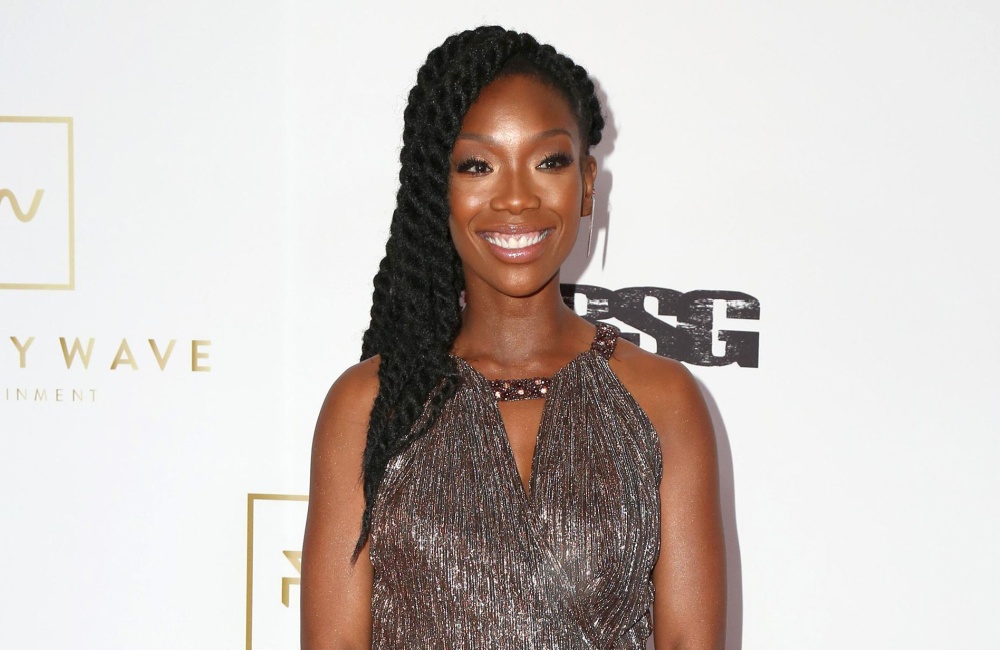
For more than three decades, Brandy has been one of the most recognizable voices and faces in American entertainment. Now, in her memoir Phases, written with journalist Gerrick Kennedy, she is finally telling the version of her story that the public never got to see. It is a portrait of a girl from Mississippi who grew up inside a machine that demanded perfection and rarely asked how she was doing.
The book covers her path from church choirs to sold-out arenas, from her self-titled debut album to starring as the first Black Cinderella, and through a series of personal crises that she managed, largely, in private. What emerges is a deeply human account of ambition, exhaustion, and survival.
Brandy and Wanya Morris
One of the memoir’s most significant disclosures involves her early relationship with Wanya Morris of Boyz II Men. Brandy writes that their involvement began when she was 16 and he was 22, a year after they met and he took on an informal mentoring role in her life. The relationship deepened after she joined the group on tour and the two collaborated on the song Brokenhearted.
Brandy describes the dynamic as one in which her admiration was gradually shaped into something she was not equipped to navigate at her age. She felt her boundaries were quietly negotiated away by someone older who understood exactly what he was doing. When their relationship ended, it was after he admitted to multiple infidelities. Brandy writes that she was old enough to recognize she had been played, even if she had been too young to see it coming.
An abusive relationship with a dancer
In the spring of 1999, Brandy entered a relationship with one of her dancers, whom she refers to in the book only as the Dreamer. What began with genuine connection slowly curdled once her first headlining world tour ended and they returned to the routine of life in Los Angeles. His charm gave way to verbal jabs aimed at her appearance and thinly veiled jealousy over her success.
Brandy writes that she became skilled at redirecting attention away from herself in order to protect him from feeling overshadowed. It was only after her mother quietly passed her a book about verbal abuse that she recognized her situation for what it was and found the resolve to leave.
The making of a classic and its complicated aftermath
The Boy Is Mine, the 1998 Grammy-winning duet with Monica, is now considered one of the defining records of its era. Brandy reveals in Phases that the collaboration was her own idea and that almost everyone around her advised against it. Her family, her brother, and at least one Atlantic Records executive all urged her not to move forward with Monica as the featured artist.
She went ahead anyway. The song became a phenomenon, but the industry machinery around it created real tension between the two singers. Monica’s label boss renamed her album after the song, and a solo television performance by Brandy while Monica had a scheduling conflict worsened the optics. The pair eventually reconciled and years later Monica made clear publicly that any rivalry had largely been a product of marketing rather than genuine animosity.
The night before Whitney Houston died
Brandy’s relationship with Whitney Houston is one of the book’s most tender threads. She had idolized Houston from childhood and the two eventually became close enough that Houston personally called Brandy to offer her the role of Cinderella in the beloved 1997 television film Rodgers and Hammerstein’s Cinderella.
Brandy recounts seeing Houston at Clive Davis’ pre-Grammy gala the evening before her death on Feb. 11, 2012. Houston appeared unwell. Later that night the two spoke by phone for several hours, laughing, crying, and praying together. Houston told Brandy she was going to be better. Brandy writes that she believed her completely.
A brush with Scientology and a feud with Kanye
After a period of serious personal struggle that included an addiction to diet pills and what she describes as a mental breakdown, Brandy found herself drawn toward the Church of Scientology. She studied its materials and found temporary comfort in its language of purification and self-knowledge, but ultimately stepped back before fully committing.
Her collaboration with Ye, the rapper formerly known as Kanye West, on her fourth studio album Afrodisiac was fraught from the start. Brandy writes that the arrangement was made by Atlantic Records without her input, as the label hoped to court Ye to the roster. A creative disagreement over which version of the track Where You Wanna Be would appear on the album became a prolonged standoff. Ye submitted the version he preferred without informing her, presenting it as a done deal. Brandy writes that she swallowed her frustration and moved forward, but the feeling that her creative agency had been stripped away never fully left her.
The marriage that never was
In 2002, Brandy announced she was expecting a child with producer Robert Smith. Rather than disclose that the two were not married, she suggested they simply tell people they were. The lie held for a time, but when their relationship ended, Smith revealed the truth publicly, including details that blindsided her. Brandy lost several brand partnerships in the fallout, including a long-running relationship with CoverGirl.
She writes that the deception came from fear, specifically the terror of shattering the good girl image that had been built around her since adolescence. What followed the exposure was painful, but she describes it as the moment she finally began to exist in the world as herself.
