


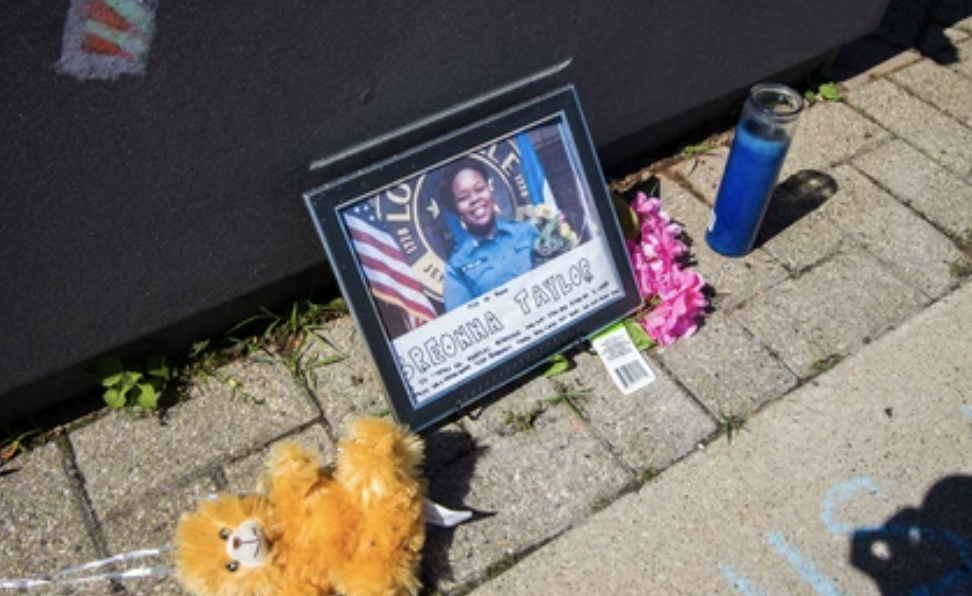
Breonna Taylor was 26 years old when Louisville police executed a no-knock warrant at her apartment just after midnight on March 13, 2020. She never made it to morning. Six years later, the federal protections her death helped inspire are already being dismantled, and the timing could not feel more deliberate.
Days before the anniversary of her killing, the Trump administration quietly reversed a Biden-era policy that had placed firm limits on the type of warrant used the night Taylor died. There was no press conference, no public debate and no national conversation. Just a memo that changed everything.
What the rollback actually means
On March 2, Deputy Attorney General Todd Blanche circulated an internal memo to attorneys and senior supervisors across the Department of Justice. The directive was blunt. No-knock entries are once again permissible under federal policy. A department spokesperson framed the change as a return to common sense, one designed to protect officers and preserve the integrity of criminal investigations.
What the memo conspicuously ignored is the long and well-documented record of what no-knock warrants actually produce. Confusion. Panic. Death. The people on the receiving end of these raids often have seconds to process what is happening, and those seconds have proven fatal over and over again.
The night that took Breonna from the world
Taylor was asleep in her home when officers arrived unannounced. She and her boyfriend, Kenneth Walker, had no warning and no reason to expect police. Walker, a licensed gun owner, fired a single shot at what he believed were intruders breaking in. Officers responded with 32 rounds. Taylor was hit multiple times and died in her own hallway. Nobody was ever convicted in connection with her death.
Her killing arrived during a national reckoning over policing, systemic racism and the unchecked authority of law enforcement. The murders of George Floyd and Ahmaud Arbery had already sent people into the streets, and Taylor’s case sharpened the demand for real, lasting change.
The reforms her name built
Louisville moved fast. Within weeks of Taylor’s death, city lawmakers passed Breonna’s Law, a local ban on no-knock warrants. Other jurisdictions followed. Then in 2022, President Biden signed a sweeping executive order that curtailed unannounced entries at the federal level, a direct response to exactly the kind of tragedy that took Taylor’s life.
The data behind these reforms was never soft. A previous investigation revealed that at least 81 civilians and nine officers died during no-knock warrant executions between 2010 and 2016. These are not abstract statistics. They are lives ended by a tactic that courts, lawmakers and communities had increasingly agreed was doing more harm than good.
A rollback with consequences
The reversal lands as the Trump administration faces mounting scrutiny over its approach to law enforcement. Weeks before the memo surfaced, the administration drew sharp criticism after reports emerged of civilians being killed during immigration enforcement operations in Minneapolis.
Taylor’s death was supposed to mark a turning point. The laws written in her name, the federal order that followed and the broader cultural shift her case ignited were all meant to prevent history from repeating. That work is now being quietly undone.
The sixth anniversary of Breonna Taylor’s death falls on March 13. This year it arrives with a federal policy that looks nearly identical to the one that allowed officers to enter her home unannounced, in the dark, without warning. She did not survive that night. The protections meant to honor her memory may not survive this administration either.
For the millions of people who took to the streets in her name, who pushed lawmakers to act and who believed that her death would not be forgotten, this rollback is not a policy footnote. It is a statement. And right now, six years later, that statement is being made very loudly through silence.
