


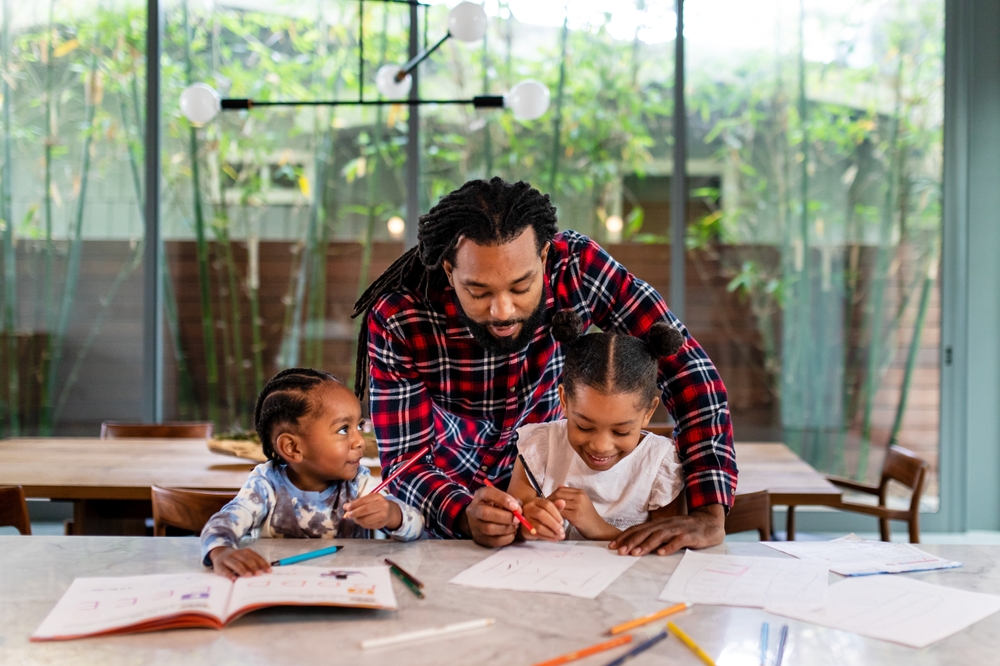
Long before a child ever sets foot in a classroom, their brain is already hard at work. Children begin learning from the moment they are born, and every interaction with the world around them helps build crucial skills that last a lifetime. The home is not just where children sleep and eat — it is where their entire intellectual and emotional foundation gets built, one conversation, one book, and one shared moment at a time.
For parents wondering how much influence they truly have over their child’s future, the answer is simple — more than they will ever fully realize.
Why Early Learning at Home Matters Most
The years from birth to age five are widely regarded as the most critical period for brain development. It is during this window that children develop linguistic, cognitive, social, emotional, and regulatory skills that directly predict how they will function later in life — in school, in relationships, and in their careers.
Children at this stage are highly responsive to their environment. Safe, nurturing, and stimulating homes strengthen early brain development, while chaotic or unstimulating environments can slow it significantly. Experts in child development consistently point to this period as the one where parental involvement carries the most weight — not just for academic readiness, but for emotional intelligence and resilience that children carry with them for decades. The quality of the home learning environment during these years carries consequences that extend well into adulthood.
What Early Learning at Home Actually Looks Like
Many parents assume early learning requires structured lessons, flashcards, or expensive programs. The reality is far simpler. Everyday moments carry enormous educational weight:
- Reading aloud from infancy builds vocabulary and comprehension
- Singing and rhyming games sharpen phonological awareness
- Open-ended play develops problem-solving and creativity
- Dinner table conversations build language and critical thinking
- Drawing and coloring together strengthen fine motor skills and focus
From 18 months to preschool age, children can absorb as many as nine new words per day — a staggering rate of development that parents can directly fuel simply by talking, reading, and engaging consistently.
Early Learning and Long-Term Success
The long-term payoff of an enriched home learning environment is well established. Children who receive strong early stimulation at home show higher educational attainment, better adult health outcomes, stronger social skills, and lower rates of behavioral issues later in life.
Research consistently shows that the quality of parent-child interactions holds greater importance than socioeconomic background. It is not about how much money a family has — it is about how much time and intention a parent brings to the table. A child raised in a modest home with an engaged, curious parent will almost always outperform a child raised in a wealthy but disengaged household.
How Parents Can Build a Stronger Learning Environment
Creating a powerful learning environment at home does not require a teaching degree or a large budget. It requires presence, consistency, and curiosity. Start small and stay consistent:
- Set aside 15 to 20 minutes of daily reading time
- Ask open-ended questions during play — what do you think happens next?
- Limit passive screen time and replace it with hands-on activities
- Let children help with simple household tasks like cooking or organizing
- Celebrate effort over results to build a growth mindset early
The investment made at home in the earliest years pays dividends that no school program alone can fully replicate. Children who grow up in engaged, curiosity-driven households tend to enter school with stronger attention spans, wider vocabularies, and a genuine enthusiasm for discovering new things — qualities that teachers notice immediately and that compound in impact with every passing grade level. The kitchen table, the bedtime story, the afternoon of building blocks — these are not small moments. They are the building blocks of a child’s entire future.
