


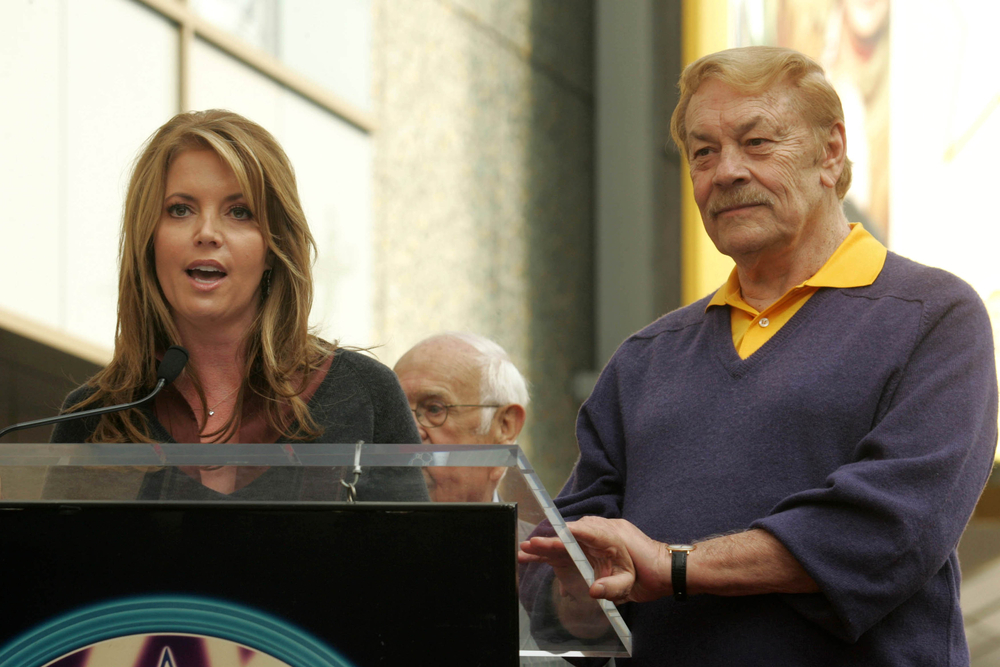
Jeanie Buss sat down with CNBC on Tuesday to defend selling nearly 50% of the Buss family’s Lakers stake to billionaire Mark Walter for a $10 billion valuation, and her rationale basically boils down to: Dad would’ve wanted this. The sale closed in late October 2025 after the six Buss siblings agreed last June. Jeanie retained her role as governor with a five-year contract while her five siblings were immediately terminated from their positions within the franchise. Each sibling pocketed about $500 million after taxes from the transaction. The family still owns 17%, which barely meets the 15% threshold required for Jeanie to remain governor. That’s the structure. The messaging is where things get complicated.
Jeanie’s argument is that Jerry Buss, who died in 2013, prioritized the Lakers staying competitive above everything else. “What was important to him was that the Lakers stay at the top of the NBA, and to stay at the top of the NBA, you need to have the resources,” she told CNBC. “You need to have everybody pulling together. And he would want [that for] the Lakers, because the Lakers are his legacy.” That’s a reasonable legacy argument. Jerry Buss built the franchise into a dynasty. Jeanie’s suggesting he’d want modern resources to maintain that status. The problem is that her interpretation of what her father would want isn’t actually supported by her siblings’ actions.
Five of the six Buss siblings were fired from their team roles immediately after the sale closed
That’s not “everybody pulling together.” That’s consolidating power and removing voices from the organization. Janie Buss, one of the terminated siblings : “I don’t think my dad would be happy with the way things just went down. Not at all.” An unnamed team official said even more bluntly: “She fired everyone.” That’s not family unity. That’s a power play dressed up in legacy language.
Jeanie’s explanation for the firings was basically that she needed clean decision-making
“My siblings were involved in the decision that was made. It’s about the Lakers and the greatness and what the fans expect, and you need resources and you need a direction.” Translation: they agreed to sell but disagreed with how I’m restructuring the organization afterward. The fact that she fired them rather than having them stay in roles suggests those disagreements were significant.
What’s genuinely notable is how Jeanie positioned the sale as universal agreement while simultaneously removing her siblings from any ability to influence the team’s future. They got the payday. Now they get no say. That’s not partnership. That’s a buyout followed by a power consolidation. The irony is that Jeanie’s justification that the team needs resources and direction applies equally to needing the perspective of family members who’ve been in the organization for years.
The LeBron James transition to building around Luka Doncic represents the actual direction Jeanie is taking. She acknowledged James is in his final contract year and said “never say never” about him returning, but added: “He hasn’t given an indication.” More importantly, she emphasized: “The partnership will give us the stability to continue to move forward as we build towards a team around Doncic.” That’s the post-LeBron era officially starting, and Jeanie’s making that decision with Mark Walter’s resources, not with family consultation.
The unstated reality is that the Buss family trust that Jerry Buss created to keep the franchise unified has essentially been dissolved. Jeanie sold half their stake, fired her siblings, and retained sole control. They each got rich, but the family’s unified governance is gone. Whether that’s good for the Lakers‘ future competitiveness remains to be seen. What’s clear is that Jeanie’s interpreting her father’s legacy very differently than her siblings do.
Legacy and execution are apparently two different things.
