


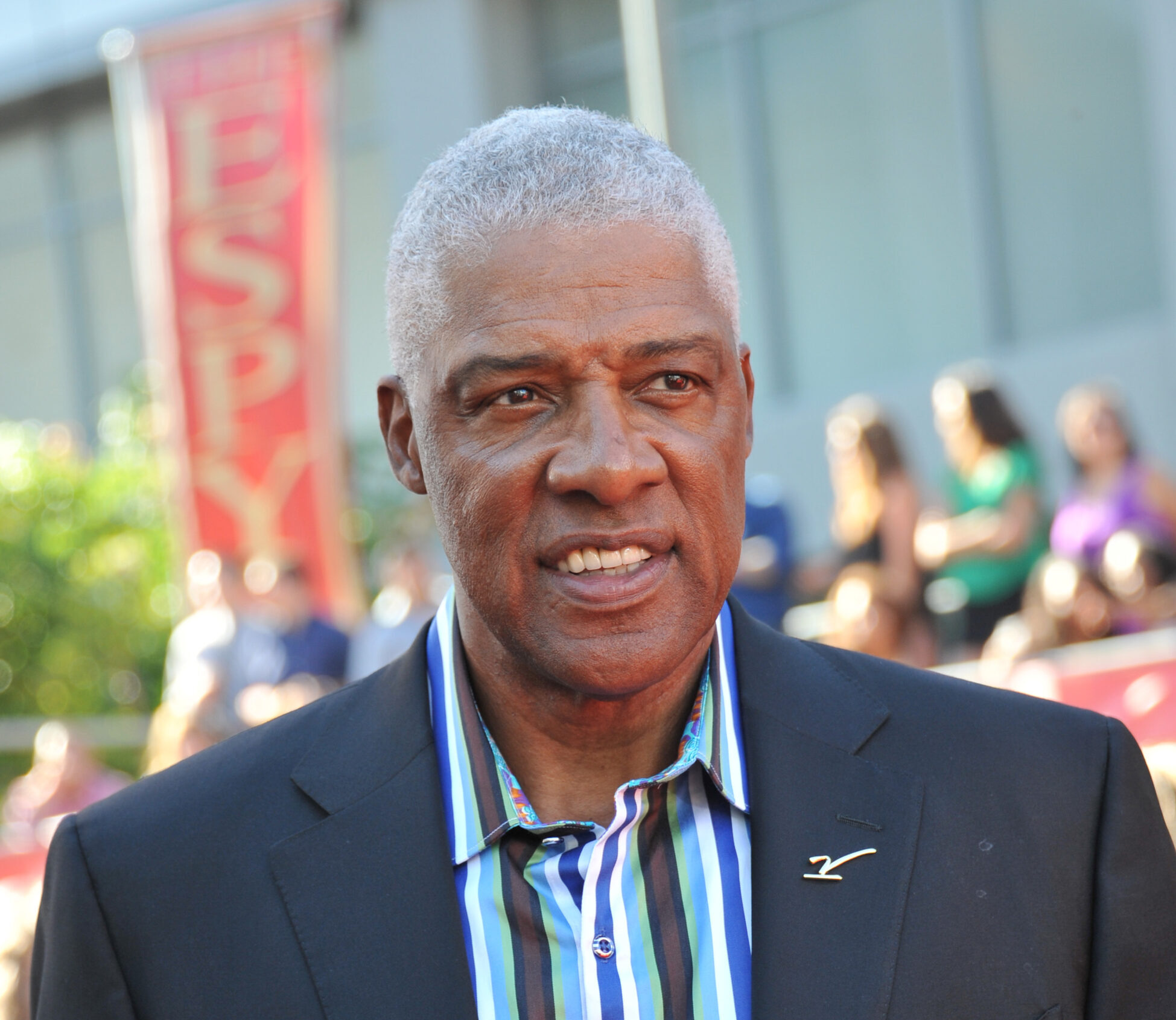
There are players who win games and players who elevate everyone around them. Kareem Abdul-Jabbar, according to Julius Erving, was both at once. The NBA icon recently made a striking assertion about his longtime rival, suggesting that Abdul-Jabbar’s presence throughout his career was directly responsible for sending somewhere between eight and ten players to the Naismith Memorial Basketball Hall of Fame.
It is a remarkable claim, and it lands with even more weight coming from someone who spent years competing against Abdul-Jabbar on the sport’s biggest stages.
A rivalry born on the grandest stage
Erving and Abdul-Jabbar were two of the defining figures of their basketball generation, and their rivalry reached its peak during the 1980 NBA Finals. The Philadelphia 76ers and the Los Angeles Lakers met in a series that showcased everything compelling about the era, athleticism, will and genuine greatness colliding under the brightest lights the sport had to offer.
The Lakers ultimately prevailed in six games, with Abdul-Jabbar delivering a performance that underscored his place among the all-time greats. But he did not carry that championship alone. A rookie by the name of Magic Johnson stepped into an extraordinary moment and delivered one of the most legendary performances in Finals history, setting the tone for what would become one of the most celebrated partnerships the NBA has ever seen.
Kareem and the players he lifted
Johnson went on to build a Hall of Fame career that included five championships alongside Abdul-Jabbar. But Erving’s point reaches well beyond that partnership. His assertion is that the gravitational pull of a 7-foot-2 all-time great created opportunity on a scale that is easy to overlook in hindsight.
When a defense has to organize itself around one of the five best players in league history, everyone else on the floor benefits. Passing lanes open. Cuts go uncontested. Role players become contributors. Contributors become stars. Stars, in some cases, become legends who one day find their names called in Springfield, Massachusetts.
The Showtime Lakers and a golden window
Erving’s comment almost certainly points toward the celebrated Showtime Lakers era, a stretch of Lakers basketball in the 1980s that produced championships, cultural cachet and a roster full of players who thrived in Abdul-Jabbar’s orbit. The players who benefited from that environment were undeniably talented in their own right. But talent alone does not explain everything, and Erving is not suggesting it does.
What he is saying is something more nuanced and ultimately more generous. That being in proximity to Abdul-Jabbar accelerated careers, opened possibilities and gave teammates a platform they might never have found elsewhere.
A compliment only a rival could give
There is something particularly meaningful about this kind of praise coming from Erving. The two men battled across some of the most consequential games of their era, and Erving never had the luxury of benefiting from Abdul-Jabbar’s presence the way his Lakers teammates did. He faced it instead.
That perspective makes his acknowledgment all the more credible. Abdul-Jabbar spent decades as one of the most respected and quietly influential figures in American sports history. Erving’s words are a reminder that the full measure of a player’s greatness is not always captured in scoring titles or championship rings. Sometimes it lives in the careers of the people standing beside him.
