


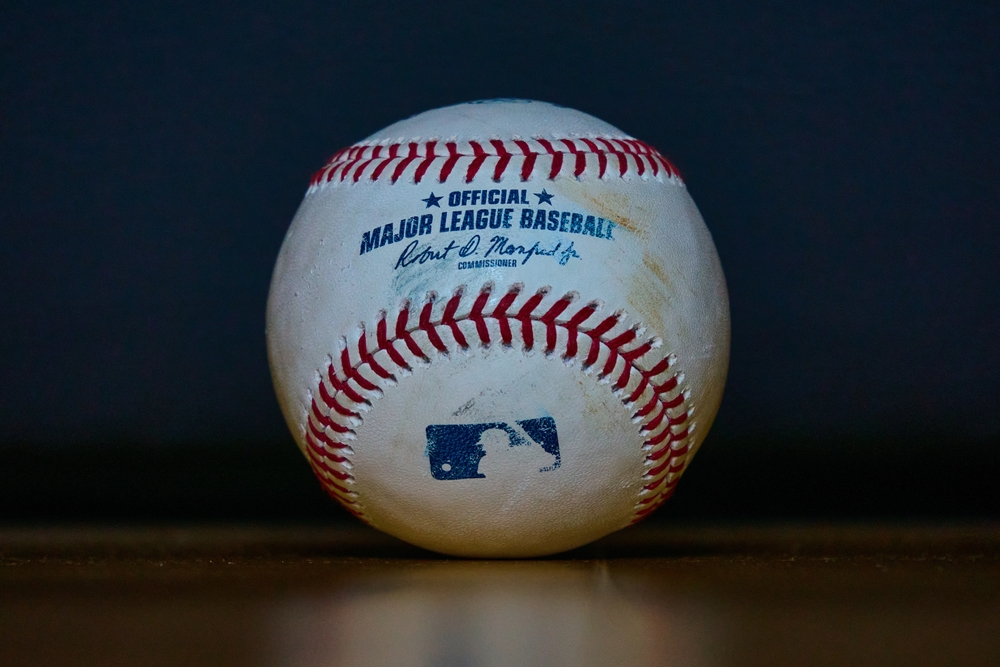
Major League Baseball is stepping into a new era. Beginning Wednesday night with the New York Yankees facing the San Francisco Giants in the 2026 MLB season opener, players can now appeal ball and strike calls made by plate umpires — a seismic shift that has been debated, tested, and long awaited by the sport’s most passionate fans.
The ABS Challenge System makes its formal debut on Opening Night, with the Giants hosting the Yankees at 8:05 p.m. ET in the first-ever live MLB broadcast on Netflix. It is a night that will be remembered not just for the matchup between two powerhouse franchises, but for what happens every time a borderline pitch crosses — or misses — home plate.
What Is the ABS Challenge System
For the past four seasons, MLB invested heavily in testing Automated Ball-Strike technology, predominantly at the Triple-A level but also during 2025 major-league spring training and the 2025 All-Star Game. The league spent years refining the system before bringing it to the biggest stage, showing MLB’s commitment to blending tradition with technology.
This system of replay recourse is widely seen as a happy middle ground between so-called robot umpires that would call every ball and strike, and the long-standing tradition of human umpires and the nuance that comes with their calls. Human umpires remain in place — the technology only steps in when a challenge is made.
The ABS system uses similar technology to the line-calling system in tennis, with 12 cameras in each ballpark tracking the ball with a margin of error of around one-sixth of an inch.
How the ABS Challenge Works
The rules are straightforward but demand split-second judgment from players on the field
- Each team receives two challenges to start the game. If a team wins a challenge, it keeps the right to challenge again. Once a team loses two challenges, it cannot challenge another pitch for the rest of that game.
- Only the pitcher, catcher, or batter may signal a challenge and must do so by tapping the top of their head.
- Players must challenge immediately after the pitch, without waiting for help from the dugout, teammates, or coaches.
- MLB defines the strike zone as a two-dimensional rectangle set in the middle of home plate spanning its full 17-inch width, with the top set at 53.5% of the batter’s height and the bottom at 27%.
- If a team enters extra innings without a challenge remaining, they receive one additional challenge every inning.
What the Data Reveals About ABS
Spring training results painted a revealing picture. In 2026 spring training games, 53% of 1,844 challenges were successful. Only 45% of batter-initiated challenges worked, compared with 60% for the defense.
In MLB‘s 2026 spring testing, only 1.4% of all pitches were challenged, and 65% of spring games had two or fewer overturned calls. This is not a system that will slow the game to a crawl — it is, as the league describes it, a pressure-release valve for the most critical moments.
MLB reported that 63.2% of ejections in 2025 were about balls and strikes, so the ABS challenge system gives players a way to contest calls without immediately turning the moment into a shouting match.
A Strategic Game Within the Game
The ABS challenge does not just correct errors — it rewrites how teams prepare. Several executives said that many of the spring calls that were challenged and overturned were on pitches that barely clipped the zone or just missed it, by less than an inch on many occasions, a trend closely watched across MLB.
Catchers, whose value in pitch framing could take a hit due to the new rule, were the most successful challengers. Meanwhile, pitchers proved the least reliable — and some teams may restrict them from challenging at all, several MLB analysts.
Yankees captain Aaron Judge summed up the collective feeling across the league. He admitted it would feel a little weird, because as a hitter he has never had to stand in the box thinking about whether a pitch is a ball or a strike.
MLB Opening Day Is Here
Beyond the ABS storyline, tonight’s matchup between the Yankees and the Giants features two elite starting pitchers in Max Fried and Logan Webb. Fans at Oracle Park will be watching to see if anyone can send a ball splashing into McCovey Cove — while also keeping one eye on the scoreboard every time a batter taps his helmet.
The rest of the league follows tomorrow, but the stage is already set. Baseball in 2026 looks a little different, plays a little smarter, and argues a little less — and that might just be the biggest win of Opening Day.
