


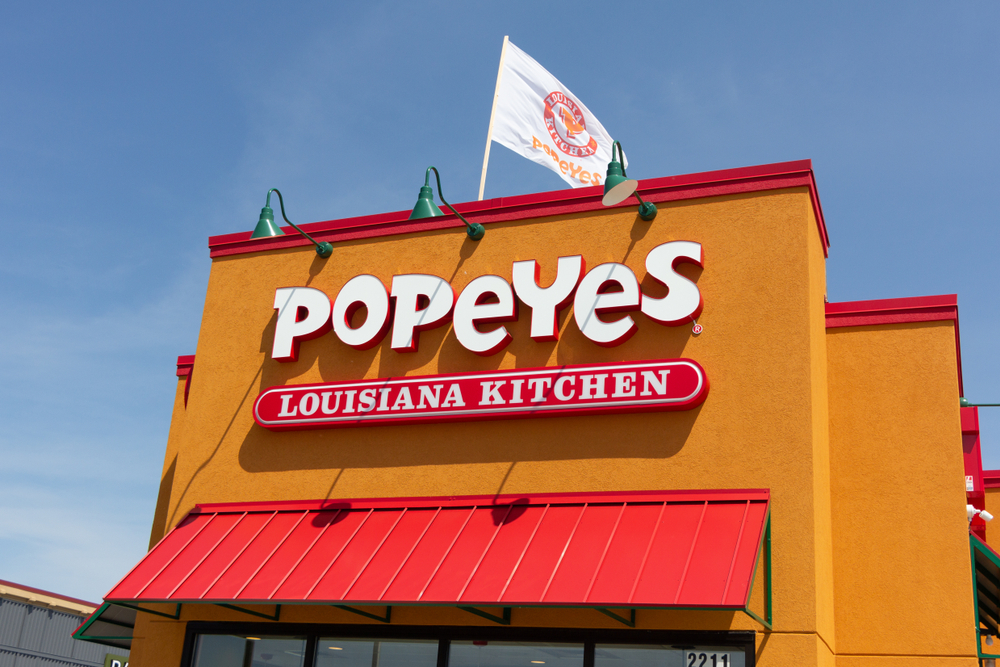
One of the largest Popeyes franchise operators in the country is in the middle of a financial collapse that has already shuttered nearly 20 restaurants — and left the fate of more than 100 additional locations hanging in the balance.
Sailormen Inc., a Miami-based company that once operated more than 130 Popeyes restaurants across Florida and Georgia, filed for Chapter 11 bankruptcy protection in January, citing a brutal combination of rising inflation, declining customer traffic, and roughly $130 million in mounting debt. The filing set off a wave of closures that has continued to grow in the weeks since.
How the Popeyes Closures Unfolded
The initial wave came fast. Sailormen closed 17 restaurants in January as part of the early stages of its restructuring process. A March 10 court filing later revealed that three additional locations in Georgia had since shuttered, bringing the total number of closed Popeyes restaurants tied to the case to approximately 20.
The most recent filing sought to formally reject the leases on those three Georgia properties — a standard step in bankruptcy proceedings that signals the company has no intention of reopening them. Neither Popeyes nor Sailormen Inc. had issued a public response at the time of publication.
Decades of Growth, Then a Slow Unraveling
Sailormen’s story is one of a franchise empire that grew steadily over decades before the math stopped working. The company has operated Popeyes locations since the late 1980s, building one of the largest portfolios in the chain’s entire franchise system. At its peak, it was exactly the kind of multi-unit operator that fast-food brands depend on to scale quickly and maintain regional dominance.
The pressures that eventually broke that model include:
- Surging operating costs that eroded already thin margins
- Legal disputes with lenders that added complexity and expense
- A failed attempt to sell off a portion of its restaurant portfolio
- A debt load of roughly $130 million that its remaining revenue could not support
By the time the Chapter 11 filing arrived, Sailormen had run out of runway.
What Chapter 11 Means for the Remaining Restaurants
Chapter 11 bankruptcy is not the same as a full shutdown. The process is designed to allow companies to restructure their finances while continuing to operate, which means many of Sailormen’s remaining Popeyes locations are expected to stay open as proceedings move forward. The goal is to emerge as a leaner, more financially stable operation.
That said, the uncertainty surrounding more than 100 remaining restaurants is very real. The outcome of Chapter 11 proceedings can shift depending on:
- Negotiations with creditors and lenders
- The ability to renegotiate existing leases
- Whether a buyer emerges for some or all of the remaining portfolio
For employees and communities that depend on those locations, the coming months will be closely watched.
A Brutal Moment in the Chicken Wars
The Popeyes closures arrive at a particularly competitive moment for the fast-food chicken category. Major chains have been aggressively fighting for market share in what industry observers have called a renewed chicken wars era — investing heavily in new menu items, promotions, and value offerings to hold onto increasingly price-sensitive customers.
For franchisees already operating on tight margins, that environment leaves almost no room for error. Rising costs on one side and pressure to keep prices accessible on the other create a squeeze that even the most established operators can struggle to survive.
Sailormen’s Popeyes bankruptcy is a stark reminder that the fast-food industry’s growth story is not without its casualties — and that the restaurants customers visit most casually can disappear with very little warning.
Industry analysts say rising labor costs, supply chain volatility, and shifting consumer spending habits are forcing operators across the country to rethink expansion plans and reassess long-term sustainability.
Source: PEOPLE.com
