


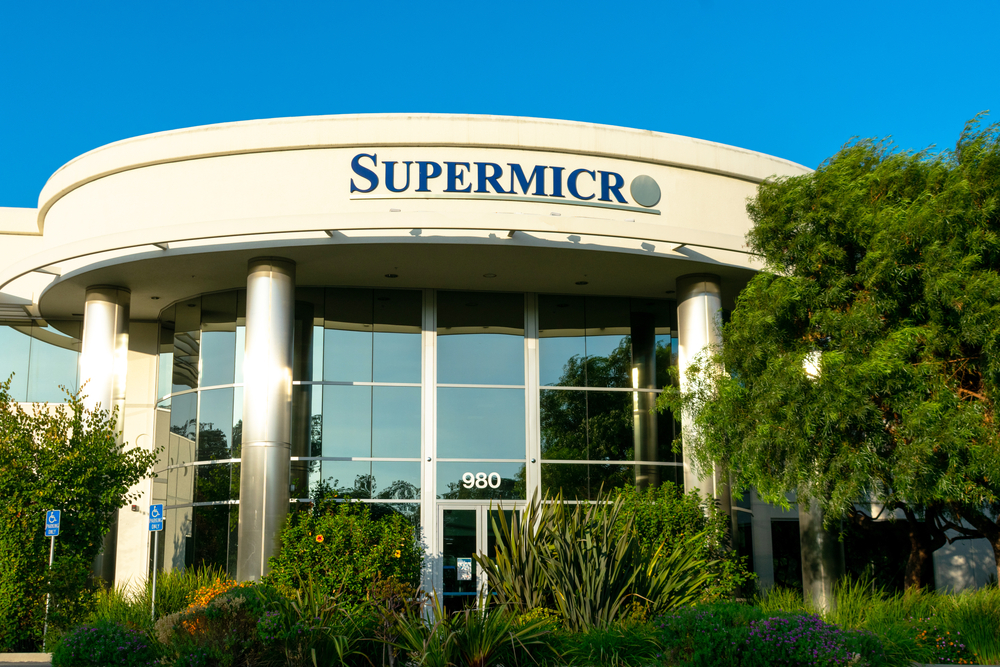
Supermicro shares dropped 25% Today after federal prosecutors in New York unsealed an indictment charging three individuals with orchestrating one of the largest alleged export control violations in recent American history. At the center of the case is Yih-Shyan Liaw, known as Wally, a co-founder of Super Micro Computer and a current board member and senior vice president who controls roughly $464 million in company shares.
Liaw, 71, was arrested Thursday alongside contractor Ting-Wei Sun, known as Willy. A third defendant, Taiwan sales manager Ruei-Tsan Chang, known as Steven, remains a fugitive. All three face up to 20 years in prison on the most serious charge of conspiracy to violate the Export Controls Reform Act, along with additional counts of conspiracy to smuggle goods and defraud the United States government.
How the alleged scheme worked
According to the indictment, the three defendants built a multi-layered operation designed to move Nvidia-powered Supermicro servers to Chinese buyers while evading American export controls that strictly prohibit such sales without a Commerce Department license.
The pipeline worked through an unnamed Southeast Asian company that placed purchase orders with Supermicro as though the servers were intended for its own operations. After assembly in the United States and shipment to Supermicro’s Taiwan facilities, the servers were handed off to a logistics firm that removed all identifying packaging, placed them in unmarked boxes, and forwarded them to their actual destination in China. The Southeast Asian company purchased roughly $2.5 billion worth of servers under this arrangement during 2024 and 2025, with approximately $510 million worth shipped during a three-week window between late April and mid-May 2025 alone.
Dummy servers and staged audits
Prosecutors allege the defendants went to significant lengths to keep the scheme hidden from Supermicro’s internal compliance team and American regulators. Physical replica servers were staged at the Southeast Asian company’s warehouse to create the appearance that inventory was being stored there as required. Surveillance footage cited in the indictment allegedly shows Sun and a co-conspirator using a hair dryer to remove and reapply serial number stickers on the dummy units before carefully repackaging them.
Those same fake servers were later used to deceive an audit conducted by the United States Department of Commerce. Chang separately arranged for what the indictment describes as a cooperative auditor to conduct a review and worked to keep inspectors away from sections of data centers where the real servers should have been stored. The defendants also communicated through encrypted messaging apps to coordinate server quantities, delivery locations inside China, and methods for avoiding detection.
Supermicro’s troubled compliance history
The arrest lands against a backdrop of persistent governance problems at Supermicro. Trading in the company’s stock was suspended in 2018 following an SEC investigation into its accounting practices. Liaw resigned all his positions that year after an internal audit committee investigation, though he returned as an adviser in 2021 and rejoined the board in December 2023.
In August 2024, short-seller Hindenburg Research published a critical report alleging that accounting issues had returned. Months later, longtime auditor Ernst & Young abruptly resigned, stating it could no longer rely on management’s representations. The company brought in BDO as a replacement auditor and submitted a compliance plan to Nasdaq to avoid a second trading suspension.
An internal investigation that concluded in December 2024 found no evidence of fraud, though it identified lapses and recommended replacing the chief financial officer. That recommendation has not been carried out.
What the charges mean for the AI supply chain
Supermicro stated it is not named as a defendant and has placed Liaw and Chang on administrative leave while ending its relationship with Sun. The company said it is cooperating fully with the government investigation.
The Nvidia chips at the center of the case have been subject to strict export controls since October 2022 under rules enforced by the Commerce Department’s Bureau of Industry and Security. Those controls exist specifically to prevent advanced AI accelerators from reaching China, which both the Biden and Trump administrations have treated as a national security priority. Nvidia said in a statement that compliance remains a top concern and that unlawful diversion of controlled technology carries serious consequences.
