


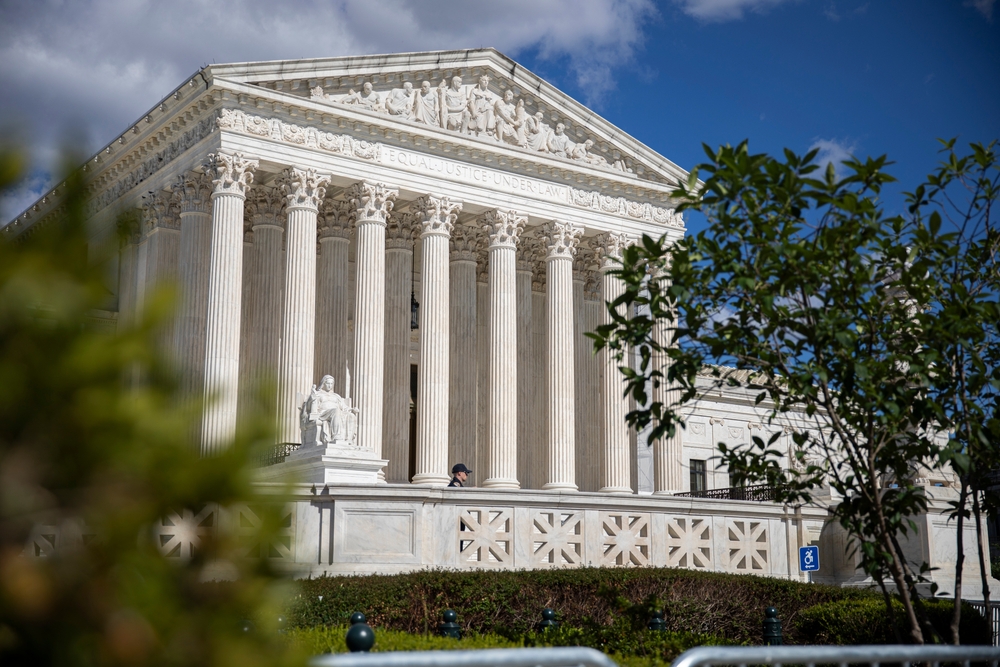
Terry Pitchford has been on Mississippi’s death row since 2006. On March 31, the United States Supreme Court will hear arguments about whether the jury that put him there was chosen fairly.
Pitchford was convicted of murder in connection with a robbery in which a shopkeeper was shot and killed. The jury that decided his fate included one Black juror. The county where the trial took place is roughly 40% Black. Four Black prospective jurors were removed by the prosecutor during jury selection. Pitchford’s legal team has argued for years that those removals were racially motivated, a violation of the constitutional standard established by the Supreme Court’s own ruling in Batson v. Kentucky, which prohibits the exclusion of jurors on the basis of race.
A prosecutor with a history
The prosecutor who tried Pitchford’s case, Doug Evans, is not a stranger to this kind of scrutiny. In 2019, the Supreme Court overturned a separate conviction connected to Evans specifically because of concerns about racially discriminatory jury selection in that case. The pattern did not go unnoticed, but it did not initially help Pitchford.
During his trial, objections to the jury selection were raised and dismissed by the presiding judge. Mississippi courts later upheld the conviction, ruling that Pitchford had given up his right to challenge the removals by failing to adequately push back when the prosecutor offered race-neutral justifications. Those justifications included claims that certain jurors arrived late or had family members with criminal records.
The federal courts split
A federal district judge reviewed the case and reached a different conclusion, finding that the juror exclusions violated constitutional standards and ordering either a new trial or Pitchford’s release. The U.S. Court of Appeals for the Fifth Circuit reversed that ruling, relying on a federal law that limits when federal courts can override state court decisions. Under the Antiterrorism and Effective Death Penalty Act, federal intervention is only permitted when a state court’s ruling is found to be objectively unreasonable, a high bar that the Fifth Circuit concluded had not been met.
That disagreement between the district court and the appeals court is part of what brought the case to the Supreme Court.
What the justices will decide
The Supreme Court’s review will center on a specific procedural question. Mississippi’s courts ruled that Pitchford had waived his right to challenge the jury selection because he did not adequately contest the prosecutor’s stated reasons at trial. Pitchford’s attorneys argue that objections were in fact raised, that the state court ignored material facts in reaching its conclusion, and that the defense was denied a fair opportunity to respond to the prosecutor’s explanations before the judge ruled.
Mississippi maintains that the prosecutor’s stated reasons for removing the jurors were race-neutral on their face and were not meaningfully challenged at the time. The federal government filed a brief supporting Mississippi’s position, urging the court to hold firm on the rule requiring defendants to raise arguments during trial before they can pursue them on appeal.
Why the outcome matters beyond this case
A ruling in Pitchford’s favor could make it easier for defendants in capital cases and others to bring Batson challenges in federal court, particularly in cases where state courts dismissed those claims on procedural grounds. A ruling for Mississippi could reinforce existing limits on federal review and make it harder to revisit jury selection disputes after the fact, even when the underlying facts raise serious questions.
The case arrives at the court at a moment when the integrity of jury selection in capital cases has received sustained attention from civil rights advocates and legal scholars. Pitchford’s situation, a Black defendant convicted by a near-all-white jury in a majority-minority county, selected by a prosecutor whose record had already drawn a rebuke from this same court, has made it one of the more closely watched arguments of the current term.
The decision is expected later this year.
