


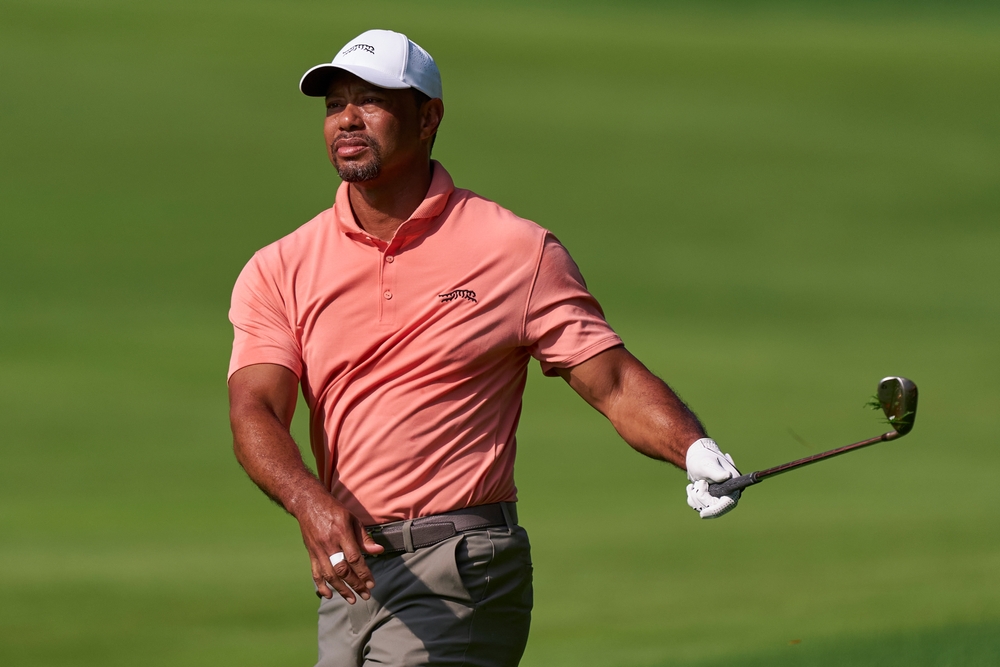
Tiger Woods did not rule out competing at the 2026 Masters when reporters asked him directly on Tuesday. He smiled and said no, it’s not off the table. Two words shifted the entire conversation around his recovery and refocused attention on whether golf’s greatest competitor might attempt one more remarkable comeback.
Woods spoke at Riviera Country Club near Los Angeles where he hosts this week’s Genesis Invitational, offering his most detailed public update in months. He confirmed he’s back to hitting full shots, acknowledged the grind of yet another surgery and left Augusta National firmly in discussion without committing to anything specific. That ambiguity is deliberate. Woods understands the power of possibility better than anyone in sports.
Recovery continues testing his patience and body
The past year threw multiple obstacles at Woods that would have ended most athletes’ careers. He withdrew from the 2025 Genesis Invitational after his mother’s death, ruptured his Achilles while training at home in March and underwent his seventh back surgery last October involving a disc replacement procedure. Each setback raised serious questions about whether competitive golf remained realistic.
He told reporters the disc replacement remains sore and recovery simply takes time. He referenced Will Zalatoris, who returned to competition following his own back surgery, as a comparison point. Woods acknowledged he’s older than the 29-year-old and his body has absorbed considerably more punishment over the years, making his timeline naturally longer. Progress has been real but uneven as he rebuilds strength and endurance into a body that has endured more than most athletes ever will.
Augusta means everything to Tiger Woods
Augusta National represents something entirely different than any other tournament for Woods. He won there for the first time in 1997 at 21, collected his fifth green jacket in 2019 after an 11-year drought between majors and transformed that Sunday into one of the most watched moments in recent sports history. The final round drew more than 10 million television viewers with viewership climbing sharply through the closing holes.
He has played sparingly for years, protecting his body and targeting events that matter most. Finishing four competitive rounds has been the real obstacle. Augusta, with its familiar terrain and strategic demands he has studied for three decades, remains the most realistic venue for a competitive return. The Masters begins April 9 with no confirmed entry and no medical clearance announced, but Woods chose not to close the door.
The Champions Tour could provide a testing ground
Before Augusta, Woods could use the PGA Tour Champions circuit to test his game in competition. The over-50 tour allows carts, something Woods said he wouldn’t do on the PGA Tour but remains open to on the Champions circuit. Three March events in Boca Raton, Tucson and Newport Beach offer potential windows for competitive testing without full commitment.
He framed turning 50 as a genuine shift in thinking, one that made the cart option worth considering rather than dismissing outright. That flexibility suggests he’s adapting his approach to what his body can realistically handle while still competing at the highest levels.
What Woods returning to Augusta would actually mean
His presence continues to move the needle even when he’s not playing. Television partners, sponsors and tournament organizers all see measurable impact when Woods is in a field. The competitive landscape has changed dramatically around him. Scottie Scheffler emerged as the clear dominant force and a new generation leads the rankings.
None of that changes what a Woods appearance at Augusta would mean. If he walks through those gates in April, it won’t be ceremonial. It will be a genuine test of whether one of the greatest golfers in history has anything left on sport’s grandest stage. For now, he hasn’t said no—and in the world of Tiger Woods, that’s everything.
