


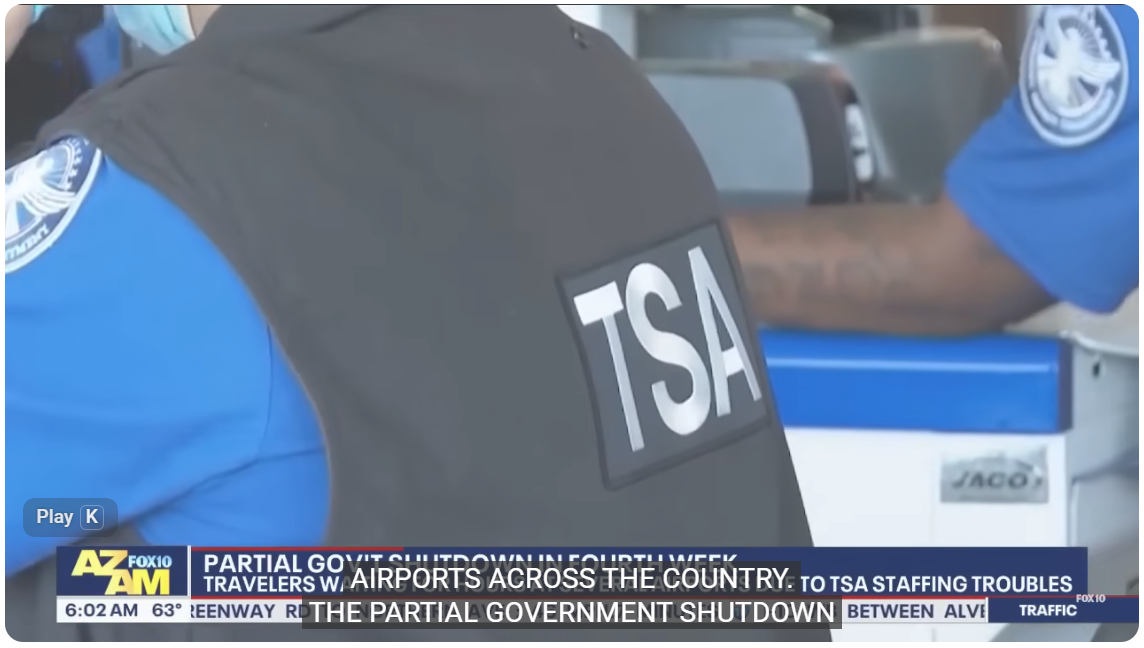
The partial government shutdown that began Feb. 14 has pushed absenteeism among Transportation Security Administration officers to levels that are straining checkpoint operations at airports across the country, according to internal TSA data obtained by CBS News. The agency has also recorded more than 300 employee departures since the funding lapse began, a number that raises concerns about longer-term staffing stability.
Roughly 50,000 TSA employees have been required to work without pay since DHS funding lapsed. The nationwide unscheduled absence rate climbed to an average of 6% during the shutdown, compared with roughly 2% before funding expired. The highest single-day national rate reached 9% on Feb. 23, with additional spikes of 8% on March 6 and 7% on March 9.
Houston and New York led the worst disruptions
At the local level, the numbers were far more severe. At William P. Hobby Airport in Houston, 53% of scheduled officers did not report to work on March 8, with 47% absent the following day. Security lines at Hobby stretched beyond three hours on March 8, with airport officials advising travelers to arrive four to five hours before their flights.
John F. Kennedy International Airport in New York averaged a 21% absence rate during the shutdown period, the highest among major airports nationally. Hartsfield-Jackson Atlanta International Airport followed at 19%, Hobby at 18%, Louis Armstrong New Orleans International Airport at 14%, and Pittsburgh International Airport at 13%. Weather contributed to additional spikes, with 77% of JFK officers and 53% at Newark Liberty International Airport calling out on Feb. 23 during a major blizzard.
New Orleans airport officials warned passengers to arrive at least three hours early after travelers missed flights due to extended lines. Atlanta issued similar cautions. The agency tracked 87 operational hotspots in a single day on March 8, with Houston recording 44 such incidents during the shutdown period, New Orleans 35, and Atlanta 32.
More than 300 officers have already left
TSA recorded 305 employee separations between Feb. 14 and March 9. Replacing those officers is not a quick process. Officers require four to six months of training before they can work checkpoints independently, meaning the departures will affect staffing well beyond when funding is eventually restored.
Former TSA Administrator John Pistole said the situation represents a significant morale blow for the agency and warned that adversaries could perceive a vulnerability as airport security lines grow longer and checkpoint staffing thins. He noted that after the 2025 shutdown, TSA lost nearly 1,100 security officers who resigned due to the absence of pay. Repeated shutdowns, he said, also undermine the agency’s ability to recruit new officers, as applicants weigh the risk of taking a job where unpaid work periods could recur.
Friday marked an additional financial threshold for TSA workers, with the first full missed paycheck expected to land, raising concerns that absence rates could climb further.
A political standoff with no deal in sight
A DHS spokesperson described TSA employees being forced to work without pay for the third time in roughly six months and called on Democrats to end what the agency characterized as political obstruction. Senate Democrats, meanwhile, offered to fund TSA and several other DHS agencies separately from disputed immigration enforcement funding. Senate Republicans blocked that effort, according to Senate Minority Leader Chuck Schumer.
Senator Brian Schatz said Democrats would support a bill funding the Coast Guard, TSA, FEMA, and the Cybersecurity and Infrastructure Security Agency if it excluded immigration enforcement agencies. Republicans have not agreed to that separation.
With spring break travel continuing to increase passenger volumes at airports nationwide, and no funding agreement in sight, TSA officials warned that conditions at the most affected airports could worsen before they improve.
