


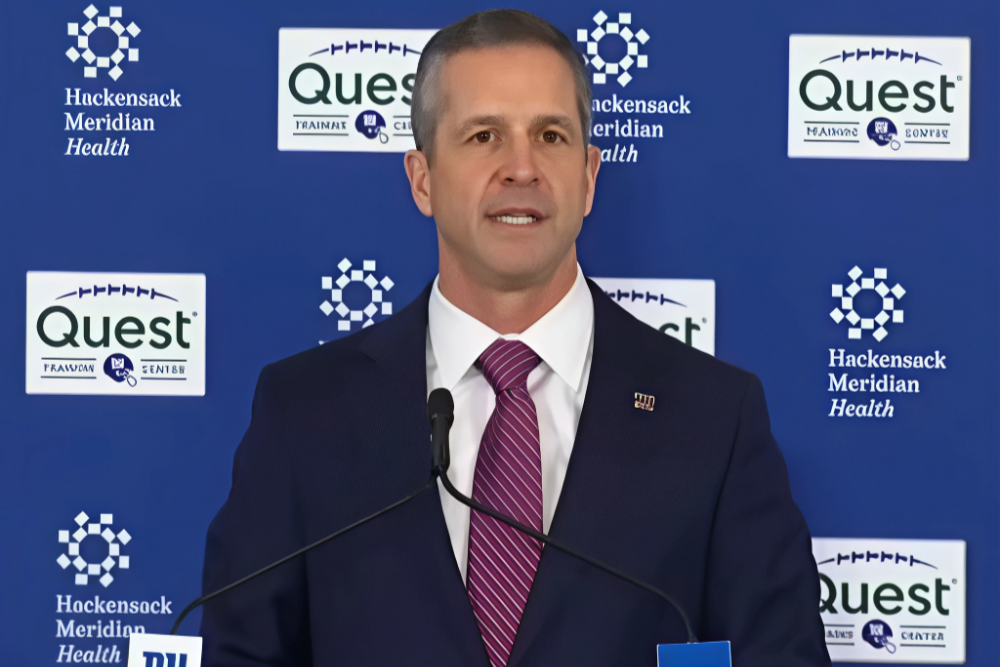
The New York Giants welcomed John Harbaugh on Tuesday as their 21st head coach, marking a significant shift in how the franchise operates. With 12 playoff appearances and a Super Bowl victory defining his career, Harbaugh arrives with a résumé few coaches can match and authority that reshapes traditional Giants operations.
The 18-season Baltimore Ravens veteran secured a five-year contract worth approximately $100 million, multiple league sources confirmed to ESPN. This substantial investment reflects not just his coaching prowess but the expanded influence he brings to personnel decisions.
Breaking Tradition
The organizational structure represents a departure from Giants convention. Harbaugh will bypass general manager Joe Schoen and report straight to ownership, flipping the traditional hierarchy where coaches answered to general managers who then interfaced with ownership.
This restructuring places Harbaugh in an elevated position. While he and Schoen will collaborate, Harbaugh’s proven track record suggests his voice will carry more weight in critical decisions.
Harbaugh downplayed the significance of reporting structures during his introductory press conference, suggesting media attention has inflated the issue beyond its actual importance.
The arrangement feels natural to him, mirroring what he experienced throughout his career. The focus, he emphasized, centers on effective collaboration rather than organizational charts.
Ultimately, everyone answers to ownership. The Mara and Tisch families maintain their positions as primary stakeholders, with Chris Mara taking a more active role following his brother John’s cancer diagnosis.
The Recruitment Process
Chris Mara pursued the coach aggressively, visiting him multiple times during the courtship. A pivotal lunch meeting, arranged by former Giants coach Tom Coughlin, launched the recruitment several weeks ago. The Giants operated with clear intention, choosing proactive engagement over reactive decision-making.
The result gave him substantial authority over personnel and organizational direction. Chris Mara addressed speculation about final decision-making power directly. While he holds tremendous influence, the framework remains collaborative. Complete autonomy would overwhelm any coach, making the job impossible to execute effectively.
He emerges as the most critical component in the organizational machine. However, success requires partnership among ownership, the general manager, and the head coach rather than unilateral control.
Schoen’s Perspective
Schoen played an instrumental role in recruiting Harbaugh, with both men engaging in extensive conversations that revealed mutual respect for each other’s football acumen. This foundation provides optimism for their working relationship despite the power dynamics.
With 26 years in the league, Schoen has witnessed various organizational structures. His experience taught him that head coaches and general managers must work in tandem for teams to succeed. Alignment matters more than hierarchy.
Formal titles and reporting structures remain secondary concerns. The priority involves working together toward shared conclusions that benefit the franchise. Schoen expressed no anxiety about the arrangement and anticipates a productive partnership with Harbaugh.
Building a New Culture
Harbaugh wasted no time beginning his tenure. At Tuesday’s press conference, he approached Giants players in attendance, including quarterback Jameis Winston, greeting each personally and exchanging brief words.
His vision for the franchise starts with cultural transformation from day one, beginning with player selection criteria.
The Football-First Philosophy
Harbaugh outlined his primary requirement that players must genuinely love football. This non-negotiable standard will guide roster decisions.
The building exists for football. The organization functions as a football team. Therefore, roster spots belong to individuals who embrace every aspect of the sport—games, practices, weightlifting sessions, meetings, and even the dining hall experience. Passion for football determines belonging.
This philosophy shaped his Baltimore tenure across 18 seasons. He learned this approach from mentor Andy Reid, who built championship cultures in Philadelphia using the same foundation.
Learning from Reid’s Success
Harbaugh consulted Reid about changing organizations. Reid’s remarkably successful second chapter in Kansas City, featuring three Super Bowl victories, provides an encouraging blueprint.
Reid offered simple wisdom about Harbaugh’s transition from Baltimore to New York.
Change, Reid suggested, can yield positive outcomes.
That perspective frames Harbaugh’s approach to his Giants challenge. With his proven methodology, substantial organizational support, and lessons learned from one of football’s greatest minds, Harbaugh enters this new chapter equipped to reshape the Giants into contenders once again.
The franchise’s willingness to restructure traditional power dynamics demonstrates their commitment to Harbaugh’s vision. Whether this bold gamble pays dividends remains to be seen, but the Giants have clearly signaled their belief that Harbaugh represents their path back to championship contention.
Source: ESPN
