


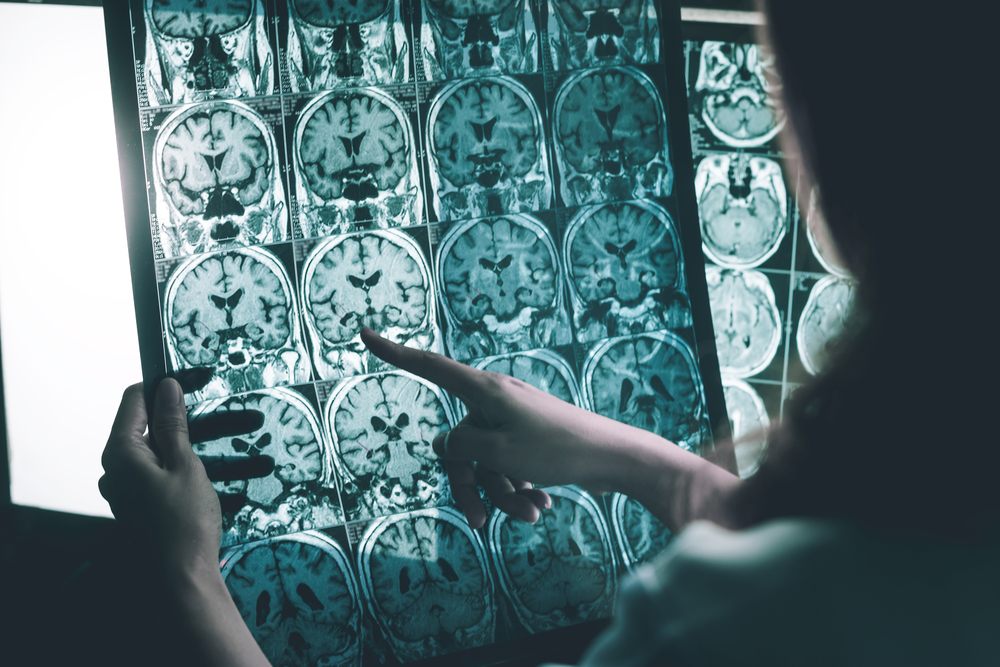
Alzheimer’s research has been chasing the same lead for decades. Clear the plaques, stop the disease. It was a reasonable theory. It was also, by most measures, a theory that has not translated into a cure, a reliable treatment or much hope for the millions of families watching someone they love disappear in slow motion.
Then a study landed in Nature that pointed somewhere completely different. Not at the plaques. Not at a new drug. At a mineral. A simple, naturally occurring mineral that your brain depends on — and that appears to quietly vanish in the earliest stages of Alzheimer’s before most people even know anything is wrong.
The mineral is lithium. And what researchers found when they restored it in the lab is the kind of result that makes scientists use words like “reversal.”
Your brain runs on lithium and nobody told you
When most people hear lithium, they think psychiatric medication — the mood stabilizer prescribed for bipolar disorder and depression. That is one form of it. But lithium also exists naturally in the body in trace amounts, absorbed through certain foods and mineral-rich water, and the brain appears to depend on it in ways that researchers are only now beginning to fully understand.
A study published in Nature analyzed brain tissue from people across the full cognitive spectrum — healthy brains, brains with mild impairment and brains in the advanced stages of Alzheimer’s. Researchers examined 27 different trace metals. Of all of them, lithium showed the most dramatic difference between healthy and diseased tissue.
Here is the detail that changes everything: lithium levels were already declining in people with only mild cognitive impairment — before a full Alzheimer’s diagnosis, before significant symptoms, before most people would have any reason to be concerned. By the time the disease had fully developed, lithium had dropped substantially. This is not just a side effect of the disease progressing. The timeline suggests it may be part of what allows it to.
The part about the plaques that nobody expected
For decades, amyloid-beta plaques — the protein clusters that build up in Alzheimer’s brains — have been treated as the enemy. The assumption was simple: find a way to clear them, and you stop the disease. What this research found is considerably more complicated and considerably more interesting.
Lithium, it turns out, binds to those plaques. And the researchers now believe it may be doing so as a protective mechanism — that lithium attaches to amyloid-beta as a way of defending the brain, and that when lithium levels fall too low, that defense collapses along with them.
It reframes everything. The plaques may not be purely the cause of damage. They may also be a site where the brain is actively trying to protect itself. And the mineral that makes that protection possible is the one that disappears first.
What happened in the lab that made people pay attention
Researchers fed mice a lithium-depleted diet. The mice developed accelerated aging, brain inflammation and cognitive decline that mirrored what is seen in human Alzheimer’s patients. Then they gave those cognitively impaired mice lithium orotate — a specific form of the mineral.
The Alzheimer’s-related brain damage reversed. Memory function returned.
Not slowed. Not stabilized. Reversed. That is the word researchers used, and it is the word that has the scientific community simultaneously excited and urging caution — because mouse studies, as promising as they are, do not automatically translate to human outcomes. Controlled clinical trials in humans are the essential next step, and they have not yet been completed.
What makes this finding particularly unusual is that lithium appears to work through multiple pathways at once — reducing brain inflammation, supporting healthy neural connections and protecting against cellular damage — rather than targeting a single mechanism the way most current approaches do.
Why this could be bigger than another promising study
Lithium’s safety profile is already well established. Decades of use in psychiatric medicine mean researchers have a significant head start on understanding how the body handles it, which could accelerate development if human trials confirm what the lab results suggest.
The research also raises the possibility of early detection through lithium level testing — identifying people at elevated risk before symptoms appear, in the same way cholesterol screening flags cardiovascular risk years before a heart attack. That kind of early window does not currently exist for Alzheimer’s, and the absence of it is a significant part of why the disease is so hard to treat.
None of this means running out to supplement with lithium. Anyone concerned about cognitive health or Alzheimer’s risk should speak with a doctor before drawing conclusions from findings that have not yet been confirmed in human trials. What it does mean is that one of the most devastating diseases in modern medicine may have a new, completely different lead — and this one, for the first time in a while, has results behind it.
