


Losing happens in tennis. Even the best players in the world drop matches they probably shouldn’t. But when it happens twice in a row to someone who spent the better part of two years looking nearly invincible, people start asking questions and Jannik Sinner knows it.
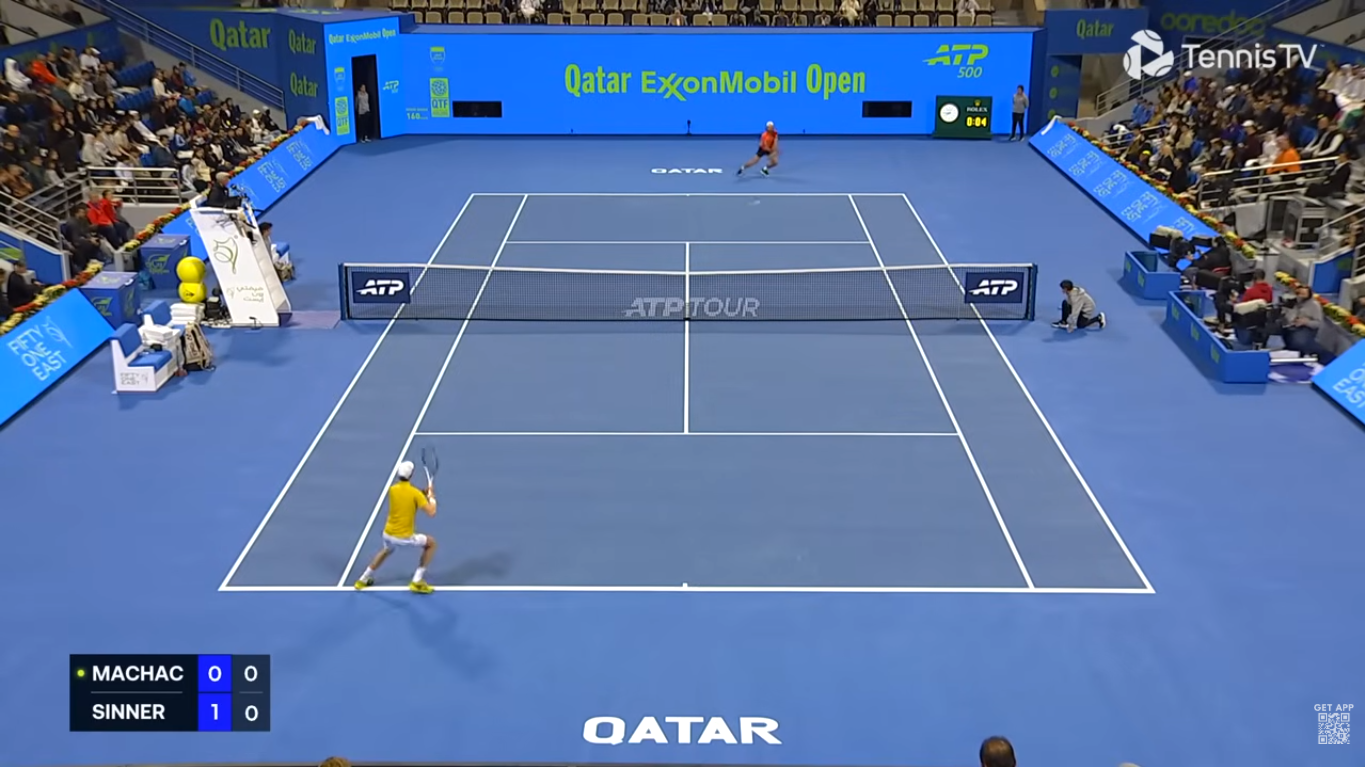
The Italian world No. 2 was eliminated from the Qatar Open in Doha on Thursday, falling 7-6 (3), 2-6, 6-3 to 20-year-old Czech rising star Jakub Mensik. Sinner had entered the tournament hoping to reach the semifinals and mirror what rival Carlos Alcaraz had done at the same event. Instead, he’s heading home early, dealing with the kind of form questions that were essentially nonexistent for him over the past two seasons.
What went wrong in Doha
Mensik was excellent that much is worth acknowledging upfront. The 20-year-old is one of the most exciting young talents in the men’s game, and he played a terrific match from start to finish. But Sinner wasn’t at his best either, producing uncharacteristic errors off his forehand that gave Mensik openings he wouldn’t typically get against a locked-in version of the world No. 2.
The numbers underline how unusual this stretch has been. Thursday marked the first time since October 2023 that Sinner had lost a completed hard court match to a player ranked outside the top 10. He had also not failed to reach the final at back-to-back events since the summer of 2024. Both streaks are now gone, snapped within weeks of each other following his semifinal loss to Novak Djokovic at the Australian Open.
Sinner’s perspective on the rough patch
To his credit, Sinner isn’t hiding from the results or making excuses. He acknowledged that Mensik served exceptionally well, making returns difficult throughout the match. He pointed to a tough break and a couple of mistakes in the third set as the turning point moments he felt he could have handled better. There’s disappointment there, but no alarm.
His broader message was one of perspective. Two years of elite-level dominance earns you the right to weather a dip without treating it as a crisis, and Sinner seems to genuinely believe that. He’s maintained publicly that he knows his tennis is still there and that a brief downturn isn’t something that will shake his confidence in the bigger picture.
The Alcaraz gap and what’s at stake
Context matters here. A year ago, Sinner was navigating the fallout from a doping case, eventually reaching an agreement with the World Anti-Doping Agency that led to a three-month ban. He didn’t return to competitive play until the Rome Masters in May. The fact that he’s now a fixture near the top of the rankings and competing regularly is its own kind of story.
But the Alcaraz gap is a real concern heading into the next stretch of the season. By the end of this week, Alcaraz could lead Sinner by more than 3,000 ranking points a significant margin that will take sustained results to close. The Sunshine Double of Indian Wells and Miami next month represents the most immediate opportunity to do exactly that. Both are Masters-level events that carry enormous ranking weight, and both are events where Sinner has shown he can compete at the highest level.
What comes next
The good news for Sinner is that a loss in Doha, while disappointing, isn’t a catastrophe. The hard court swing through California and Florida is where the real points are up for grabs, and arriving with something to prove after back-to-back early exits is not the worst motivational fuel.
Mensik will celebrate a legitimate upset. Sinner will recalibrate, work on that forehand, and show up in Indian Wells ready to remind everyone what two years of dominance actually looks like when it’s firing on all cylinders.
The dip is real. The panic, at least from Sinner’s corner, is not.
