


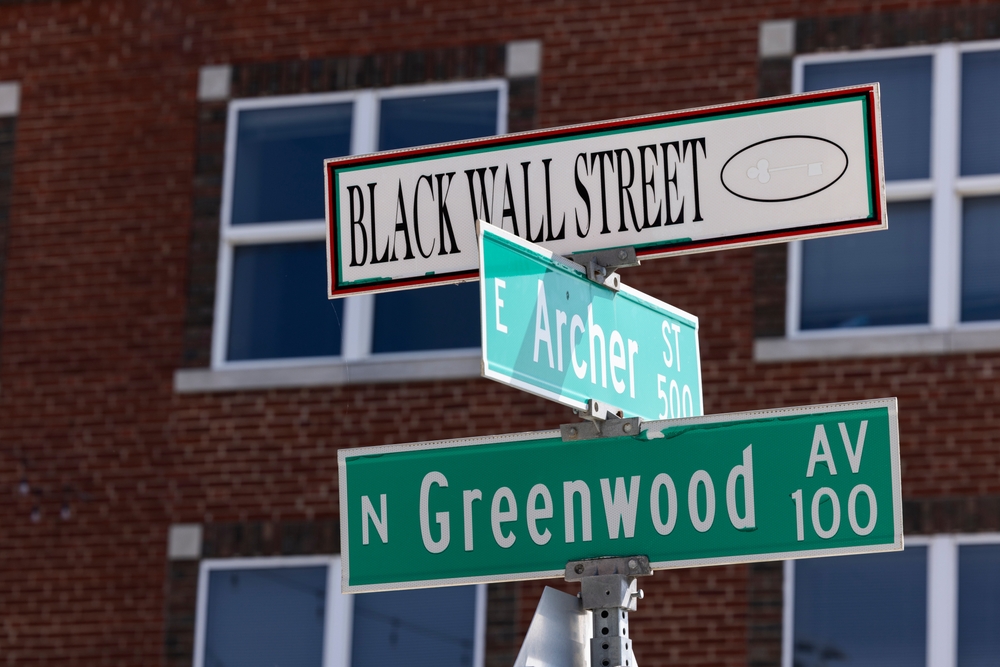
The corner of Archer Street and Greenwood Avenue in Tulsa, Oklahoma holds more history per square foot than almost anywhere else in America. That gold-and-green street sign — Black Wall Street, planted right above North Greenwood Ave — is not just a marker. It is a declaration. And right now, that corner is at the center of a national conversation that is only getting louder.
Greenwood District, once the most prosperous Black community in American history, was torn apart by a violent white mob in the 1921 Tulsa Race Massacre. For decades, the story was buried, the losses went uncompensated, and the neighborhood was systematically chipped away by redlining, eminent domain, and federal highway projects that carved straight through its heart. But Greenwood is not waiting for an apology. It is building something new — and the rest of the country is starting to pay attention.
A rally that became a cultural movement
Now in its fifth year, the multi-day Black Wall Street Biker Rally has been nominated as one of the Ten Best Cultural Festivals in the United States by USA Today. That nomination is not just an honor for a motorcycle event — organizers say it is a recognition of history, culture, and the enduring spirit of an entire community.
The festival blends live music and cultural celebrations with educational sessions focused on economic empowerment, financial literacy, entrepreneurship, and health and wellness. Every component of the rally is intentional, designed to reflect Greenwood’s past while actively building toward its future. Thousands of bikers and visitors travel from across the country each year to attend — some riding hundreds of miles to be part of something they say cannot be found anywhere else.
What Greenwood built and what was taken
Before the destruction, the Greenwood District had 108 Black-owned businesses by 1921, including 41 grocery and meat markets, 30 restaurants, 11 boarding and rooming houses, five hotels, and 33 Black professionals including 15 physicians and surgeons, four pharmacists, and three lawyers. It was a fully functioning, self-sufficient ecosystem built by Black Americans who were legally barred from spending their dollars anywhere else — and who turned that exclusion into extraordinary collective power.
Booker T. Washington himself visited Greenwood and was so impressed by its growth and success that he bestowed upon it the title that has endured more than a century — Black Wall Street. That name carries the full weight of what was built there, and what was so deliberately destroyed.
Greenwood rising from the ground up
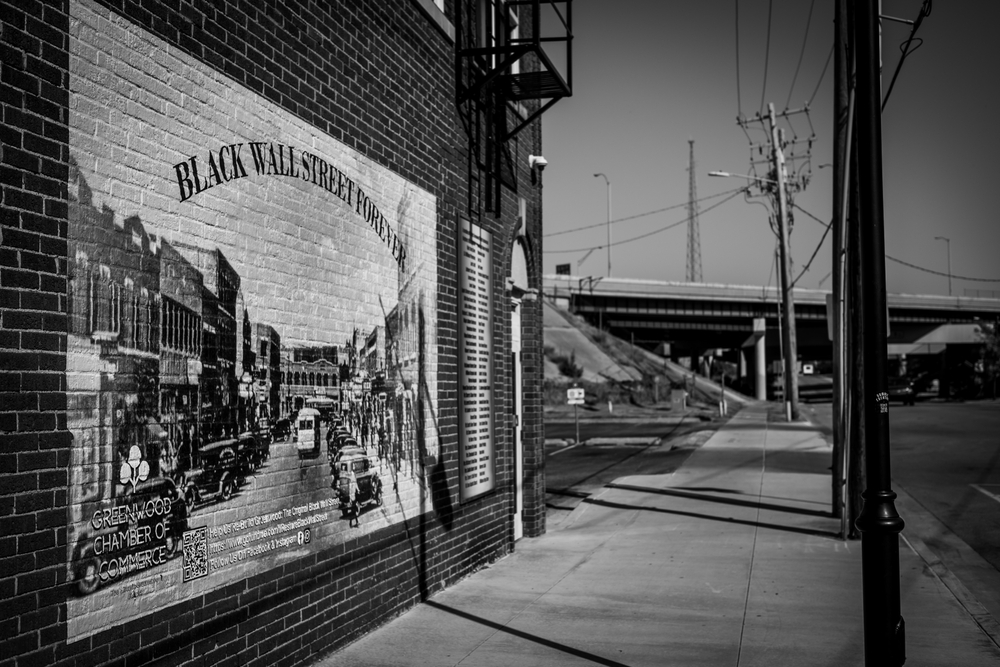
The mural on that brick wall says it plainly — Black Wall Street Forever. It is not nostalgia. It is a mission statement. After over a century of marginalization and disinvestment, residents and Tulsa’s development authority embarked on designing a community-driven development plan centered on equitable economic mobility and community ownership of real estate.
The Greenwood Rising History Center now stands on the very site where Black Wall Street once thrived, bringing the story to vivid, immersive life for visitors from around the world. Interactive kiosks, touchscreen timelines, and community partnerships are turning the area into both a classroom and a catalyst.
A global story with deep HBCU roots
BlackWallStreet.org has officially established May as Black Wall Street History Month, a global initiative with events planned in partnership with surviving families, cultural organizations, universities, and civic leaders. Educational institutions are being encouraged to integrate Black Wall Street history into their spring curricula — a direct bridge to the HBCU community, whose institutions have long carried the spirit of Greenwood in their classrooms, business programs, and entrepreneurship centers.
The connection runs deep. Both Greenwood and America’s HBCUs were built on the same defiant premise — that Black excellence does not require outside validation to thrive. That premise is as urgent today as it was in 1921. And on the corner of Archer and Greenwood, that gold-lettered sign is still standing to prove it.
