


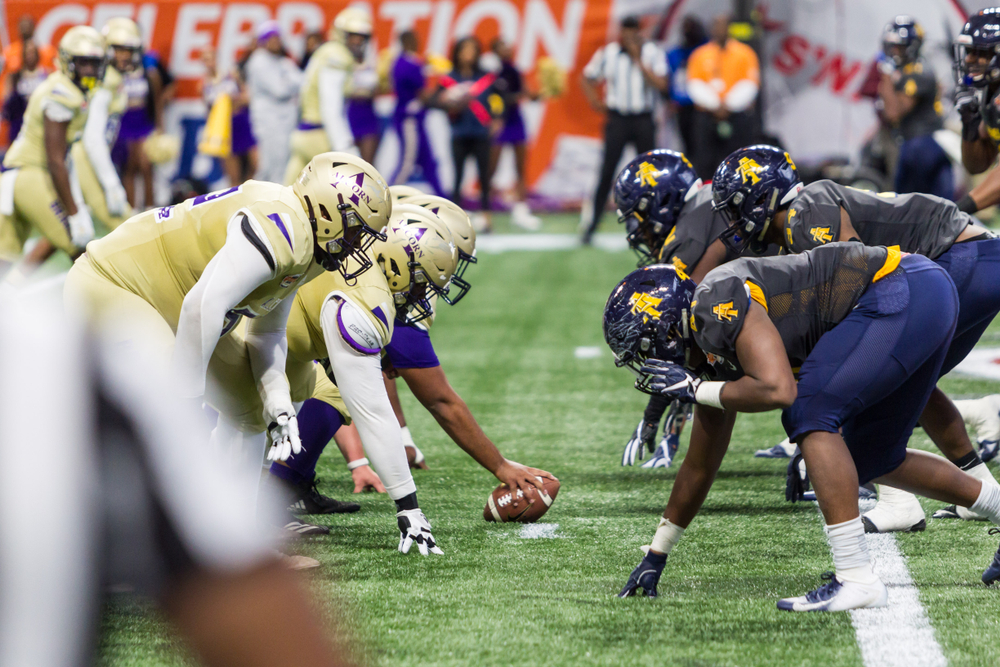
The 2026 NFL Scouting Combine is underway in Indianapolis, and once again, a glaring absence has the HBCU football community asking hard questions. Of the 319 players invited to participate in the league’s most prestigious pre-draft showcase, not one currently plays for an HBCU program. Zero. The number is stark, and for a community that has long fought for visibility in professional football, it stings.
The omission is not just a data point — it is a pattern. And this year, the HBCU community is not staying quiet about it.
HBCU Football’s Shrinking Combine Presence
The road to zero did not happen overnight. HBCU representation at the NFL Combine has been quietly eroding for years. In 2024, three HBCU players received invitations. In 2025, that number fell to one — Alabama A&M offensive lineman Carson Vinson, who was eventually selected in the fourth round by the Baltimore Ravens. Now in 2026, the number has hit the floor entirely.
The history makes the silence louder. Between 1960 and 1970, HBCU programs produced 31 percent of all professional draft picks. The NFL still counts 35 Pro Football Hall of Famers among HBCU alumni. The talent pipeline that built professional football now struggles to get a single player into a four-day evaluation event.
The Transfer Portal Problem Hurting HBCU Prospects
Part of the story lies in the transfer portal era. Two players participating in this year’s combine have direct HBCU roots — Virginia running back J’Mari Taylor, who built his foundation at North Carolina Central, and Missouri wide receiver Kevin Coleman Jr., who started his career at Jackson State. Both transferred to Power Four programs before earning their invitations.
Their paths reflect a broader shift. Elite talent from historically Black colleges is increasingly being recruited away by major programs offering NIL money, bigger platforms, and greater national exposure. The gravitational pull is difficult to resist — and the result is that these programs are losing their most marketable prospects before they ever get a chance to represent their schools on the national stage.
J’Mari Taylor, for his part, has been vocal about his pride at the combine. He has made clear that North Carolina Central shaped him as a player and a person, and that he would make the same choice again. The HBCU spirit, he said, travels with him.
One Exception That Proves the Rule
There is one update worth celebrating. North Carolina A&T kicker Andrew Brown received a late invitation to the combine’s Specialist Showcase after an impressive performance at the HBCU Legacy Bowl. Brown is the first kicker in Aggies history to earn a combine invitation, and he stands as the only current player participating in Indianapolis this week.
His path is telling. Brown did not transfer. He did not chase a bigger brand. He built his résumé entirely at North Carolina A&T, where he became the program’s all-time leader in field goals made with 51, drilled all five of his 50-yard attempts last season, and set the school record with a 56-yarder. His invitation is a reminder that the HBCU path to the NFL is still open — but it is narrow, and the margin for error is unforgiving.
Why the NFL Must Do Better for HBCU Programs
The frustration within the historically Black college and university community goes beyond this year’s invite list. Sports agent Rasheeda Liberty has been among the most direct voices, publicly calling the situation a reflection of systemic issues in how NFL teams evaluate talent outside of major programs. Her argument is straightforward — scouts need to show up in person, build relationships with coaches, and watch games live rather than relying on late-round tape review.
The infrastructure for change already exists. The Legacy Bowl, broadcast on NFL Network, has grown into a legitimate scouting hub with all 32 teams represented. The Combine offers additional evaluation opportunities. Former players like Decobie Durant and Joshua Williams have proven that this talent translates at the highest level — Durant as a key piece of the Los Angeles Rams’ defense, Williams as part of two championship teams with the Kansas City Chiefs.
The talent is there. The question is whether the NFL is willing to do the work to find it.
