


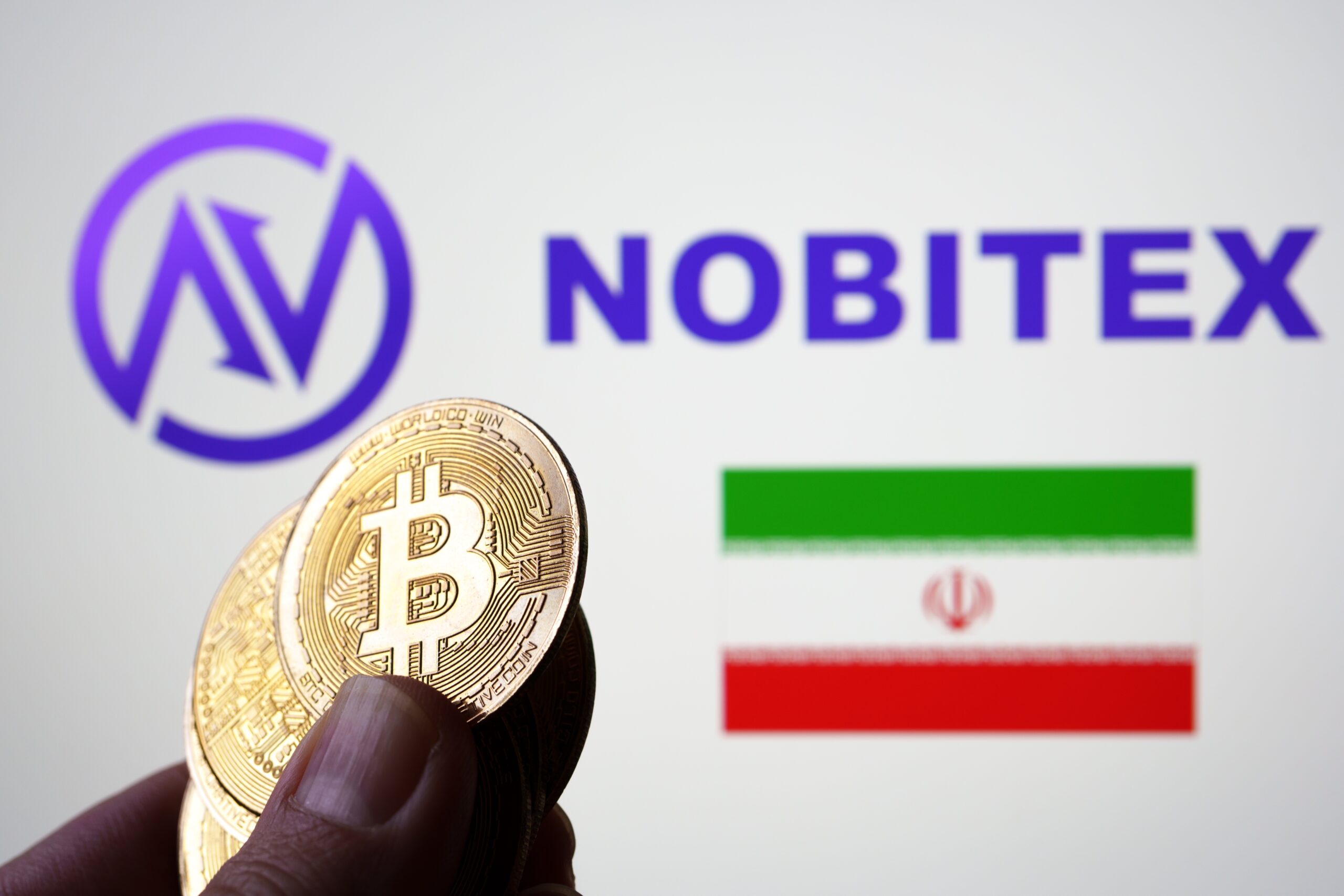
When strikes began hitting Iran on a Saturday morning, something else started moving almost immediately — money. Blockchain data shows that millions of dollars in cryptocurrency left Iranian exchanges in the hours that followed, offering a rare and unsettling window into how Iranians respond when the ground beneath them, literally and financially, begins to shift.
The outflows were swift. In just one hour after the strikes began, more than two million dollars flowed out of Iranian crypto exchanges. By midday, the numbers had climbed further, with Iran’s largest crypto exchange, Nobitex, recording peak outflows of nearly three million dollars in a single hour. That figure represented roughly eight times the platform’s typical peak for that same window just one day earlier.
Between Saturday and Monday, a total of more than ten million dollars in crypto exited Iranian exchanges. The data, compiled by blockchain analytics firms, paints a picture of a population that has quietly built crypto into its financial survival toolkit.
Nobitex and the anatomy of a financial shock
Nobitex has become something of a barometer for economic anxiety in Iran. The platform, which operates as the country’s largest crypto exchange, sits at the intersection of everyday financial activity and geopolitical turbulence. When instability rises, transaction volumes on platforms like Nobitex tend to rise with it.
Crypto transaction volumes across Iran reportedly reached between eight and eleven billion dollars in 2025 alone. That figure reflects both ordinary citizens looking for alternatives to a weakened national currency and more powerful actors using digital assets for less transparent purposes. The growing scale of that ecosystem makes moments like last weekend’s spike harder to dismiss as coincidence.
Researchers have been careful not to overreach in their conclusions. Crypto wallet addresses are pseudonymous, recorded on the blockchain as strings of letters and numbers rather than names or institutions. That anonymity makes it genuinely difficult to determine who moved the funds or why.
Reading the signals without jumping to conclusions
The explanations for the outflows are several and not mutually exclusive. Some of the movement almost certainly came from ordinary Iranians protecting personal savings in a moment of fear. Some may reflect exchanges managing their own internal liquidity during a volatile period. Others could represent more deliberate efforts by institutional or state-connected actors to shift funds out of view.
Blockchain researchers flagged that initial tracing suggested much of the money was heading toward overseas crypto exchanges, which raises the possibility of capital flight. A separate analysis described the Nobitex flows as more consistent with stress-driven behavior than a sweeping systemic exodus. The distinction matters, but neither reading is particularly reassuring.
The United States has been paying close attention. Earlier this year, American authorities were actively examining whether certain crypto platforms had become tools for Iranian officials to sidestep international sanctions. Last weekend’s data is unlikely to quiet those concerns.
Why this moment matters beyond Iran
Crypto remains a relatively small piece of the global financial system, but its relevance in countries with fragile currencies or restricted banking access continues to grow. The International Monetary Fund has noted that digital currency adoption is accelerating in emerging markets, and Iran is among the most telling examples of why.
What happened in those hours after the strikes is not just a story about Iran. It is a preview of how crypto functions as a financial pressure valve in moments of national crisis, moving silently, quickly and at a scale that is only becoming harder to ignore.
