


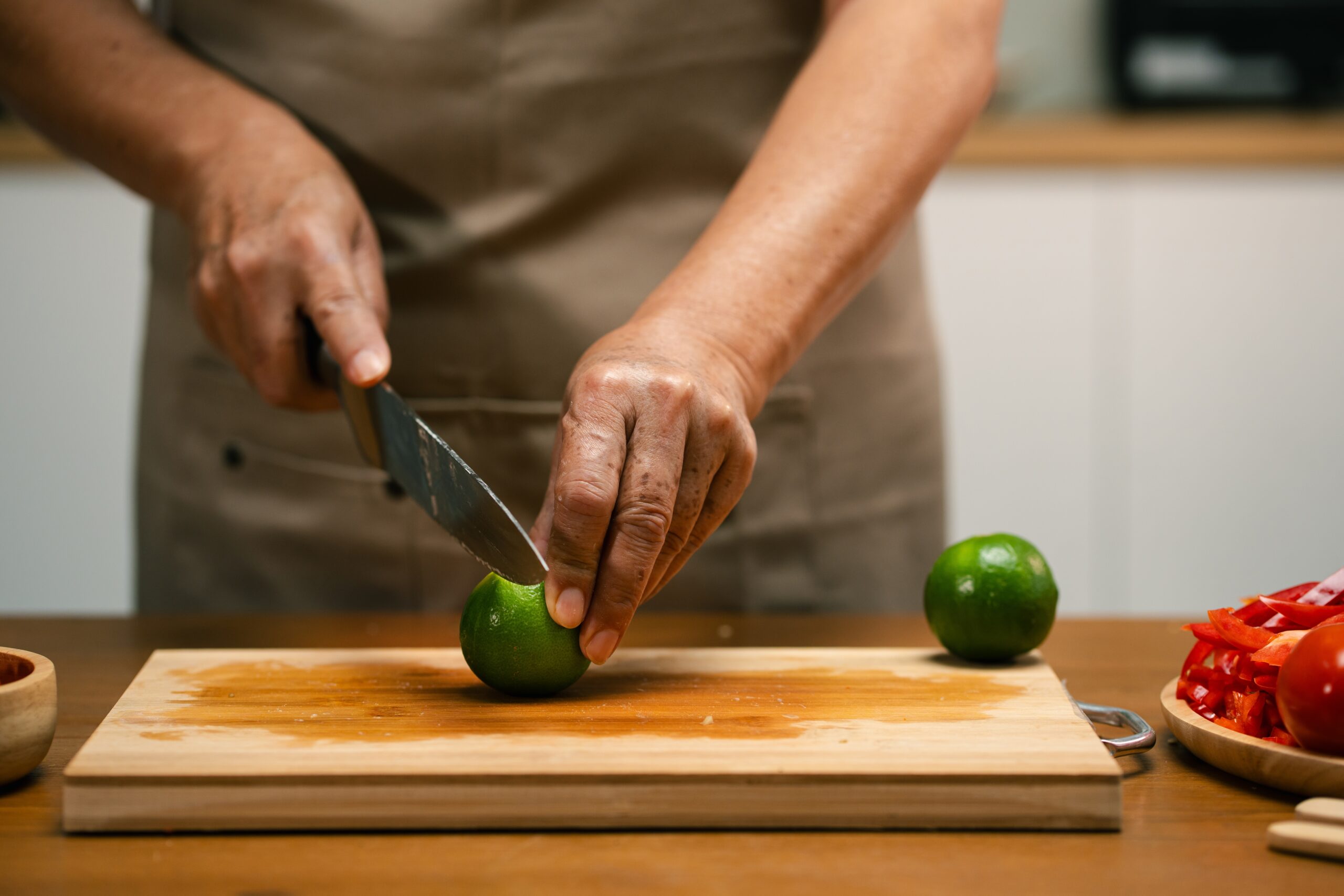
New research and expert insight challenge decades of kitchen wisdom about which cutting board material is truly the safest choice.
It is one of the most overlooked decisions in the kitchen. Most people grab whatever cutting board is closest and get to work, but where your knife lands matters more than you might expect. Cutting boards sit at the center of cross-contamination risk in the home kitchen, and the material you choose, along with how you care for it, plays a direct role in how safely you are handling food.
For a long time, plastic was the default recommendation. It seemed logical. Hard, smooth, easy to clean. But a growing body of research and a shift in expert opinion suggest the picture is more complicated, and for many home cooks, wood may actually be the smarter choice.
What makes a cutting board safe
The real question with any cutting board is not whether it looks clean, but whether bacteria can survive on its surface after washing. The key factors are knife grooves, moisture retention and how porous the material is. Pathogens like salmonella and E. coli do not need much to hold on, and a surface that traps water or has deep scratches gives them exactly the environment they need to survive.
That said, food safety professionals agree that material alone does not determine risk. How thoroughly a board is washed and how completely it dries between uses matter far more than what it is made of.
The case for wooden cutting boards
Wood spent years with a bad reputation. It was seen as porous and difficult to sanitize, while plastic was held up as the safer option. Then research began to challenge that assumption. Studies found that wood absorbs bacteria into its fibers, where the bacteria tend to die off as long as the board dries completely between uses. An older hardwood board that is properly dried actually carries lower risk than a heavily scored plastic board that retains moisture in its grooves.
Not all wood is the same. Dense hardwoods like maple, walnut and cherry have tighter grain structures that limit how deeply bacteria can penetrate. Some also appear to have naturally occurring antimicrobial properties. These boards hold up well to everyday prep, are gentler on knife edges and can last for years with proper care. Rubbing with oil regularly, washing by hand with hot soapy water and standing upright to dry completely are the main requirements.
The problem with plastic
Plastic boards are nonporous when new, which is why commercial kitchens rely on them. They are dishwasher-safe and easy to color-code for separating raw proteins from produce. But the benefit of plastic degrades over time. As knives cut into the surface, grooves form and deepen, and once they are deep enough, bacteria can survive even thorough scrubbing. A heavily used plastic board becomes harder to sanitize than a well-maintained wooden one.
There is also a newer concern worth noting. Research published in recent years has found that cutting on plastic boards releases microplastic particles into food, and the number of particles increases as the board ages and develops more scoring. Polyethylene and polypropylene, the plastics most commonly used in cutting boards, are among the microplastics most frequently detected in human blood and tissue samples. The long-term health effects of microplastic accumulation are still being studied, but the finding has added another reason to think carefully about when to replace a worn plastic board.
Bamboo and composite options
Bamboo boards are denser and more water-resistant than many traditional woods, which sounds like an advantage. But that density also makes them harder on knife edges and causes surface micro-abrasions to develop faster, creating more grooves over time. Bamboo boards are also glued together from strips, and the adhesive lines can be weak points where bacteria accumulate or the board begins to separate with repeated washing.
Composite boards, made from compressed wood fibers and resin, offer a low-maintenance middle ground. They resist deep grooving better than plastic, are often dishwasher-safe and hold up well to regular use. Quality varies depending on the resin used, so choosing a reputable brand matters.
The habit that matters most
Regardless of material, the single most important practice is drying your board completely after every wash. Moisture is what allows bacteria to thrive, not the wood or plastic itself. Wash with hot soapy water, rinse well and stand the board upright so air can circulate on both sides before storing it flat. A board that sits wet on the counter or gets stored while still damp is a risk no matter what it is made of.
For most home kitchens, a well-maintained hardwood board is a reliable, durable and genuinely safe choice. Plastic remains practical for households that want dishwasher convenience or need to separate raw proteins with color-coded boards, but those boards should be replaced once scoring becomes deep and widespread.
The healthiest cutting board is ultimately the one you clean properly and replace when it is time.
