


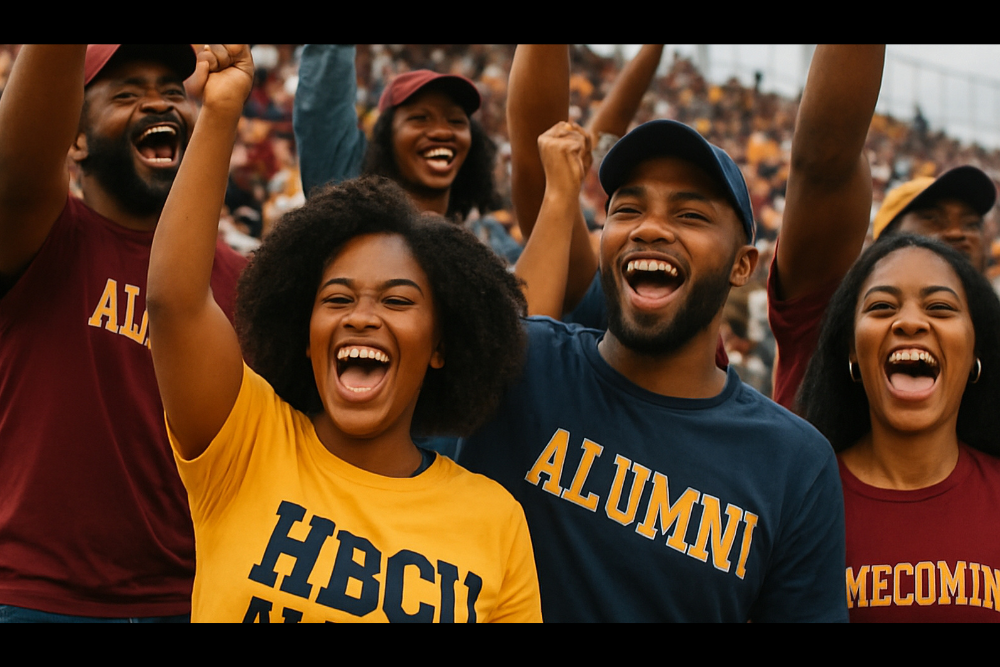
There are institutions that educate. Then there are institutions that transform. HBCUs have always belonged to the second category — and the generations they have shaped over more than a century and a half are living proof of that distinction.
Historically Black Colleges and Universities were born out of necessity in an era when higher education was deliberately kept out of reach. What emerged from that resistance was not just a network of schools — it was a movement. A culture. A proving ground for some of the most influential minds, leaders, and creators the world has ever seen.
That culture did not stay on campus. It traveled with every graduate who walked across a stage and carried it forward.
What HBCU Culture Actually Means
HBCU culture is difficult to define precisely because it operates on multiple levels at once. On the surface it is the yard, the band, the homecoming energy that draws tens of thousands of alumni back every single year without fail. It is the step shows, the traditions, the rivalries, and the bonds that feel more like family than friendship.
But underneath all of that is something far more structural. HBCU culture is a deliberate environment of affirmation. It is the experience of being seen, challenged, and celebrated all at once — of existing in a space where excellence is expected and belonging is never in question.
For many students, it is the first time an institution has felt genuinely built for them.
The Legacy of Leadership These Institutions Produce
The list of HBCU alumni who have gone on to reshape their fields is extraordinary. Lawyers, engineers, artists, scientists, entrepreneurs, politicians, and cultural icons — generation after generation has walked out of these campuses ready to lead.
What these institutions do particularly well is develop the whole person. Academic preparation is a given. But HBCU graduates consistently speak about something less tangible — a confidence, a sense of purpose, and an unshakable identity that was forged on campus and never left them.
That is not accidental. It is the product of an environment intentionally designed to produce exactly that kind of graduate.
Homecoming as a Cultural Institution
No conversation about HBCU culture is complete without homecoming. What happens on these campuses every fall goes far beyond a football game and a parade. HBCU homecoming is a reunion, a celebration, a cultural festival, and a community gathering all compressed into one electric weekend.
Alumni who graduated decades ago return with the same energy as current students. The sense of pride is palpable and entirely contagious. For many, homecoming is the one time each year that reminds them exactly who they are and where they come from — and why that matters.
It has become one of the most celebrated traditions in the country and shows absolutely no signs of slowing down.
Why the Next Generation Still Chooses HBCUs
In an era of unprecedented college choice, students continue to choose HBCUs deliberately and enthusiastically. Enrollment has surged in recent years as a new generation seeks something specific — community, identity, excellence, and an environment that pushes them without making them feel like outsiders.
Many prospective students visit a campus once and never look at another school again. The feeling is that immediate and that powerful.
HBCUs are not a consolation prize or a niche option. They are a first choice — and for the generations they continue to produce, they are often described as the best decision ever made.
A Culture Built to Last
What makes HBCU culture truly extraordinary is its durability. Trends shift. Institutions change. But the pride, the community, and the sense of shared purpose that these schools generate have remained constant across generations and continue to grow stronger with every graduating class.
The culture does not live in the buildings. It lives in the people those buildings helped create — and those people are everywhere.
