


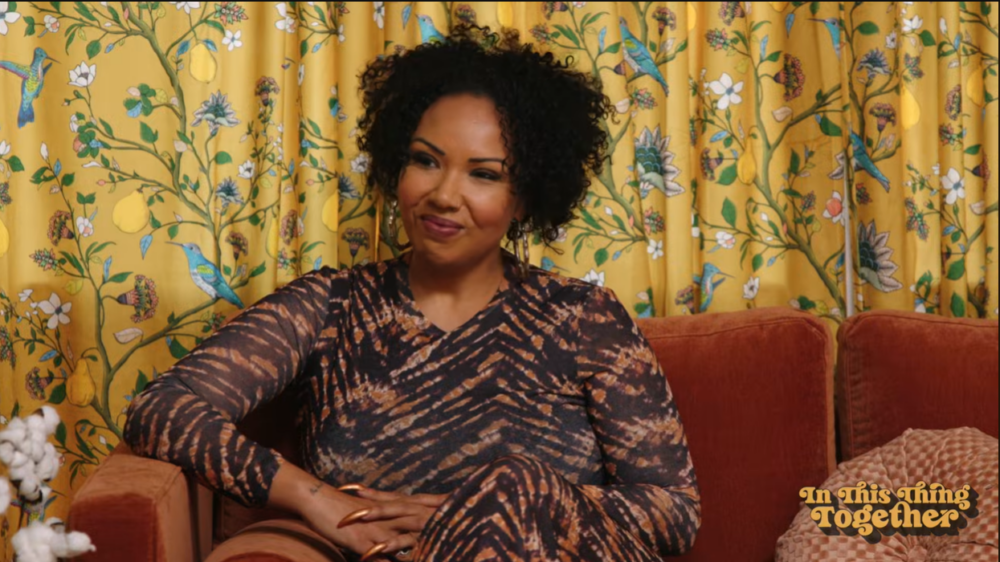
For far too long, the narrative surrounding Black single mothers has been flattened into something unrecognizable a one dimensional image built on pity, judgment and tired stereotypes that leave little room for the truth of who these women actually are. Veteran journalist and cultural critic Jamilah Lemieux decided she had seen enough of that story and set out to write a better one.
Her debut book, Black. Single. Mother. Real Life Tales of Longing and Belonging, published by Penguin Random House, is part memoir and part anthology. It is an unflinching, layered and deeply human look at Black single motherhood that situates these women’s experiences within the broader context of patriarchy, white supremacy and the complicated dynamics of Black communities. It is also, at its core, a book about belonging and about finally giving these women their flowers.
The writer behind the book
Lemieux brings considerable weight to this subject. A Howard University alumna and former senior news and lifestyle editor at Ebony, she has written about race, gender and culture for outlets including Essence, The Guardian, The New York Times and The Washington Post. She has held senior roles at Interactive One and served as a consultant on the HBCU campaign tour for former presidential candidate Elizabeth Warren. And in a detail that might surprise readers, she once worked as a camp counselor for Malia Obama when the former First Daughter was just 4 years old.
Despite her impressive career, this is her first book and it took five years of collaboration with her literary agent, Tanya McKinnon, before the right idea came into focus. Lemieux resisted the subject for a long time, partly out of a fear that committing to write about Black single motherhood would somehow solidify that identity permanently. Once she let go of that resistance, she recognized just how much a book like this could have meant to her when she was pregnant and navigating early motherhood alone.
22 women, one shared truth
What began as a plan to interview five or six women eventually grew into something much larger. Lemieux spoke with 21 Black single mothers in addition to sharing her own story, bringing the total to 22 voices across the book. The women span a wide range of ages, geographic locations and economic backgrounds. Some are close friends. Others are professional contacts or women she connected with through social media.
The intentional diversity of the group was central to the book’s mission. Lemieux wanted to make clear that there is no single experience of Black single motherhood that these women are living full, vibrant, complicated lives and that their only universal trait is an unwavering commitment to their children.
Clearing up the language around single motherhood
One of the book’s more thought provoking threads is the distinction between single mothers and unmarried mothers, two groups that are frequently and incorrectly treated as interchangeable. Lemieux draws a clear line: a single mother is a woman who parents as a single person, regardless of whether she has a co-parent or a partner. The two roles do not cancel each other out.
She also takes issue with the double standard that shapes how society assigns credit and stigma. A mother who has her children nearly full-time may shy away from the label because of its perceived shame, while a father with minimal involvement is quick to claim it as a badge of honor. Much of the debate over who qualifies, Lemieux argues, is rooted not in logic but in shame and she is not interested in participating in that framework.
Co-parenting, complexity and chosen family
Lemieux’s own co-parenting situation adds another layer of nuance to the book. Her daughter’s father married someone else while Lemieux was still pregnant, a development that was deeply painful at the time. She declined to meet his wife for about three years, a decision she describes as protective rather than hostile a way of avoiding a damaging confrontation before the wounds had healed.
Time changed things. She eventually embraced the relationship, and the two women have maintained a positive dynamic ever since. It is the kind of outcome that rarely makes it into the dominant narrative about Black single mothers and their children’s families, which is precisely why Lemieux made room for it in the book.
What she hopes readers take away
The cover of Black. Single. Mother. features vibrant flowers against a jet-black background a visual metaphor for exactly what the book is trying to do. Lemieux and her editor, Kierna Mayo, wanted the design to feel beautiful and intentional, a reflection of the women whose stories fill its pages. Giving Black single mothers their flowers, in the most literal sense, was the point.
For general readers, Lemieux hopes the book prompts a genuine reckoning with how Black single mothers have been perceived and treated, and a commitment to supporting them more meaningfully going forward. For Black single mothers themselves, she wants the book to feel like affirmation a reminder that they are leaders who deserve love, community and pleasure in equal measure.
Her teenage daughter, who refers to herself simply as the book, has made clear she is proud of her mother. For Lemieux, that says everything.
