


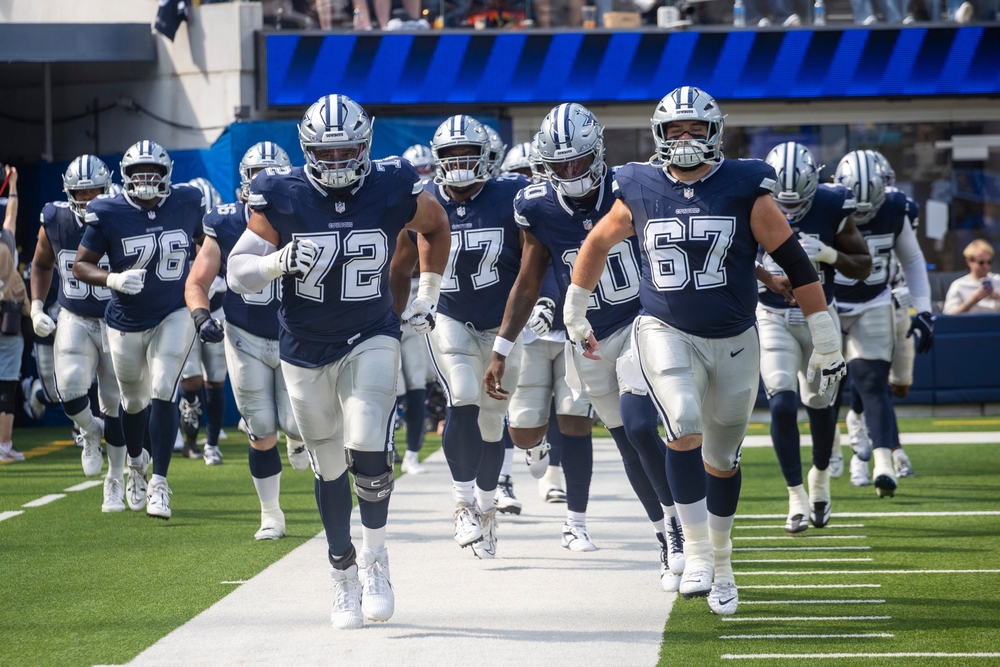
George Pickens will play the 2026 NFL season on his $27.3 million franchise tender after the Wednesday 4 p.m. deadline for tagged players to sign long-term extensions passed without a deal, an outcome the Cowboys had telegraphed since April when they announced publicly they did not plan to engage in extension talks with the wide receiver.
Pickens had already signed the franchise tender prior to the deadline, putting him under contract for the coming season. He said in mandatory minicamp last month that he was prepared to play out the year under the tag and had directed his agent to handle the contract situation while he focused on football. The deadline’s passing represents the formal close of any 2026 extension possibility.
The only tagged player without a new deal
Pickens was one of four players to receive the franchise tag this year, and he is the only one of the four who will not begin the season under a new long-term contract. The other three reached agreements well before Wednesday’s deadline. An Indianapolis quarterback signed a two-year deal in March, a Jets running back agreed to a three-year contract in May, and a Falcons tight end finalized a three-year extension in June.
The fact that all three of the other tagged players converted their situations into long-term security while Pickens remains on a one-year arrangement reflects the deliberate decision by the Cowboys rather than any breakdown in negotiations. The team made clear before the draft that they had no intention of negotiating an extension, and they followed through on that position through the deadline.
The Cowboys’ history with the franchise tag
The last time the Cowboys signed a first-time franchise-tagged player to a long-term extension was more than a decade ago, when they agreed to a deal with a wide receiver in 2015. In the years since, multiple Cowboys players have played out a tag year before either signing a second tag, reaching a long-term deal eventually, or leaving as free agents.
Dak Prescott and one of the team’s defensive ends were both tagged twice before ultimately receiving long-term contracts. Other players who played a season on the tag departed in free agency when the year was complete. Pickens now joins that list of Cowboys players who have navigated the franchise tag without converting it immediately into security, though whether his situation ultimately resembles the players who stayed or those who left will only become clear after this season.
What Pickens produced to earn this situation
The Cowboys acquired Pickens from Pittsburgh last year in exchange for mid-round draft capital, a trade that the receiver used as motivation to prove his value on a new team. He responded with the best statistical season of his career, catching 93 passes for 1,429 yards and nine touchdowns. All three figures represented career highs and established him as one of the more productive receivers in the league in 2025.
That production is precisely why the franchise tag conversation exists and why his absence of a long-term deal represents an interesting subplot heading into the season. A receiver who had 93 catches and 1,429 yards is by any reasonable standard deserving of a market contract. The Cowboys’ decision to apply the tag rather than extend him, and then to decline extension talks entirely, suggests either a strategic posture designed to preserve cap flexibility or a genuine assessment that the receiver’s value to the organization does not justify a long-term commitment at the price the market would require.
Pickens enters training camp under contract, committed to performing, and with the understanding that his play this season will be the primary factor in determining where he ends up when free agency opens.
