


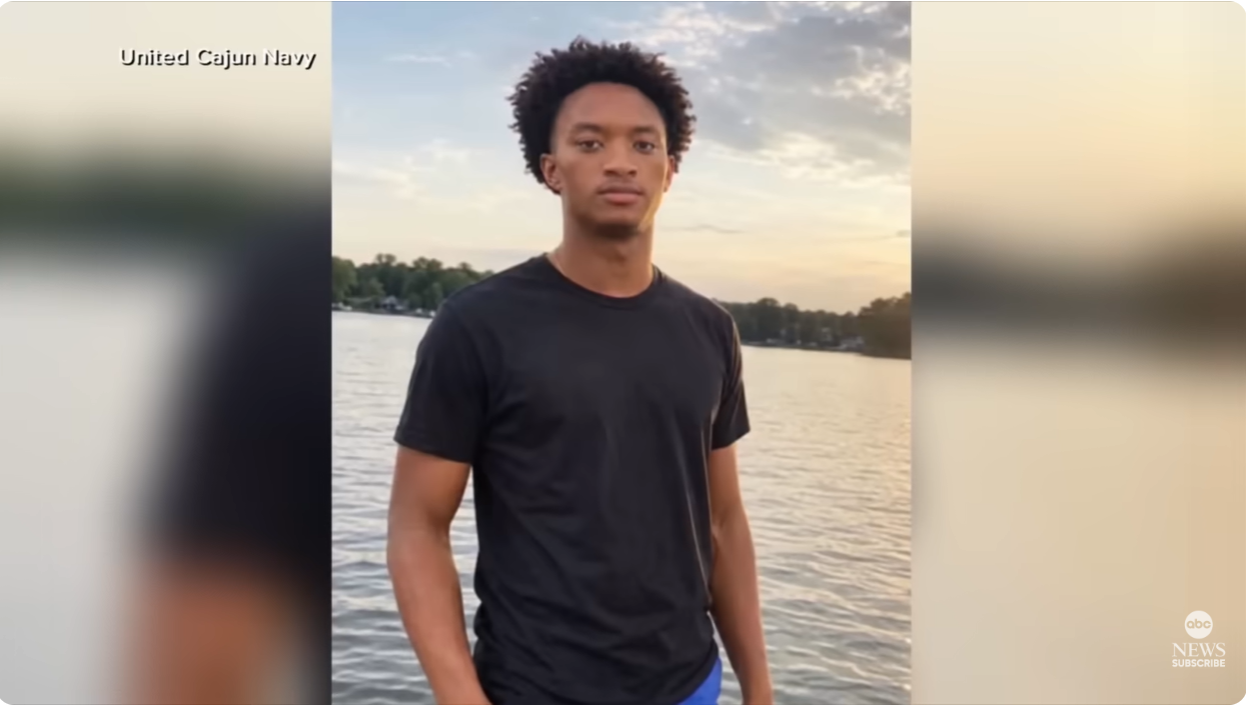
Horn Island, a slip of sand off the Mississippi coast, drew what witnesses described as thousands of boaters for the Fourth of July. Nolan Wells, an 18 year old community college football player, was among them, arriving with a group of roughly two dozen friends who anchored alongside dozens of other boats. People who have visited the island for years told reporters the crowd that day was noticeably younger and larger than usual, and that the surrounding current is notoriously unpredictable, capable of overwhelming even strong swimmers within moments.
Wells’ friends describe the final hours
Warren Hudson, described as Wells’ closest friend, has given the most detailed public account, speaking across a multi part podcast interview. Hudson said the group’s boat began taking on water around midafternoon, forcing an early return to the mainland. He said Wells chose to remain behind after meeting a young woman, and that he urged his friend repeatedly to leave with the group before ultimately departing without him. Another friend, Tracestin Shepherd, backed that version of events and pushed back on online claims tied to unrelated video and photos that had circulated after Wells’ death.
A third friend, Jayvon Williams, offered a more skeptical view, saying it was out of character for Wells to separate from the group and recalling an unusually emotional exchange with him earlier that day.
By that evening, none of the friends had heard from Wells, prompting Hudson to alert Wells’ mother and eventually contact the Coast Guard. His body was recovered two days later, on July 6, near the same stretch of water known locally for its rough conditions.
A mother searches for clarity
Wells’ parents, Christine and Elmore Wonsley, have disputed the account that their son chose to stay behind, saying it does not match his character. Christine Wonsley has said she spoke directly with the young woman who reportedly spent time with Wells that afternoon, and that the brief exchange left her with more questions than answers.
Two autopsies have since been conducted, one by the state medical examiner and a second, independent exam commissioned by the family. The private review could not confirm the cause of death and did not rule out that outside factors may have contributed, though the official state findings have not been made public.
The investigation widens
The case has since drawn national attention and a broader legal response. Mississippi’s Department of Public Safety confirmed the FBI is now investigating threats made against witnesses, officials and Wells’ family, which state leaders have linked to misinformation spreading online.
Separately, Jackson County’s district attorney said the case will go before a grand jury, which will review the evidence before any of it becomes public, a step officials described as standard for deaths that are not clearly accidental. Civil rights attorney Ben Crump, along with other advocates, has argued the case reflects a broader pattern of insufficient scrutiny in deaths involving young Black men, a characterization Mississippi’s governor has rejected as politically motivated. No timeline has been set for when the grand jury will convene.
