


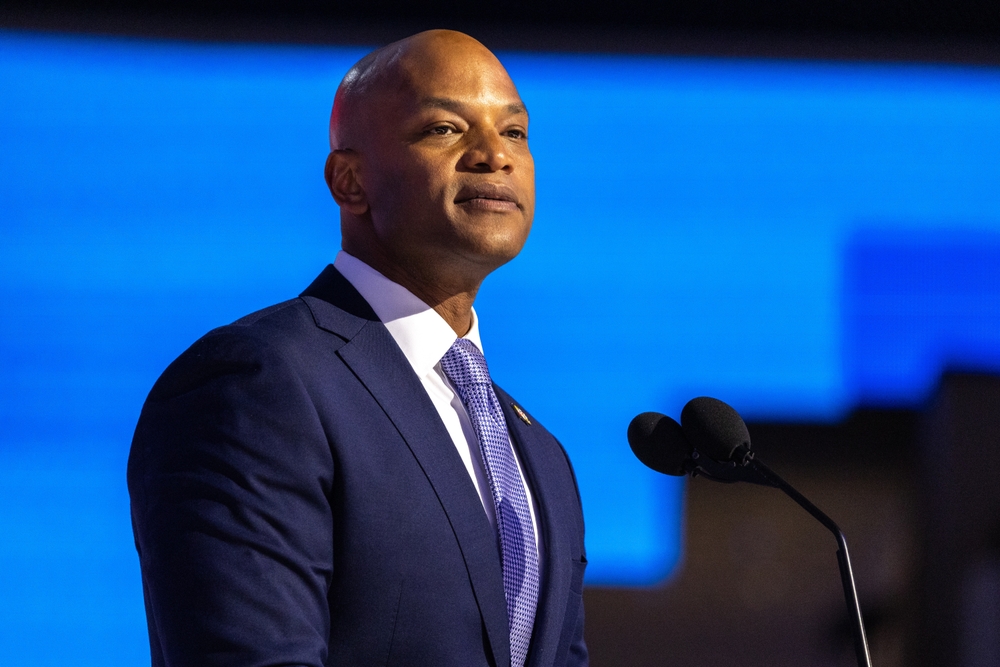
Maryland Gov. Wes Moore said Sunday, Oct. 25, that statewide races in the traditionally Republican South, including Florida, Mississippi and South Carolina, are in play for Democrats this year. On ABC’s ‘This Week,’ Moore told co-anchor Jonathan Karl that his party made mistakes by not investing in the region earlier, not just this cycle but for a generation.
Moore tied that underinvestment to history. He noted he is only the third Black American ever elected governor, and argued that reflects years of neglect, not a shortage of qualified candidates. With Election Day nine days away, the polls offer a mixed picture of his claim.
What did Wes Moore say about the South?
Moore said his campaign put its own money behind Texas gubernatorial candidate Gina Hinojosa, and he praised Keisha Lance Bottoms in Georgia and Jermaine Johnson in South Carolina. He said those candidates would make history, but stressed that the goal is winning and delivering on health care, child poverty and wages.
He also argued the Democratic base isn’t just energized but larger than before. Asked about 2028, Moore said he is committed to serving a full term if reelected in Maryland and remains focused on his state.
Is Georgia’s governor’s race in play?
The numbers say yes. An Atlanta Journal-Constitution and University of Georgia poll of 1,000 likely voters, taken Oct. 7 to 15, found Republican Rick Jackson at 46% and Bottoms at 45%, with 8% undecided. An InsiderAdvantage poll after the governor’s debate showed Jackson with a slim lead inside the margin of error.
The race is open because Gov. Brian Kemp is term limited. Jackson, a billionaire, has vastly outspent Bottoms and has positioned himself as Kemp’s political heir while putting some distance between himself and President Donald Trump. A Bottoms win would make her the first Black woman elected governor of any U.S. state.
Is South Carolina’s governor’s race competitive?
Less so, based on available polling. A Hart Research poll conducted for the Johnson campaign in August showed Republican Attorney General Alan Wilson leading Johnson 50% to 42%. A Public Policy Polling survey in July had Wilson ahead 45% to 37%.
The history is steep. South Carolina hasn’t elected a Democratic governor since Jim Hodges in 1998. Johnson, a state representative, grew up in poverty and earned a basketball scholarship to the College of Charleston before playing professionally.
Can Democrats win Mississippi’s Senate race?
It’s tighter than expected, but forecasters still favor the incumbent. A Wedgewood Polls survey of 511 likely voters, taken Oct. 12 to 14, found Republican Sen. Cindy Hyde-Smith leading Democrat Scott Colom 52% to 48%, within the margin of error. With independent Ty Pinkins included, Hyde-Smith led 44% to 38%, with Pinkins at 7%.
Major forecasters, including The Cook Political Report and Sabato’s Crystal Ball, rate the race as Solid or Likely Republican. No Democrat has won a Senate race in Mississippi since 1982, and Colom would become the state’s first Black senator since Reconstruction. Hyde-Smith’s campaign has dismissed favorable Democratic polling as partisan and said it is confident she will again win a majority.
Why does Wes Moore’s message matter for Black voters?
Moore’s point about representation is grounded in history. Only three Black Americans have been elected governor, Douglas Wilder in Virginia, Deval Patrick in Massachusetts and Moore in Maryland. The South is home to the largest share of Black voters in the country, and races in Georgia and Mississippi could test whether more investment changes that record.
What happens next?
Early voting is underway in many states ahead of Nov. 3. Democrats like Moore argue that frustration with the economy and Trump’s low approval ratings have opened doors in places the party once ignored. Republicans counter that these states remain conservative at their core, pointing to their candidates’ financial advantages, long winning streaks and polls that still show them ahead. Voters will decide which argument holds.
