


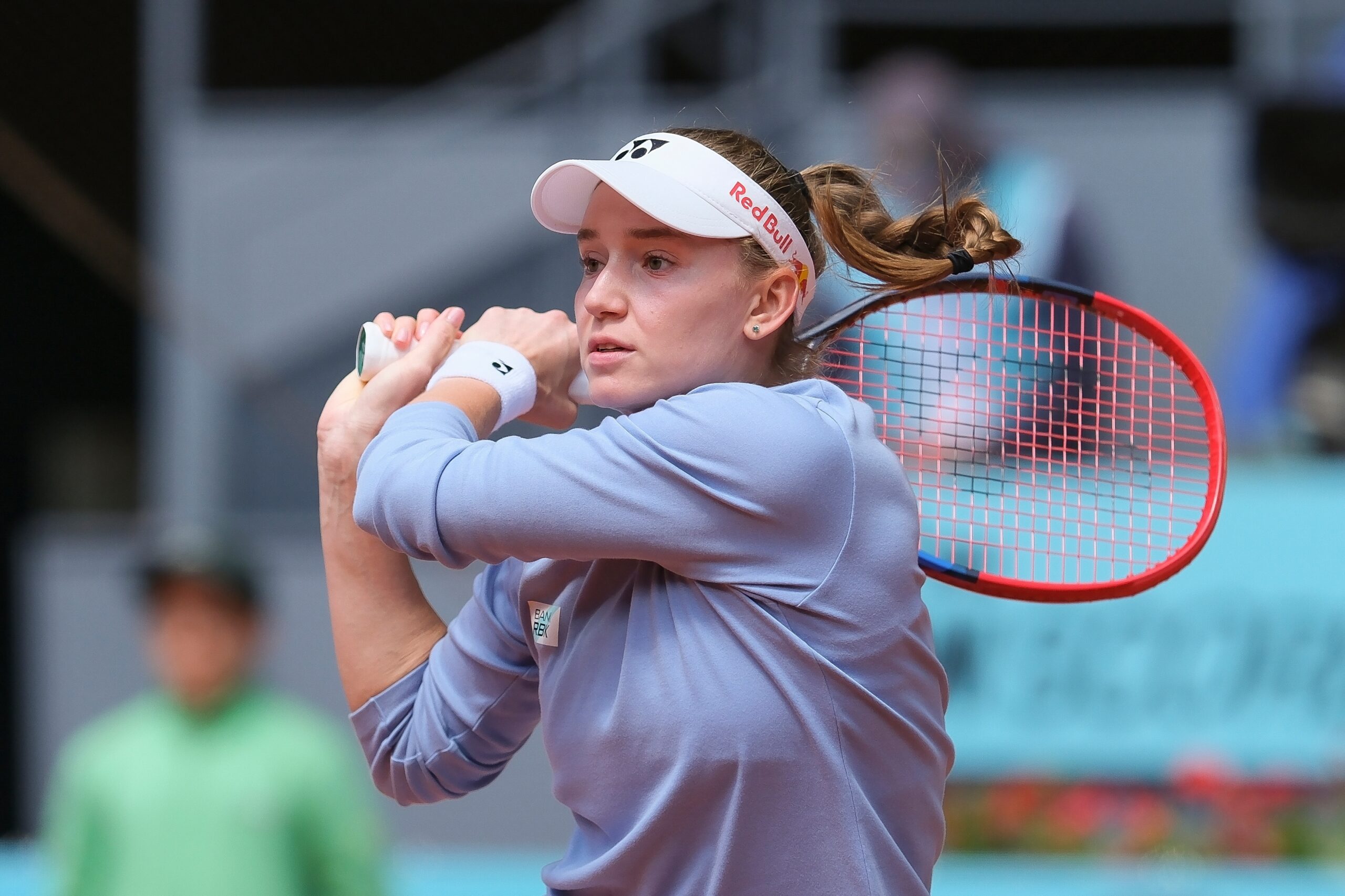
Elena Rybakina reached the National Bank Open final in Toronto early Thursday, defeating Coco Gauff in three sets to set up a title match against Iga Swiatek later the same night.
The second seed defeated Gauff 5-7, 6-2, 6-2, completing the match just before 1 a.m. after the night session had been delayed by rain. The six-foot Kazakh added consistent power throughout the second and third sets after dropping the first, winning 12 of the final 14 games to close out the match convincingly.
The victory gives Rybakina her 13th career title opportunity. She has been in strong form this year, having already won the Australian Open and a title in Stuttgart. A win Thursday night in Toronto would be her third title of 2026.
In the first semifinal, seventh-seeded Swiatek defeated ninth-seeded Elina Svitolina of Ukraine 6-3, 1-6, 6-3 in a match that also started approximately an hour behind schedule because of the same rain delay. Swiatek broke Svitolina’s serve at love to take a 5-3 lead in the decisive third set, then converted her second match point after building a 40-0 advantage on her serve.
What the final matchup means
The Rybakina-Swiatek final brings together two of the more formidable players in women’s tennis at a hard court event that serves as a direct tuneup for the U.S. Open, which begins its main draw at the end of the month. Toronto’s hard courts and the conditions of a major WTA 1000 event make the final a meaningful performance indicator heading into the final Grand Slam of the year.
The two have met multiple times at the highest levels of the sport, with their matches typically decided by which player better controls the rallies from the baseline. The serve is one of the most powerful in the women’s game and becomes particularly effective on hard courts where the bounce can amplify its effects. Swiatek’s ability to construct points through spin and placement gives her a different kind of baseline control that has made her one of the dominant players of the past several years.
Gauff’s semifinal loss
For Gauff, the tournament ends with a defeat after what had been a competitive campaign in Toronto. She won the first set and was competitive through portions of the second before Rybakina’s power began to take over. Losing 12 of the final 14 games is a significant reversal, and it suggests that once Rybakina found her range in the second set, she was difficult to contain.
Gauff had commented publicly earlier in the week about the WTA‘s new gene-testing policy tied to Olympic eligibility, expressing support for competitive fairness principles while also criticizing how the debate has been framed. She remains one of the premier players on the tour and enters the U.S. Open as a major contender.
Rybakina’s 2026 season
Rybakina has had a strong calendar year heading into the North American hard court swing. The Australian Open was the centerpiece of her spring run, and the Stuttgart title added further evidence of her versatility across surfaces. Her performance on hard courts specifically has been particularly consistent, and Toronto conditions suit her game.
At 13 career titles and counting, her playing style centered on the serve and disciplined baseline construction tends to age well and project favorably on the fastest surfaces. The final in Toronto will be an early measure of whether she can add to that total against one of the game’s most consistent performers.
