


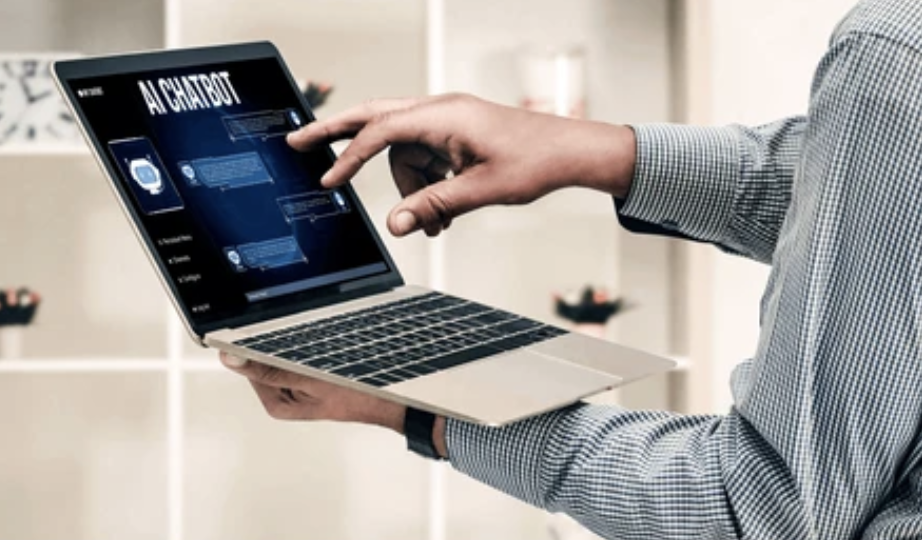
AI tutoring is the education technology development that teachers have been watching with a combination of professional interest and existential concern since large language models became sufficiently capable to hold an instructional conversation. The question of whether an AI system could match or exceed human teaching quality in any meaningful dimension has been debated theoretically for years. New research is moving the conversation from theoretical to empirical in ways that make the debate considerably more urgent.
A comprehensive education outcome study examining more than 30,000 students across grade levels and subject areas who used AI tutoring systems as their primary instructional support compared to matched students in traditional classroom settings confirmed four specific areas where the technology outperformed classroom instruction. The findings are nuanced enough to resist simple interpretation but clear enough to demand serious policy attention from educators, administrators, and parents alike.
AI tutoring and personalized learning pace
The most fundamental structural advantage of this technology is its ability to adapt instructional pace in real time to each individual student’s demonstrated mastery rather than the class average. Traditional classroom instruction is necessarily calibrated to a range of learners, moving too slowly for advanced students and too quickly for those who need more time with foundational concepts. Intelligent tutoring systems eliminate this constraint entirely, adjusting difficulty, explanation depth, and progression speed based on continuous assessment of each student’s responses.
Research found that students using personalized digital instruction showed significantly greater mastery retention at four-week and twelve-week assessments compared to classroom-taught peers, with the advantage most pronounced among students who were either significantly above or significantly below grade-level average. These are exactly the populations most poorly served by pace-averaged classroom instruction, and the data suggests that adaptive technology addresses their needs more consistently than a single teacher managing 25 to 30 students simultaneously can reasonably deliver.
AI tutoring and immediate feedback quality
The feedback loop in traditional classroom instruction is constrained by the ratio of students to teachers, which limits the frequency and specificity of feedback any individual student can receive. Intelligent tutoring systems provide immediate, specific, and actionable feedback to every response, including explanations of why an answer is incorrect and alternative approaches to reaching the correct understanding.
Research found that the feedback density of digital tutoring systems, measured by feedback events per hour of study, exceeded classroom instruction by a factor of approximately eight. The learning science literature consistently identifies immediate and specific feedback as one of the most powerful drivers of skill acquisition, and the advantage in this dimension directly translates to the outcome improvements the study documented.
AI tutoring and anxiety reduction in learning environments
One of the more unexpected findings in the research concerns the emotional dimension of learning. Students using intelligent tutoring systems reported significantly lower assessment anxiety and higher willingness to attempt difficult problems than classroom peers, an effect researchers attribute to the non-judgmental and infinitely patient nature of digital instructional interaction.
The fear of appearing foolish in front of peers and teachers is a documented suppressor of intellectual risk-taking and question-asking in classroom environments. Removing this social dynamic entirely allows students to ask the same question multiple times without embarrassment, attempt problems they are not confident about without social consequence, and engage with material at a pace that reflects their actual readiness rather than their anxiety level.
AI tutoring and learning gap identification and closure
Digital tutoring systems that maintain longitudinal learning profiles for each student demonstrated a significantly superior ability to identify and address foundational knowledge gaps compared to classroom assessment, which relies on periodic testing and teacher observation with limited individualized diagnostic depth. The research found that students using adaptive tutoring technology showed greater closure of pre-existing learning gaps over a six-month period than classroom peers, particularly in mathematics and reading comprehension.
What this means for teachers
The research findings do not suggest that teachers are obsolete. What they suggest is that the role of the teacher is most valuable in the dimensions that the technology cannot address, including mentorship, social and emotional learning, critical thinking facilitation, and the cultivation of curiosity and love of learning that no algorithm reliably produces. The most compelling education model emerging from the research is a hybrid one in which AI tutoring handles personalized instruction and feedback delivery, freeing human educators to do the deeply human work that defines the best classroom experiences anyone remembers. Used thoughtfully, AI tutoring is not the end of great teaching. It may be what finally makes great teaching possible at scale.
