


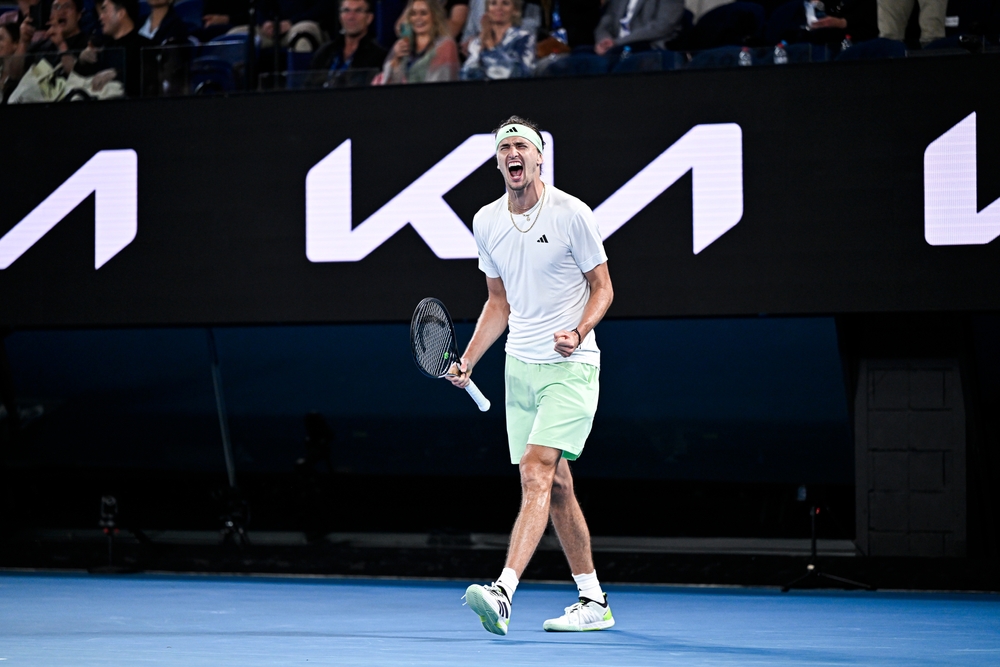
Germany is through to the Davis Cup Final 8 after Alexander Zverev closed out a 3 to 1 win over Croatia in Halle on Sunday, taking barely more than an hour to finish the job.
How comprehensive was the win?
Entirely. Alexander Zverev beat Dino Prizmic 6 to 2, 6 to 4 in 77 minutes against an opponent ranked more than 100 places below him. Prizmic never earned a break point, the same outcome as Saturday’s win over Matej Dodig, where the German also conceded none. Two matches on indoor hardcourt, four sets won, zero break points surrendered across the weekend.
How did Germany get to the deciding point?
The doubles did the setup work. Kevin Krawietz and Tim Puetz beat Nikola Mektic and Mate Pavic 7 to 5, 6 to 2 earlier Sunday, a significant result given the pedigree of the Croatian pairing. That win moved Germany ahead and handed Alexander Zverev the chance to clinch rather than the burden of keeping the tie alive. He took it in straight sets.
Who else advanced on Sunday?
Britain completed a 3 to 0 sweep of Ecuador when Henry Patten and Neal Skupski won the doubles 6 to 3, 6 to 4. Spain built an unassailable 3 to 0 lead over Chile without Carlos Alcaraz in the lineup, with Pedro Martinez and Jaume Munar taking the doubles 6 to 0, 6 to 3. Both results arrived before the reverse singles were needed.
What does the qualifying picture look like?
Six nations are confirmed. Germany, Britain and Spain joined the Czech Republic, Austria and South Korea, the last of which became the first Asian country to reach this stage. The Czech run came at the expense of the United States, which lost both singles matches in Prague on Saturday to exit despite carrying a top five player.
Why does this matter for Alexander Zverev?
Because of what preceded it. He won the US Open final last weekend, which followed his first Grand Slam title at the French Open in June. Turning around from a major final into a national team commitment on a different surface is the kind of scheduling most players at his level now decline. Alexander Zverev did not, and he played two matches without dropping serve in a manner that suggests the workload is not yet costing him.
Is Spain a concern without Alcaraz?
Less than the absence suggests. Spain has historically fielded depth beyond its headline name, and dispatching Chile without needing the reverse singles indicates the supporting cast is functional. Whether Alcaraz appears in Bologna will shape expectations considerably, since a Spanish side with him is a different proposition than one managing around him.
What happens in Bologna?
The Final 8 runs in Italy in November, a single venue knockout introduced in 2022 that replaced the old format of home and away ties spread across host nations. Critics argue it strips out the home crowd advantage that made the competition distinctive. Supporters point to a condensed event that is easier to follow and easier to schedule around. Alexander Zverev arrives as one of the highest ranked players committed to it, which in a competition frequently hollowed out by withdrawals carries its own weight.
What is the read on Germany?
Strong on paper. A top two singles player who is playing the best tennis of his career, paired with a proven doubles partnership, is a difficult combination in a best of three rubber format. The vulnerability is depth behind Alexander Zverev, which Saturday’s loss by Daniel Altmaier illustrated.
