


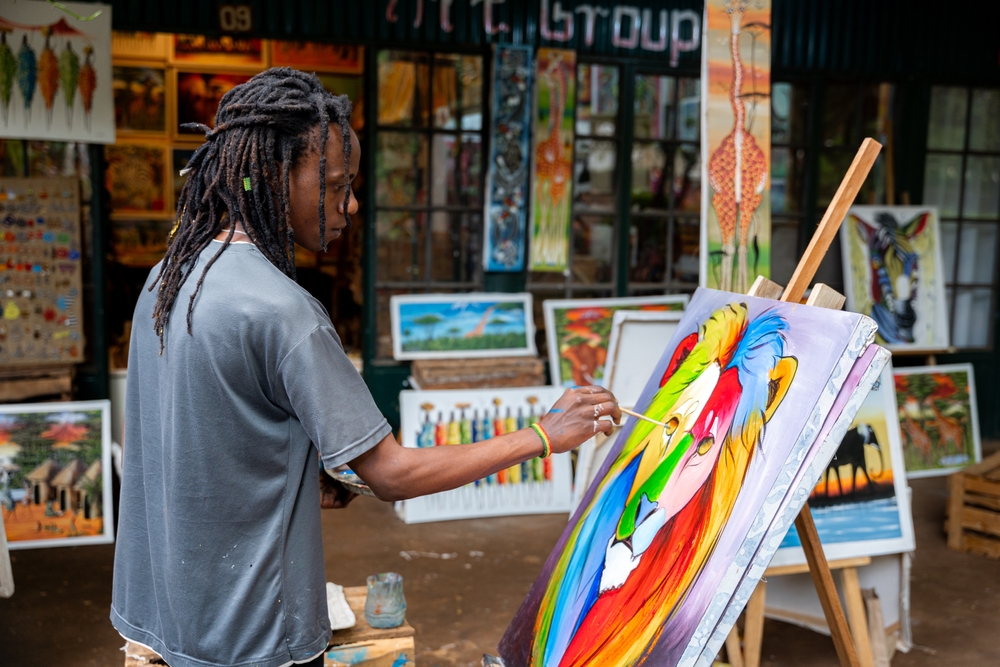
For decades, Black creatives have shouldered the responsibility of chronicling their communities when mainstream historical accounts have fallen short. These artists transform canvas, movement, and sound into living archives that capture the complexity of Black existence beyond what textbooks and official records reveal.
Art Functions as Living History
Jerrell Gibbs, a painter working in Baltimore, views Black creativity as inseparable from Black historical documentation. These artists function as unofficial historians, preserving narratives that institutions often ignore or simplify.
Gibbs describes how visual storytelling bridges gaps in formal documentation. Paintings and other artistic expressions contain emotional dimensions that dry historical texts cannot convey. They preserve the texture of daily experiences—moments of happiness, sorrow, defiance, and endurance—in ways that connect deeply with audiences.
His portraits focus on tender human interactions and fleeting expressions. Many feature Black men in contemplative repose, surrounded by botanical elements, with inspiration drawn from personal family photographs. This approach deliberately counters pervasive media representations that reduce Black masculinity to aggression and suffering.
Memory Preservation Strengthens Cultural Bonds
Sharayna Christmas, a multidisciplinary creator also based in Baltimore, treats her artistic practice as a vehicle for ancestral reverence and communal memory. Her organization Muse 360 operates as a cross-generational creative space where youth and adults collaborate on projects while engaging with historical materials and archival collections.
Christmas infuses her dance performances, films, and mixed-media works with African spiritual practices, futurist concepts, and diasporic customs. These elements combine to portray Black existence and self-conception in multifaceted ways.
She frames Black artistic expression and cultural production as essential to collective survival. Without these creative practices, communities risk losing their sense of identity and continuity. This perspective emphasizes how creativity serves not merely as entertainment but as foundational infrastructure for cultural cohesion.
Ordinary Moments Become Historical Documents
Christopher Johnson, who performs under the name kolpeace, relocated from Columbia, South Carolina to Baltimore, where he produces portraits, large-scale murals, and spontaneous paintings during live events. His subjects typically depict routine scenes—family gatherings, neighborhood interactions, and everyday rituals that constitute the fabric of community life.
Johnson incorporates specific visual symbols including indigo plants, pine needles, and various creatures. These elements evoke sensations of protection, cultural remembrance, and connections to those who came before.
He articulates how Black creators have consistently functioned as documentarians, capturing subtleties of existence, tradition, and resistance. His artistic mission centers on making these narratives visible to audiences who have experienced marginalization, isolation, or difficult circumstances. The work establishes cultural bridges inspired by predecessors who embraced their identity with pride.
Contemporary Practice Honors Ancestral Traditions
All three artists acknowledge their debt to previous generations of Black creators who pioneered these documentary approaches. Their work continues lineages of artistic resistance and cultural preservation that extend back through decades of struggle and triumph.
The creative output of Gibbs, Christmas, and Johnson illuminates how artistry functions as indispensable historical practice. While traditional archives rely on text and official documentation, artistic practice captures sensory experience, emotional resonance, and subjective truth. This distinction matters particularly for communities whose stories have been systematically excluded from mainstream historical narratives.
Christmas’s intergenerational model through Muse 360 exemplifies how artistic practice can involve entire communities in the preservation process. Rather than positioning artists as sole authorities, this approach invites collective participation in documenting and interpreting shared experiences. Such collaboration ensures that multiple perspectives shape historical understanding while helping younger generations develop connections to cultural heritage through active creative engagement.
By maintaining traditions while innovating new forms, contemporary Black artists ensure cultural continuity while remaining responsive to present circumstances. Their creations become bridges between past and future, honoring ancestors while speaking to current realities. Through committed creative practice, these artists demonstrate that making art constitutes making history, preserving memory, strengthening community ties, and maintaining cultural identity in contexts where dominant narratives frequently marginalize Black voices.
Source: AFRO
