


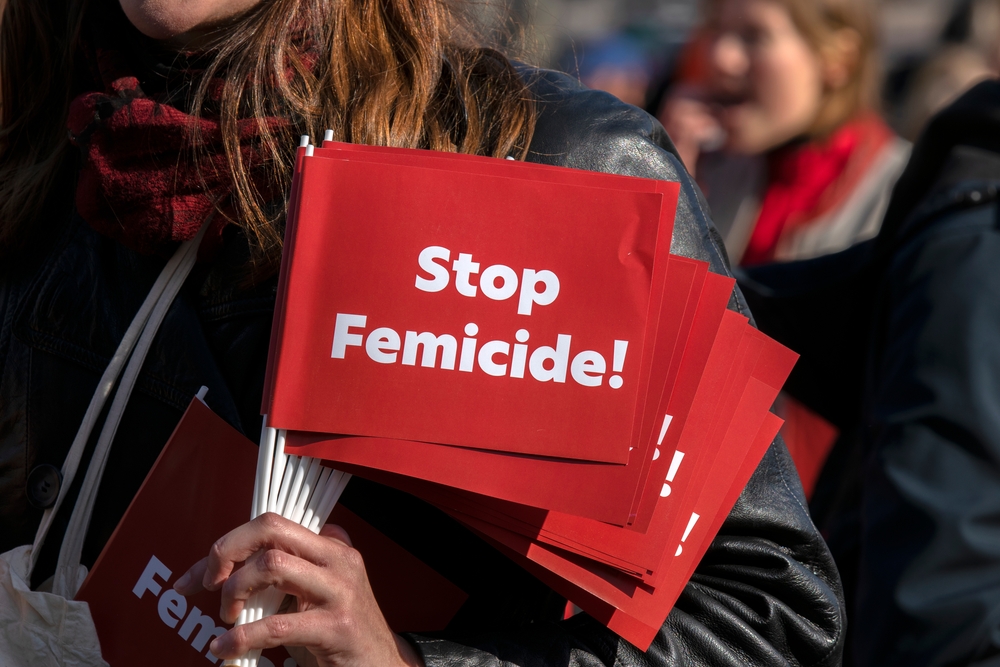
Black women in the United States are being killed at a rate that public health researchers describe as a crisis, and the perpetrators are rarely strangers. Nearly 90% of Black women murdered by men are killed by someone they know, whether a partner, a family member or someone else in their immediate circle. The term Black femicide has emerged to describe this pattern of violence, one rooted not only in individual acts of harm but in the structural conditions that leave Black women disproportionately exposed to danger.
Research shows that Black women are three times more likely than white women to die at the hands of an intimate partner. Between 2019 and 2023, gun-related deaths among Black women and girls rose by 49%. Those numbers represent a measurable, accelerating trend that advocates say has been met with systemic indifference.
Femicide cases reveal how legal systems leave women behind
The case of Ashanti Allen illustrates the gap between what legal protections promise and what they actually deliver. Allen, who was eight months pregnant, was found murdered in Houston just blocks from her home. The man charged in connection with her death had received a lenient plea deal weeks earlier, despite a documented history of violence. Her death came after the legal system gave her killer an opening.
In Shreveport, Louisiana, a mass shooting during a domestic dispute killed eight children, seven of whom were the perpetrator’s own. Two women, identified as Shaneiqua Pugh and Christina Snow, survived the attack but remained in critical condition. The shooting underscored how unresolved domestic violence can escalate into catastrophic loss, often with little warning and even less intervention.
Dr. Cerina Fairfax, a respected figure in her community, was killed by her husband despite having taken formal legal steps to protect herself. Her death challenged a widely held assumption that education, resources and access to the legal system provide meaningful shelter from domestic violence. For Black women, they often do not.
Femicide rates reflect a pattern of barriers, not just failures
Advocates point to several compounding factors that make Black women particularly vulnerable. Protective orders are difficult to obtain in many jurisdictions, and enforcement remains inconsistent even when orders are granted. Black women who seek help from law enforcement report experiences shaped by distrust, dismissal and a sense that their safety is not treated as a priority.
The activist Rosa Page, who helped popularize the term Black femicide, has described the phenomenon as inseparable from structural racism. The historical context matters: systems that were not designed to protect Black women continue to fall short in ways that are predictable and preventable.
Community-driven femicide responses fill gaps the state leaves open
Some advocates argue that lasting safety for Black women will not come primarily from the state but from communities organized to protect their own. Several frameworks have gained traction in recent years. Neighbor-based crisis response teams trained in de-escalation offer an alternative to police intervention in volatile situations. Informal safe house networks provide immediate refuge for women in danger. And broader community accountability models seek to address the conditions that allow violence to continue unchecked.
Proponents of transformative justice, a framework that emphasizes community-led accountability over incarceration, argue that policing and prisons have not reduced femicide rates and that new models are necessary. Critics of that position argue that legal accountability remains essential and that community solutions work best alongside, not instead of, institutional reform.
The deaths of women like Ashanti Allen and Cerina Fairfax, and the children killed in Shreveport, represent more than individual tragedies. They reflect a pattern of exposure, neglect and preventable loss that data consistently confirms and that communities are increasingly refusing to accept in silence.
