


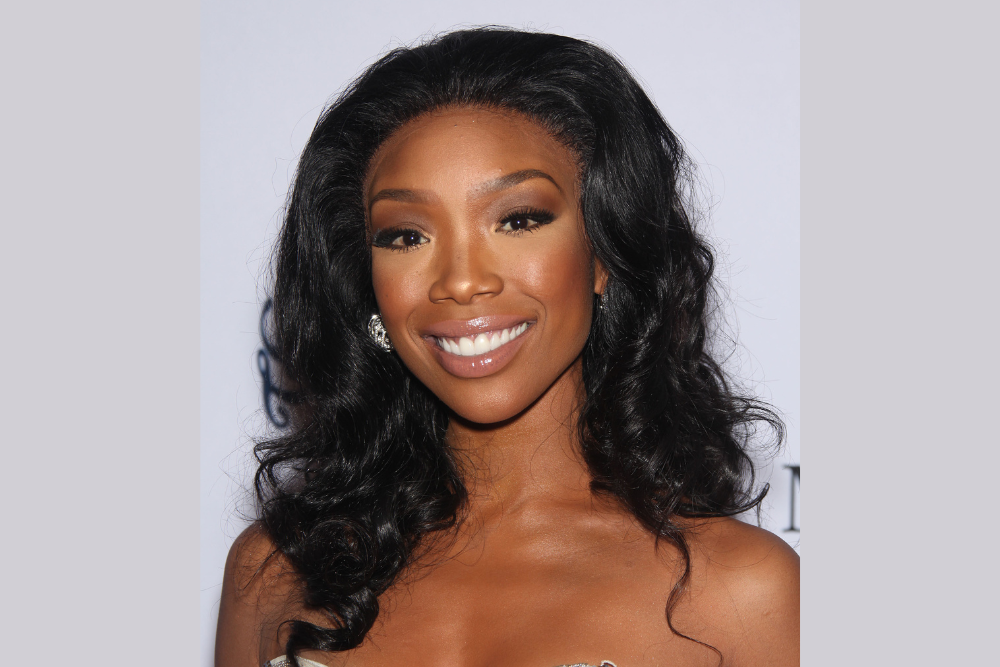
There are experiences that reshape a person permanently, dividing life into everything that came before and everything that followed. For Brandy Norwood, that moment arrived on a December morning in 2006 on a stretch of Los Angeles freeway she had driven countless times before. Nearly two decades later, she is writing about it for the first time in her new memoir Phases, released on March 31.
The book describes the moments leading up to the accident with striking clarity. Brandy recalls being focused and clear-headed, treating the drive along the 405 freeway as the routine it had always been. There was no premonition, no instinctive warning of what was seconds away. A chain reaction collision unfolded ahead of her before she had time to respond, and by the time she understood what had happened, the world she had known had already split into two distinct halves.
A life lost and the weight that followed
Awatef Aboudihaj, a mother of two, was involved in the crash and was transported to the hospital immediately afterward. She died from her injuries the following day. The loss was devastating on its own terms, and for Brandy it became something she carried in her body long after the legal proceedings concluded.
In the memoir, she writes about the silence that followed the crash, the paralysis of realizing what had occurred and the guilt that took hold of her and would not let go. She describes the feeling as a physical presence, something that made breathing feel like a deliberate act and that stripped her of any sense that she had the right to continue living her life as before.
The questions she found herself asking were the ones that grief, in its most consuming form, tends to ask. How could she justify returning to ordinary pleasures, to music, to joy, when the woman whose life had ended in that crash would never experience those things again. Brandy has spoken about this period as one of the most psychologically devastating of her life, a time when survivor’s guilt did not simply linger but dominated.
Therapy, time and a grief that softened
Brandy sought help from a therapist and describes the process of working through what happened as long and nonlinear. The grief, she writes, never disappeared entirely. But over time it changed in texture, losing some of its sharpest edges without ever fully releasing her. Forgiveness, she has said, was the hardest part of the healing process, and it took years.
The legal aftermath of the accident added another layer of difficulty. Aboudihaj’s children filed a $50 million lawsuit against Brandy, which was settled out of court in 2009. The settlement closed the formal legal chapter, but the emotional one proved far less easy to resolve.
Why she is sharing it now
Phases represents Brandy’s most personal public statement to date, a book built around the kind of honesty that does not come easily and cannot be performed. The decision to revisit the accident in print, in her own voice and on her own terms, reflects a willingness to sit with a painful truth rather than protect herself from it.
At 47, the same week she received a star on the Hollywood Walk of Fame, Brandy is navigating a profound dual moment. One is a celebration of everything she has built. The other is a reckoning with everything she has carried. Phases suggests she is no longer willing to keep those two realities separate.
