


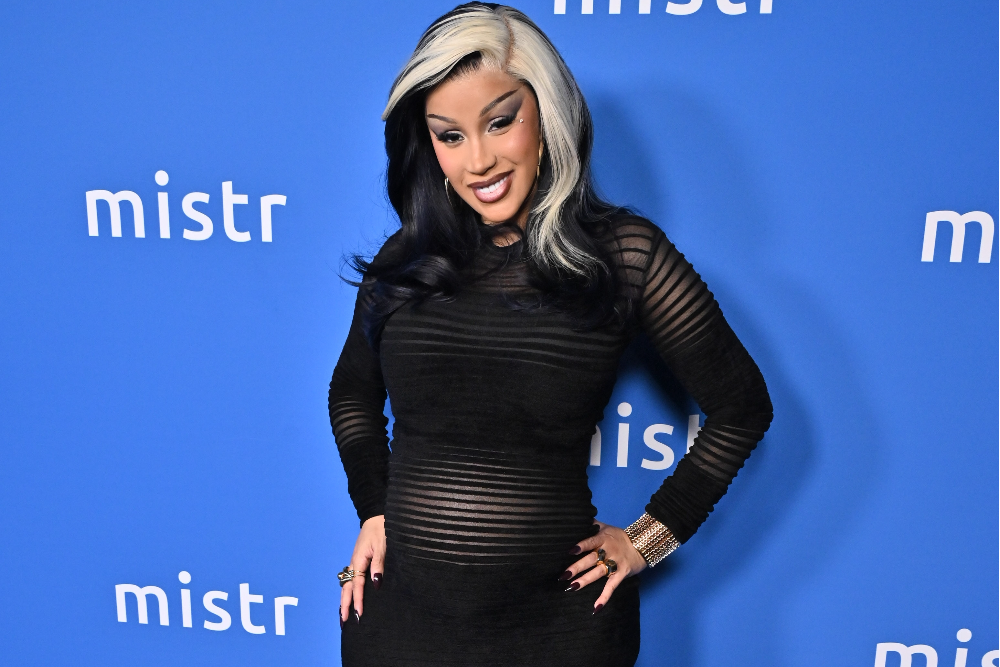
Cardi B is stepping into the celebrity beauty space, and she is doing it without apology and without the narrative that tends to follow women in entertainment who dare to occupy the same market. The rapper, 33, is set to launch her haircare line Grow-Good Beauty on April 15, and she has been making the media rounds with a clear message: this is not about competition.
During a recent appearance on the Aspire with Emma Grede podcast, Cardi was asked directly how she felt about entering what the host described as a saturated market, one already home to established celebrity haircare brands from the likes of Tracee Ellis Ross, Beyoncé, and Rihanna. The question carried an implicit assumption that launching in such company required a combative posture or at least a carefully hedged one.
Cardi rejected the framing entirely. Her view on the matter was grounded and straightforward: if a product works, it speaks for itself. The conversation about market competition, she suggested, misses the point of why she created the line in the first place. She also went out of her way to praise Beyoncé’s haircare brand, which launched in early 2024, calling it genuinely impressive and saying so without a hint of reluctance.
A journey that started in the kitchen
Grow-Good Beauty did not begin with a business plan or a licensing deal. By Cardi’s own account, it began with kitchen experiments, a personal hair crisis, and the kind of generational knowledge that gets passed down through families rather than formulated in labs.
After years of damage from extensions, styling, and the relentless demands of being a performer in the public eye, Cardi turned to homemade hair masks and treatments rooted in what she already knew from her background and what she picked up through her own research. Her mother is from Trinidad and her father is from the Dominican Republic, and the haircare traditions she grew up around became part of the foundation she built the brand on.
She described the process as intentional and unhurried, something she worked on over time rather than rushing to market. When her hair began to respond, she saw an opportunity not just to sell a product but to share something she believed in because she had lived it.
The garlic detour
Not every experiment went smoothly, and Cardi has been characteristically candid about the missteps along the way. She has previously shared her recipe for an all-natural onion hair treatment, which drew both curiosity and skepticism from her followers. More recently, she recounted a chapter involving raw garlic that did not go entirely as planned.
The idea, like the onion treatment, was rooted in the belief that certain natural ingredients can stimulate the scalp and promote growth. The execution left something to be desired. She had apparently applied raw garlic directly to her hair and underestimated just how long and how intensely the scent would linger. For months afterward, any time she perspired, the effect was immediate and unmistakable. She described the experience during a recent television appearance with the kind of self-deprecating humor that has always made her relatable, laughing at herself before anyone else could.
Redefining what good hair means
Underneath the brand launch and the entertaining anecdotes is something Cardi seems to genuinely care about. She has spoken openly over the years about being criticized for the appearance of her hair, with some of that criticism framed around her mixed heritage and the texture of her curls. She has consistently pushed back on the idea that certain hair types are inherently more desirable or more manageable than others.
With Grow-Good Beauty, she is extending that argument into a product. Her stated goal is to reach women of color with tighter curl patterns and offer them something designed with their hair in mind, built on the premise that there is no such thing as bad hair, only products and practices that have not been tailored to serve everyone equally.
