


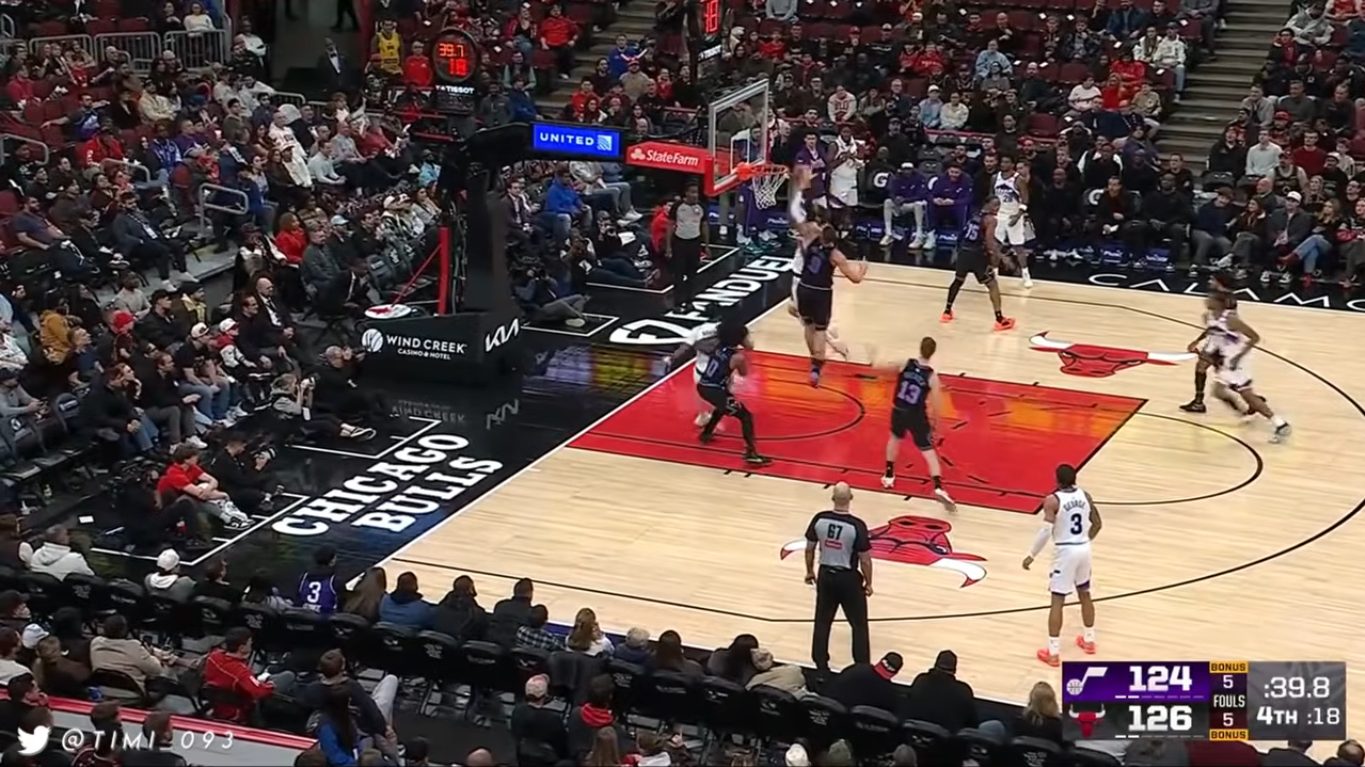
The Boston Celtics have made their move. In a trade with the Chicago Bulls, Boston acquired center Nikola Vucevic Tuesday afternoon, addressing a major need in their frontcourt while simultaneously accomplishing a secondary objective: significant salary cap relief. The Celtics traded guard Anfernee Simons and a second-round draft pick to acquire the 6-foot-9 veteran, a move that checks multiple boxes for a team that’s been searching for answers in the middle all season.
After months of speculation about adding a big man to their rotation, the Celtics finally found a solution. Vucevic represents exactly the kind of veteran depth that championship teams need. He arrives in Boston averaging 16.9 points and 9.0 rebounds across 48 games this season solid production from a player who’s seen everything in his NBA career and knows how to contribute in winning situations.
The fit makes immediate sense. The Celtics have primarily relied on unproven big men Neemias Queta (26) and Luka Garza (27) at center this season. Queta has emerged as one of the NBA’s most improved players, stepping into a full-time starting role and delivering respectable numbers (10.0 points, 8.0 rebounds, 1.3 blocks per game). His development has been genuine and encouraging. But the gap between a promising young player and a veteran anchor is significant. Vucevic fills that gap. He provides additional shooting and rebounding to accompany Queta at the pivot, giving the Celtics multiple looks at the center position depending on matchups and game flow.
The 32-18 Celtics, led by their backcourt trio of Jaylen Brown, Derrick White, and Payton Pritchard, finished Tuesday night tied with the New York Knicks for the second-best record in the Eastern Conference. Adding Vucevic elevates their frontcourt options for the playoff push ahead. Rather than relying solely on young players developing on the fly, Boston now has a veteran presence who understands playoff basketball and the demands of late-season competition.
Two Problems, One Solution
What makes this trade particularly clever is how Boston addressed two significant concerns simultaneously. The Celtics needed frontcourt help. They also needed salary cap flexibility heading toward the luxury tax threshold. Vucevic and Simons have nearly identical expiring contracts ($21 million and $27 million respectively), but the difference is substantial when calculating luxury tax obligations.
Boston saved more than $20 million in luxury tax payments in the move by swapping Simons’ $27 million expiring contract for Vucevic’s $21 million deal. That’s not just accounting. That’s strategic financial management that allows a franchise to reinvest money elsewhere or maintain flexibility for future roster decisions. It’s the kind of deal that wins championships both on the court and in the front office.
Simons, 26, averaged 14.2 points per game as a bench player for Boston this season. He provided scoring depth, but he wasn’t irreplaceable. His role was valuable but not foundational to the Celtics’ championship aspirations. Meanwhile, Vucevic brings veteran versatility and experience that a backcourt-heavy team like Boston desperately needed at center.
The Broader Trade Deadline Context
The Vucevic acquisition wasn’t Chicago’s only Tuesday move. The Bulls also dealt Kevin Huerter to the Detroit Pistons in a three-team trade involving the Minnesota Timberwolves. Chicago acquired former Pistons guard Jaden Ivey in that deal, leaving open the possibility of moving on from backcourt players Coby White and Ayo Dosunmu before the 3 p.m. ET deadline Thursday.
For the Celtics, acquiring Vucevic represents a tangible upgrade to their frontcourt depth. The team entered the season hoping young players like Queta would develop into reliable contributors. They have. But championship teams don’t rely solely on young player development. They add proven veterans who’ve been through playoff wars and understand what it takes to win. Vucevic fits that profile perfectly.
The trade also signals Boston’s confidence in their backcourt to carry them through the playoffs. By moving Simons, the Celtics are essentially saying they trust Brown, White, and Pritchard to generate offensive firepower. That’s a reasonable bet for a team currently tied for the second-best record in the Eastern Conference heading into the final stretch of the regular season.
