


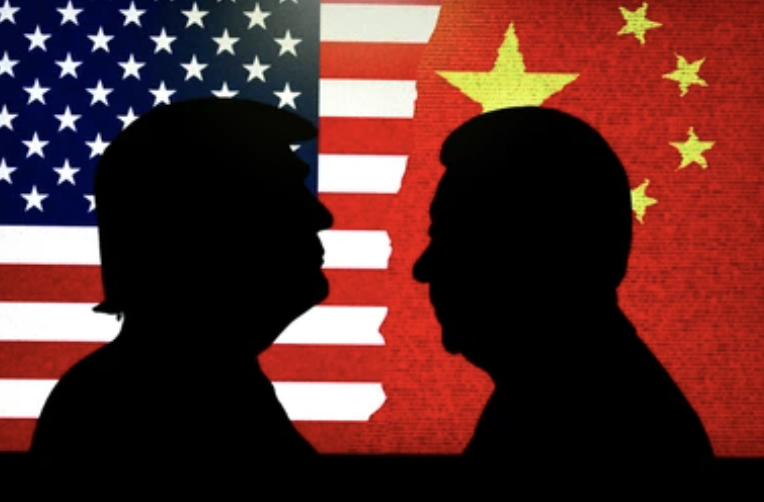
Now in its third week, the war in Iran is producing consequences that reach far beyond the Middle East. Chief among them is a growing sense among analysts that China, without committing troops or taking sides, may be emerging as one of the conflict’s quiet beneficiaries. Beijing has declined to help reopen the Strait of Hormuz as requested by President Donald Trump, and the longer the crisis drags on, the more that refusal appears to be working in China’s favor.
Oil has effectively stopped moving through the strait. American allies have declined to contribute to securing it. And the United States, which launched the operation known as Epic Fury with the expectation of projecting overwhelming force, now finds itself asking its most significant geopolitical rival for assistance it shows no sign of providing.
China’s careful non-answer
When asked directly whether it would help reopen the strait, China’s Foreign Ministry offered language that committed to nothing. It called on all parties to halt military operations and avoid further escalation, framing its position around regional stability and the health of the global economy. The response was diplomatically worded but functionally a refusal, and analysts reading between the lines found little ambiguity.
What made the posture even more telling was what China did choose to do in the region. Through international humanitarian organizations, Beijing delivered emergency aid to Iran in the wake of an airstrike that destroyed an elementary school in the southern city of Minab. The Chinese ambassador to Iran publicly condemned the attack. The contrast between refusing to help the United States and visibly aligning with the humanitarian dimension of the conflict was not lost on observers.
A delayed summit that suits both sides
Trump announced this week that his planned state visit to Beijing, originally set for late March, would be postponed so he could remain in Washington to manage the military campaign. China, which had never officially confirmed the visit, signaled that the two sides remain in communication and that rescheduling was possible.
Analysts largely read the delay as convenient for both governments, though for different reasons. For the Trump administration, sending the commander in chief abroad while overseeing active military operations would have been politically and logistically difficult. For Beijing, the delay offers more time to assess what the United States actually wants from the summit and to take stock of Trump’s position as the Iran operation unfolds.
A recent trade meeting between the two governments in Paris produced little visible progress, with structural disagreements on trade, technology and economic security remaining unresolved. With those gaps still wide, neither side had much to show off at a high-profile summit anyway.
China and the Asia pivot problem
The Iran war is also raising concerns among U.S. allies in the Pacific. Military assets have been shifted from the Indo-Pacific region to support operations in the Middle East, including rapid-response forces and missile defense systems. For countries in Asia that have been watching the United States recommit to the region as a strategic priority, those transfers are feeding anxiety about American focus and resources.
A delayed summit also means that potential arms agreements with Taiwan, which remains the most sensitive issue in the U.S.-China relationship, are further from resolution. China has long claimed Taiwan as its own and vowed to bring it under its control by force if necessary. The United States is legally obligated to provide the island with the means to defend itself, but progress on that front appears to be stalling.
For Beijing, the calculation is straightforward. The longer the United States remains entangled in the Middle East, the less attention and resources it can direct toward Asia. China does not need to act. It simply needs to wait.
