


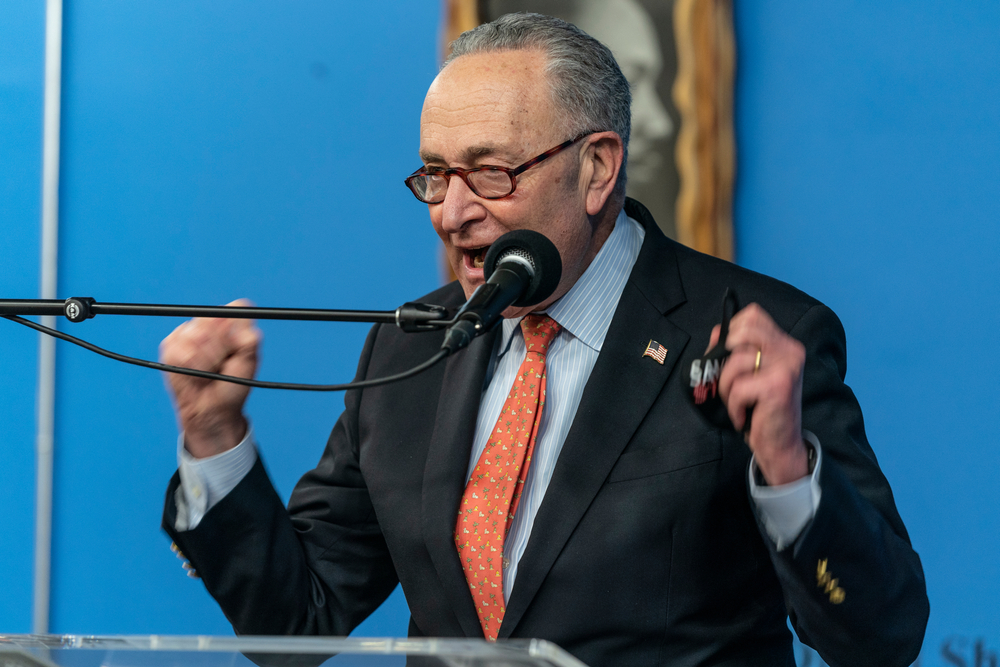
Senate Democrats have drawn a hard line in budget negotiations, threatening to extend a partial government shutdown unless Republicans agree to separate Department of Homeland Security funding from a broader spending package. The standoff comes after federal agents fatally shot Alex Pretti, a 37-year-old Minneapolis resident, during an enforcement operation Saturday.
The impasse has pushed lawmakers past their Friday midnight deadline, with intensive discussions between Senate Democrats and the White House continuing through Thursday. While progress appears promising, the House remains in recess until Monday and shows no indication of reconvening early to address any compromise.
Shutdown Appears Inevitable Despite Active Negotiations
Senate Minority Leader Chuck Schumer made clear his caucus would not support the current six-bill funding package without substantial changes to immigration enforcement protocols. Democrats have coalesced around demands for enhanced oversight of Immigration and Customs Enforcement operations, including stricter warrant requirements and mandatory independent investigations into enforcement actions.
A source familiar with the discussions, who spoke on condition of anonymity, described talks as moving favorably for Democrats. However, no final agreement has materialized as Congress races against the clock ahead of the looming funding deadline.
DHS Funding Becomes Political Flashpoint
The Democratic strategy centers on extracting DHS appropriations from the broader spending bill to allow time for renegotiating enforcement guidelines. Party leaders have signaled openness to a temporary funding extension for the department while longer-term restrictions are hammered out.
This approach effectively holds other government operations hostage to immigration policy disputes, a tactic that carries political risks for both parties as federal workers face potential furloughs.
White House border czar Tom Homan, whom President Donald Trump assigned to oversee enforcement operations in Minnesota, planned to address media Thursday morning in Minneapolis. His remarks come as scrutiny intensifies over federal immigration tactics following the Pretti incident.
Regional Enforcement Operations Face Scrutiny
The controversy has reverberated beyond Minnesota. Senator Susan Collins announced Thursday that ICE suspended its enhanced activities in Maine after she spoke with Homeland Security Secretary Kristi Noem. Collins emphasized that no large-scale operations were currently planned or underway in her state.
The Maine development suggests the administration may be recalibrating its enforcement posture amid the political backlash, though officials have not confirmed any broader policy changes.
Procedural Hurdles Complicate Quick Resolution
Even if negotiators strike a deal, significant procedural obstacles remain. The House sent its version of the funding package to the Senate last week, but any modifications would require the lower chamber to vote again. With representatives scattered during recess, reconvening quickly appears unlikely unless leadership considers the matter urgent enough to recall members.
The Senate plans to vote Thursday morning on the original six-bill package, though Democrats have made clear they possess the votes to block it without an agreement addressing their enforcement concerns.
Political Calculations on Both Sides
Democrats face pressure to demonstrate they can govern responsibly while advocating for stricter immigration oversight. Republicans, meanwhile, must balance their commitment to aggressive enforcement with the political fallout from a shutdown and the Pretti shooting.
Trump administration officials have defended their enforcement operations as necessary to address illegal immigration, but the fatal encounter in Minneapolis has energized critics who argue current protocols lack sufficient safeguards.
The standoff highlights deeper tensions over immigration policy that have defined American politics for years. As negotiations continue, federal workers and Americans dependent on government services await resolution of a crisis that blends appropriations politics with contentious debates over law enforcement authority.
Neither the White House nor Democratic leadership provided immediate public comment on the status of negotiations, though both sides acknowledged ongoing discussions aimed at preventing an extended shutdown.
Source: POLITICO
