



Los Angeles Rams
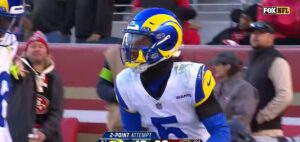
The Miami Dolphins added two players on Thursday as their free agency activity continued under new general manager Jon Eric Sullivan. Wide receiver Tutu Atwell agreed to a one year deal, reuniting the Miami native with his hometown team after four seasons with the Los Angeles Rams. Separately, defensive back Marco Wilson signed a one year contract after spending parts of the past two seasons with the Cincinnati Bengals. Both deals are expected to be near the veteran minimum based on Miami’s current cap situation.
The additions reflect a Dolphins roster construction effort that is still very much in progress, with Sullivan working to reshape a receiver room and secondary that each carry genuine needs heading into the 2026 season.
Why Atwell makes sense despite the new GM’s stated preferences
Atwell’s signing arrives with an interesting wrinkle. At the NFL Combine, Sullivan told reporters he did not want Miami’s receiver room filled with smaller players, framing it as a deliberate departure from the previous regime’s tendency to prioritize speed over physicality. Atwell, listed at 5 feet 9 inches and 165 pounds with a 4.39 second 40-yard dash, reads on paper as exactly the kind of player Sullivan was pushing back against.
The reality, however, is more nuanced. Miami’s current receiver group which includes Tahj Washington and Malik Washington is not actually as fast as its size might suggest. Tahj ran a 4.52 at his pro day and Malik came in at 4.47, numbers that are solid but nowhere near elite speed. With Jaylen Waddle as the team’s primary weapon, the Dolphins cannot simply rely on him to threaten defenses vertically on a consistent basis. Atwell fills a specific and genuine gap as a true deep threat capable of creating space for Waddle to operate across a fuller route tree.
The distinction Sullivan drew at the combine was about overindulgence in speed at the expense of physicality not about eliminating speed from the room entirely. Atwell at or near the veteran minimum, deployed in a defined role as a field stretcher, does not contradict that philosophy. It supplements it.
What Atwell brings from his Rams tenure
Atwell’s four seasons in Los Angeles produced a career that fell short of the expectations that come with a second-round draft selection but was far from a failure. His best season came in 2024 when he caught 42 passes for 562 yards, following a 2023 campaign of 39 receptions for 483 yards and three touchdowns. His career average of 14.6 yards per reception reflects how consistently he has been used as a vertical threat rather than a possession receiver.
The 2025 season was significantly more difficult. A hamstring injury cost him six weeks, and when he returned the Rams had reorganized their receiver depth chart around other options. He finished with just six catches for 192 yards and was a healthy scratch for both of Los Angeles’s playoff games. Miami’s receiver room is considerably less crowded, and the opportunity for Atwell to carve out a meaningful role is genuinely available in a way it was not by the end of his Rams tenure.
Marco Wilson adds secondary depth with injury history to monitor
Wilson’s path to Miami runs through two injury interrupted seasons in Cincinnati. The Bengals claimed him off waivers in November 2024, and his 2025 season was disrupted by a training camp injury and a right hamstring problem suffered during a Week 12 loss to New England. He saw limited action throughout the year, and his tenure in Cincinnati ended with his release ahead of free agency.
His 2024 Bengals stint included a memorable moment that did not go in his favor a pass interference flag during a Week 16 win over Cleveland that drew a visible reaction from Bengals head coach Zac Taylor. That play aside, Wilson is a proven NFL defensive back whose health will be the primary variable in determining how much value Miami gets from the one year deal.
Building toward something larger
Both signings fit the pattern Sullivan has established in his early weeks running the Dolphins roster. Atwell and Wilson are additions that address specific needs at low financial risk, leaving cap flexibility for larger moves and draft investments. Sullivan has already added quarterback Malik Willis, tight end Ben Sims and a collection of secondary pieces in this free agency window, with the receiver room and the backfield still requiring further attention before Miami’s offseason priorities are fully addressed.
The Dolphins direction under new leadership is coming into clearer focus a deliberate, flexible approach to roster building that avoids the kind of large commitments to speed dependent players that defined the previous regime’s most criticized decisions.
