


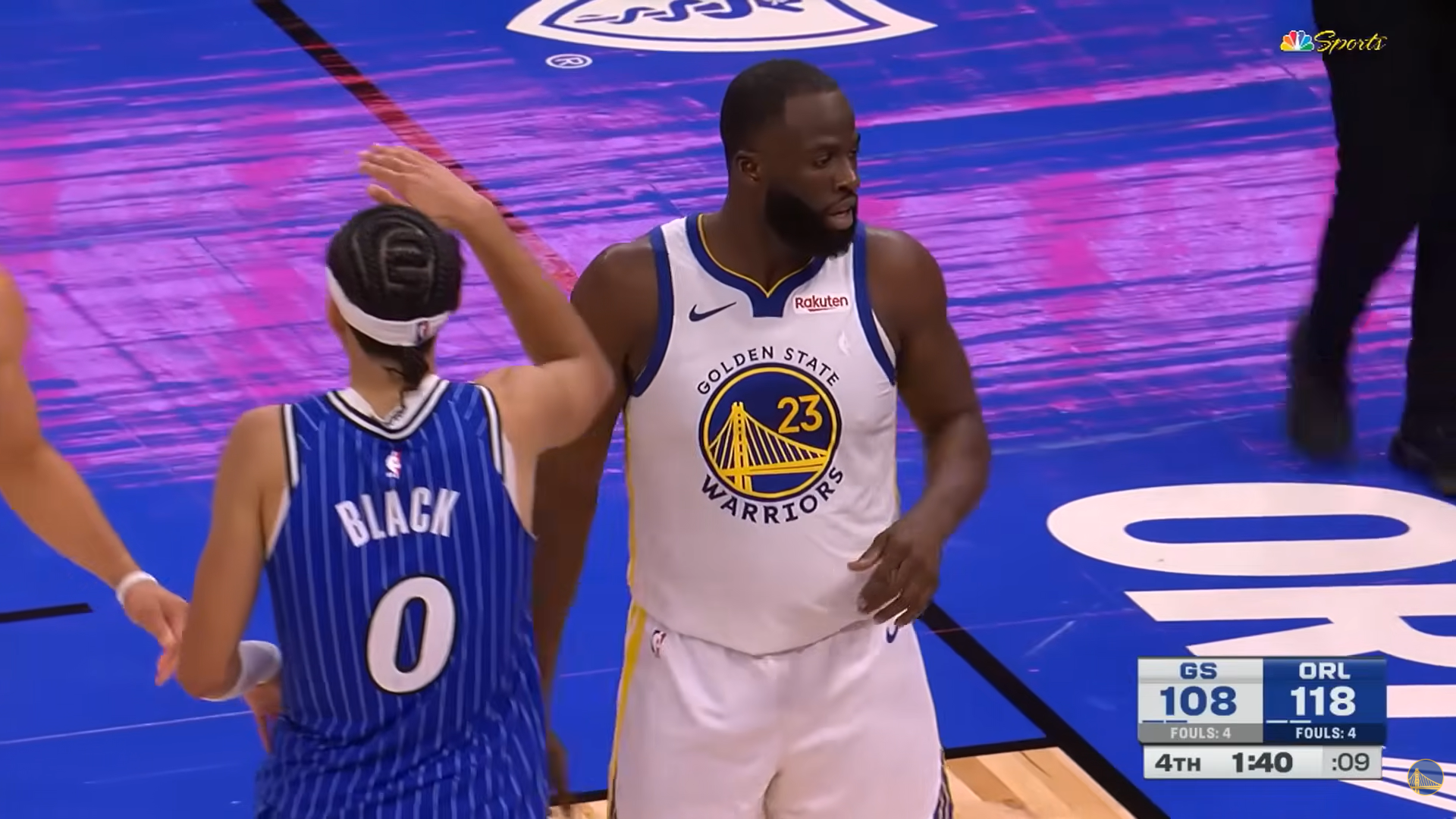
Draymond Green has never been the type to hold back, and his latest take on the state of professional basketball is no exception. The Golden State Warriors forward is making a passionate push for the NBA to loosen its restrictions on physical defense, arguing that the league’s long-running love affair with high-scoring games has quietly drained the sport of what makes it great.
It is not a new debate. For years, the NBA has leaned heavily into an offensive-first identity, betting that fans would show up for dazzling shooting displays, relentless fast breaks and an endless stream of three-pointers. And for a while, that bet seemed to pay off. But something shifted during last season’s playoffs, when officials allowed a more physical brand of basketball to breathe, and the response from fans was telling. People were locked in. The intensity felt different. The games felt like they mattered more.
Green noticed.
Draymond and the case for defensive leeway
Green has built one of the more remarkable careers in recent NBA history on the strength of his defense. Undersized for a power forward by traditional standards, he has spent years compensating with intelligence, lateral quickness and a physical presence that makes life difficult for guards and big men alike. Defense, for him, is not a role. It is an identity.
That makes his frustration with the current rules feel personal. He has spoken openly about wanting referees to give defenders more room to operate, suggesting that even minor physical contact like a quick hand check can change the rhythm of a possession and force offensive players to actually earn their buckets rather than manufacture fouls.
His argument goes beyond personal preference. He believes the league overcorrected in its push to drive up scoring, and that fans have now quietly moved past the novelty of it. A game ending somewhere around 104 to 101, in his view, carries more weight and drama than one that lands at 130 to 128. Low scores, to Green, signal that both teams were genuinely competing, that every point was fought for and that nothing came cheap.
Draymond says skill gets exposed when defense is allowed to defend
There is another layer to Green’s thinking that goes beyond pace and physicality. He believes that a more defense-friendly game would actually elevate the NBA’s best offensive players rather than diminish them. Stars like Stephen Curry, Kevin Durant, Shai Gilgeous-Alexander and others did not build their reputations by drawing fouls. They built them by creating separation, reading defenses and finishing through contact with creativity and precision.
When defenses are handcuffed, Green argues, those skills become less visible. Offensive players can get away with manipulation, slight-of-hand movements and exaggerated contact rather than relying on actual craft. But when defenders are allowed to push back, the truly elite scorers find a way through anyway, and the gap between a great offensive player and a merely good one becomes unmistakable.
That kind of separation, Green believes, is what fans actually want to see. Not a league propped up by foul calls and free throws, but one where the most gifted players prove themselves under real pressure.
What the playoffs could reveal
With the postseason approaching, the question of how officials plan to call games carries real weight. Historically, playoff basketball has allowed for more contact than the regular season, and that physical uptick tends to produce some of the most compelling basketball of any given year.
Green’s broader point is that the NBA does not have to wait for the playoffs to get it right. If the league is serious about showcasing genuine skill and delivering the kind of intense, competitive basketball that had fans buzzing last spring, giving defenders the room to actually defend would be a meaningful place to start.
