


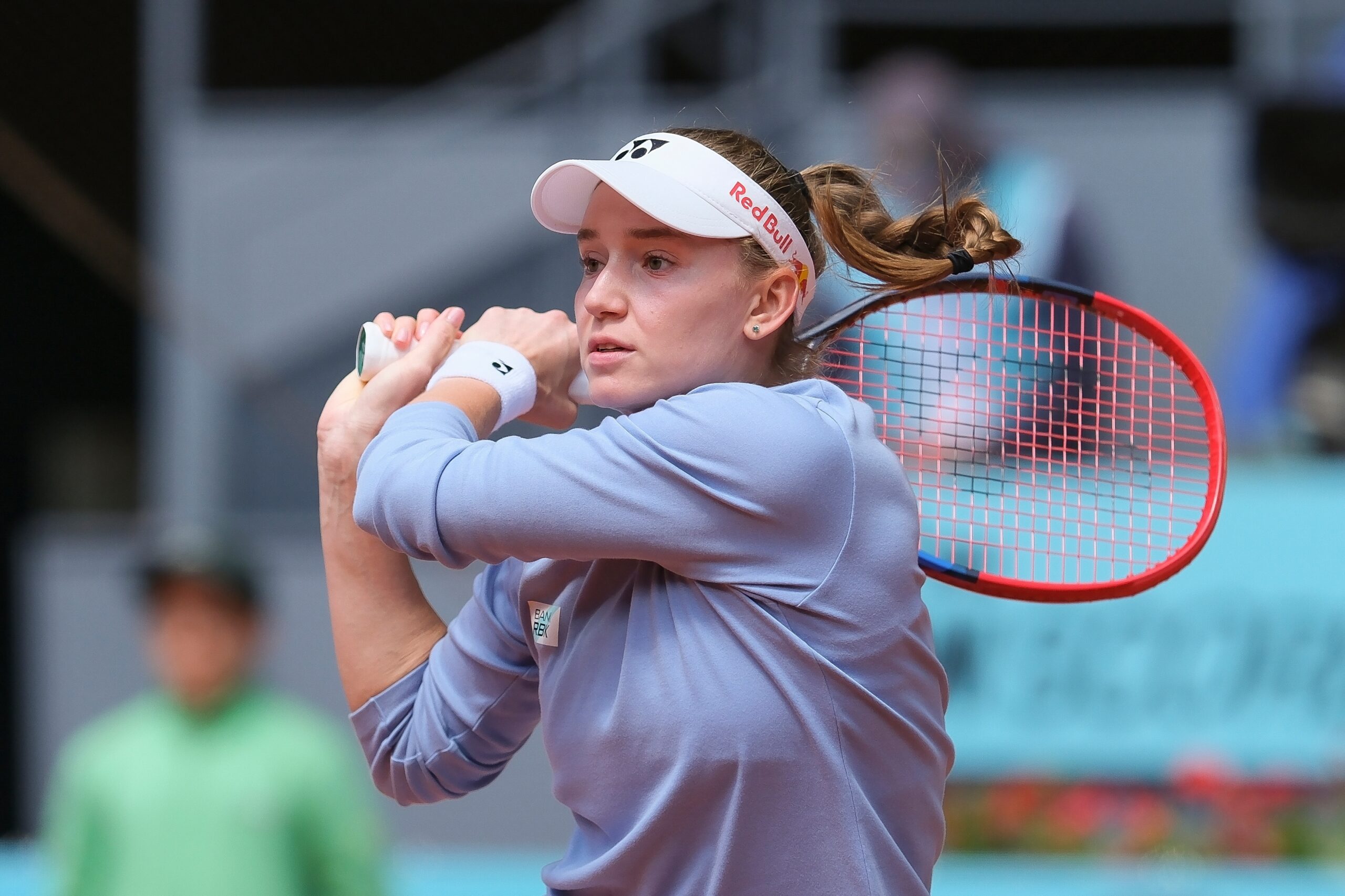
The Billie Jean King Cup finals will feature one of the strongest fields in the competition’s recent history, with Wimbledon champion Linda Noskova, Australian Open champion Elena Rybakina and Olympic gold medalist Zheng Qinwen all nominated to compete when the eight-team event takes place in Shenzhen, China, from Sept. 22 to 27.
Italy, which has won the competition back to back, returns with Jasmine Paolini and doubles specialist Sara Errani once again leading the squad as the nation seeks to become the first team to win three consecutive titles. Italy arrives as the team to beat, but the depth across this year’s field makes a third straight title anything but guaranteed.
The host nation, China, will have Zheng front and center. The Olympic champion who won gold at the 2024 Paris Games leads a squad that includes Zhang Shuai, Wang Xiyu and Guo Hanyu, with veteran captain Zheng Jie overseeing the group. Playing at home in Shenzhen gives China a crowd advantage that could be decisive in close matches.
The Czech Republic brings top talent
Czech Republic has assembled what may be the deepest roster in the draw. Noskova, who claimed her first Grand Slam title at Wimbledon this summer, will be joined by Karolina Muchova, the player she defeated in the final, and Katerina Siniakova, the world’s top-ranked doubles player. That combination of a Grand Slam singles champion, a major finalist and an elite doubles player gives the Czechs versatility across all formats of the competition.
The structure of the Billie Jean King Cup finals involves two singles rubbers per tie, with a deciding doubles match played if necessary. A team with Noskova and Muchova available in singles and Siniakova capable of determining a match in doubles is built precisely for that format.
Kazakhstan’s challenge around Rybakina
Elena Rybakina carries Kazakhstan’s hopes as she has through most of the team’s recent campaigns. Rybakina is among the five or six players capable of winning a Grand Slam in any given week, and her presence gives Kazakhstan a clear advantage in any singles rubber.
The challenge for any Kazakhstan tie remains depth beyond Rybakina herself. When Rybakina is healthy and on form, the team is dangerous. When opponents limit Rybakina to one rubber rather than two, Kazakhstan becomes more vulnerable. Putintseva, who has pushed Rybakina in practice before, helps offset that concern, and the squad also includes Sonja Zhiyenbayeva and others who can contribute in doubles.
Ukraine and Great Britain round out the field
Ukraine’s squad features Elina Svitolina and Marta Kostyuk, two players who have spoken publicly about the personal weight of representing their country while a war continues at home. Both have become among the most recognizable athletes from Ukraine in any sport, and their presence gives the team genuine singles capability against any opponent.
Great Britain arrives with Katie Boulter as its top player, alongside Harriet Dart, Mika Stojsavljevic and Jodie Burrage. Boulter has developed into one of the more consistent performers on tour and gives Britain a credible frontline player in a competitive bracket.
Belgium and Spain complete the eight-team field. Belgium’s squad is led by Hanne Vandewinkel and Jeline Vandromme, with former coach Wim Fissette serving as captain. Spain nominates Jessica Bouzas Maneiro and Sara Sorribes Tormo as its primary players, with multiple Grand Slam champion Carla Suarez Navarro as captain.
The road to a third straight title for Italy
Paolini has evolved into one of the world’s premier singles players, and the Italian squad’s doubles capability through Errani gives the defending champions a reliable option at the back end of any close tie. Italy’s ability to compete across both disciplines is what has made the team so difficult to beat in recent years.
Nations may make up to four squad changes before the start of competition on Sept. 22. The tournament format, with two singles and a potential doubles decider, rewards depth, composure and the ability to win in a team environment.
