


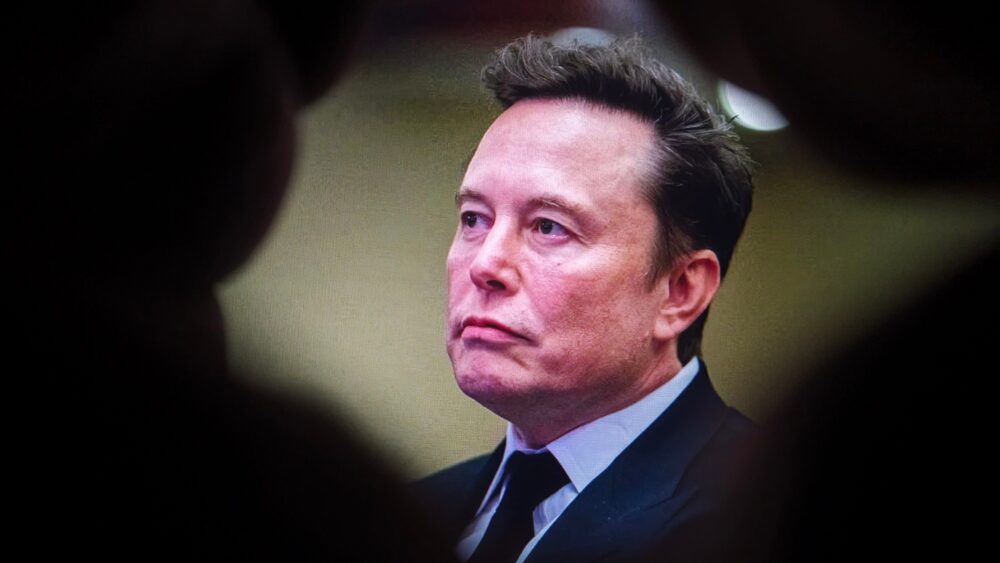
Elon Musk said he wants to personally cover the salaries of Transportation Security Administration workers who have gone without paychecks as the partial government shutdown stretches past one month a move that raises serious legal questions about whether a private individual can even fund federal employees.
The announcement, made on a Saturday morning via a post on X, came as airports across the country are experiencing some of the worst security delays in recent memory, with spring break travel now adding pressure to an already overwhelmed system.
What Musk said and why it matters
The world’s richest man said he wanted to offer payment to TSA personnel during what he described as an impasse that is harming the lives of Americans at airports nationwide. He did not specify how much money such an arrangement would require, and no financial details have been disclosed.
The offer drew immediate attention given Musk’s prominent role in the federal government through the Department of Government Efficiency, though it also raised eyebrows given the significant legal hurdles that would need to be cleared before any private funds could reach federal workers.
Legal experts say the path forward is murky at best. Under existing rules, donations to the federal government are deposited into the U.S. Treasury and then disbursed based on congressional appropriations meaning an agency cannot simply access outside money without the formal authority to do so. Philip Candreva, a professor of national security policy and budgeting at Duke University, has explained that depositing money into the Treasury does not automatically give an agency the authority to withdraw and distribute it.
USA TODAY has reached out to both the Office of Management and Budget and the TSA for comment.
The scope of the crisis at airports
Approximately 50,000 TSA officers are currently working without pay, and the financial pressure is beginning to show in stark ways. Absenteeism spiked to 10% last weekend compared to a standard rate of under 2% during normal operations. At some of the country’s busiest airports, the situation was far more severe. 1. John F. Kennedy International Airport in New York recorded a 29% absence rate, 2. Atlanta’s Hartsfield-Jackson saw 32%, and 3. Louis Armstrong New Orleans International Airport reported 27% on March 18 alone.
Security wait times have exceeded three hours at several major airports, with lines spilling out of terminals and into surrounding areas. Footage from Philadelphia International Airport captured hundreds of passengers backed up on elevators and escalators waiting to clear a single security checkpoint early on a Thursday morning.
Since the shutdown began, 366 TSA officers have resigned a significant number that a top union leader warned will only grow as the hiring freeze that has been in place since last year prevents the agency from backfilling positions. Smaller airports, officials have cautioned, could be forced to close if the situation continues to deteriorate.
Workers set to miss a second paycheck
TSA employees are classified as essential workers and are legally required to report to work during a shutdown, even without pay. Under a 2019 law, they are entitled to back pay once funding is restored and the shutdown ends.
That provides some future relief, but the immediate financial strain is mounting. Transportation Secretary Sean Duffy has said workers are on track to miss their second full paycheck on March 27, compounding the hardship for tens of thousands of families.
The political standoff behind the chaos
The shutdown stems from Congress’s failure to pass a funding bill for the Department of Homeland Security, which oversees the TSA. Republicans have pushed to restore DHS funding broadly, while Democrats have sought standalone legislation that would fund agencies like the TSA without including immigration enforcement operations. The two sides have not found common ground.
Musk’s offer, whatever its legal outcome, appears aimed at drawing attention to the human cost of the standoff one that is now being felt not just by federal workers, but by millions of Americans navigating a disrupted travel system with no resolution in sight.
