


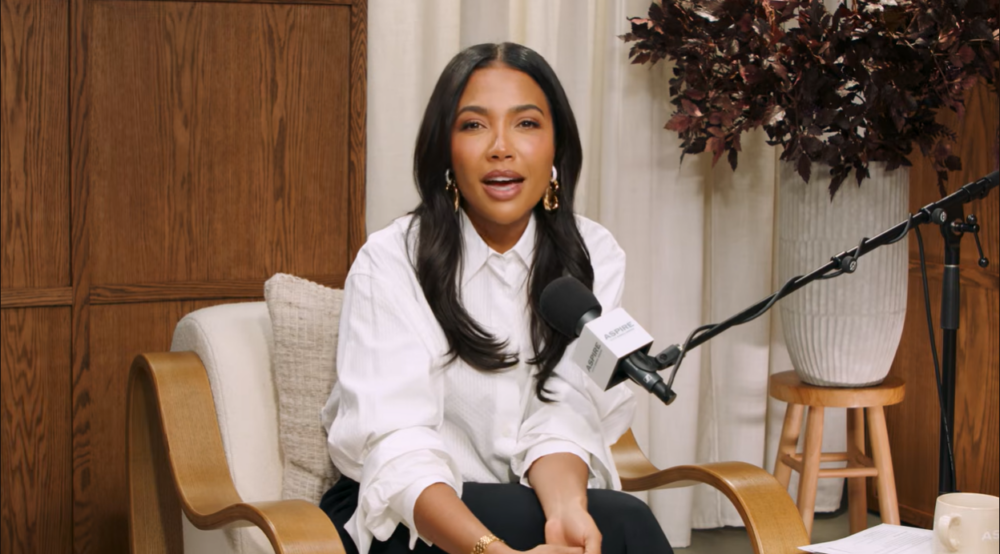
It is a Monday and Emma Grede is home in Los Angeles, which almost never happens. For a woman who is a founding partner of SKIMS, co-founder and CEO of Good American, chairwoman of the Fifteen Percent Pledge, a board member of the Obama Foundation, and a mother of four, a quiet weekday at home is practically a foreign concept. She has been traveling for the launch of her debut book, Start With Yourself, out April 14, and the timing feels right not because the world needed another business book, but because this one is something different.
It does not start with a boardroom. It starts with a girl in East London, the eldest of four children raised by a single mother, who figured out early that staying put was not going to take her anywhere. There was love in that neighborhood. Opportunity was a different matter entirely.
The cost of choosing yourself
Leaving wanting more, betting on herself when no one around her was doing the same felt selfish at the time. Like she was stepping over the people she loved to get somewhere they couldn’t follow. Grede has spent years unpacking what that feeling actually was and, more urgently, what it costs women who never give themselves permission to move past it.
She went into the writing process believing she knew exactly what she wanted to say. The business sections came easily. Leadership, brand building, career strategy that part flowed. But when she pushed deeper, she found herself asking why she had been able to do any of it in the first place. That question led somewhere more honest and more useful.
Old thoughts and what they are costing you
A significant portion of the book is devoted to what Grede calls old thoughts the internal narratives that feel like truth because, at one point, they were. For many women, those stories were formed by watching what happened to the people around them when they wanted too much, moved too quickly, or trusted the wrong room. Grede is not here to dismiss the origins of those beliefs. She is here to ask what they are costing you now that the context has changed.
For Black women specifically, that reckoning is more layered. Many of those protective behaviors were built for environments that no longer exist, or for rooms that have since opened. Holding onto them past their usefulness, she argues, is one of the quieter ways women stay stuck.
What most people get wrong about money
Few people in her position talk about money the way Grede does directly, without softening the parts that are uncomfortable. She has watched founders, and Black women in particular, walk into capital raises without fully understanding what they are agreeing to. The expectation attached to outside investment to multiply that money four, ten, or twenty times over often catches founders off guard, because no one in the rooms where that information lives ever thought to share it.
Grede knows those rooms well. She has been building inside them for years, without waiting for an invitation or a validation she never needed. Her focus has always been practical: create something that works, build wealth for herself, build it for her family. The book reflects that same clarity of purpose.
Failure, and what it actually means
She has also failed. More than once and more than the public narrative around her tends to acknowledge. The section of Start With Yourself that addresses failure is among its most direct. A bad business outcome does not make someone a bad businessperson. The two are not the same thing, and conflating them is one of the faster ways a woman talks herself out of trying again.
Too many women, she says, are the first to declare themselves unfit for leadership or incapable of running a company. Her answer to that is blunt: the business may not have worked. That is a different problem with a different solution, and it is one worth solving.
Written for the woman who hasn’t figured it out yet
Start With Yourself was not written for women who already have clarity. It was written for the version of Grede that didn’t and for what she describes as the many women like her, girls who weren’t strong in math, who had learning differences, who grew up in places where entrepreneurship wasn’t something people around them even considered possible.
She kept the chapters short deliberately. Her reader is busy, stretched across multiple responsibilities, and does not have the bandwidth for a dense, 400-page commitment. The design of the book mirrors its message: take it in, apply it, come back, and repeat. That rhythm practical, iterative, and grounded is the whole point.
Start With Yourself is available April 14.
