


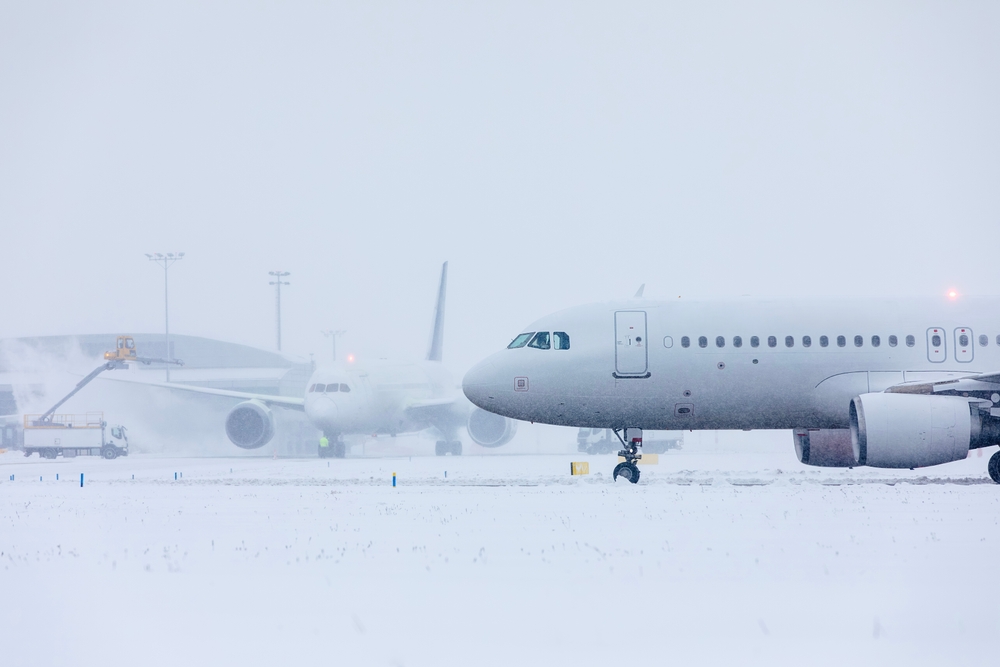
A powerful winter storm sweeping across the United States has pushed flight cancellations today to historic levels, leaving travelers stranded and airports overwhelmed as dangerous weather conditions stretch from the Southern Rockies to New England. The scale of disruption has not been seen in a single day since the height of the COVID pandemic, underscoring how vulnerable the nation’s air travel system remains when extreme weather collides with peak travel periods.
By Sunday, airlines had scrapped more than 10,000 domestic flights, a sharp escalation from Saturday and a stark reminder of how quickly conditions can deteriorate when snow, ice and freezing rain converge across multiple regions. The storm’s wide footprint has complicated recovery efforts, making it difficult for airlines to reposition aircraft and crews as conditions continue to evolve.
Cancellations surge as storm expands eastward
The sprawling system has delivered heavy snowfall, sleet and freezing rain across large portions of the country, creating hazardous conditions not only in the air but also on runways, taxiways and access roads. As the storm presses eastward, transportation officials have warned that frigid air trailing behind it could prolong disruptions well into the coming week.
Beyond winter precipitation, parts of the eastern Gulf Coast have faced severe thunderstorms capable of producing damaging wind gusts and isolated tornadoes. This volatile mix of weather threats has added layers of complexity for airline operations, forcing carriers to make conservative decisions that prioritize safety while frustrating passengers eager to reach their destinations.
More than 1,800 additional US flights were already canceled for Monday, signaling that the worst of the travel fallout may not yet be over. Airlines continue to adjust schedules in real time as forecasts shift and airport conditions change.
Major airports brace for prolonged shutdowns
Some of the country’s busiest airports have been among the hardest hit. In Washington, Ronald Reagan Washington National Airport temporarily halted arrivals and departures as crews worked overnight to clear snow from the airfield. Officials cautioned travelers to expect widespread cancellations as cleanup efforts continued.
In Texas, disruptions mounted even before the storm’s most intense impacts arrived. Dallas Fort Worth International Airport warned that airlines would operate reduced schedules, advising passengers to closely monitor flight statuses as last-minute changes remained likely. Airport teams worked through the weekend to treat roadways, bridges and airfield surfaces in an effort to maintain safe operations.
Along the East Coast, LaGuardia Airport flagged significant travel impacts as snow and ice threatened both ground operations and inbound flights. Other major hubs including Atlanta, Charlotte and Philadelphia also prepared for delays and cancellations as weather conditions deteriorated.
Cancellations expose airline vulnerability
Data from flight tracking services showed American Airlines as the most affected carrier over the weekend, followed closely by United and Delta. The uneven impact reflects the geographic concentration of each airline’s hubs and the difficulty of managing large networks during widespread weather events.
To ease passenger frustration, major US airlines rolled out travel waivers that allow customers to change itineraries without incurring change fees. While these policies offer some flexibility, they do little to solve the immediate challenges faced by travelers scrambling to rebook flights amid limited seat availability.
Flight cancellations ripple beyond airports
The surge in flight cancellations today has consequences that extend beyond terminals and tarmacs. Hotels, rental car agencies and regional transit systems are also feeling the strain as delayed travelers seek alternative accommodations and transportation. For many, the disruptions have turned routine trips into multi-day ordeals marked by uncertainty and mounting costs.
As the storm continues its march and colder air settles in, airline officials and travelers alike are bracing for additional turbulence. While weather-related cancellations are an unavoidable reality of winter travel, the sheer scale of this event has reignited questions about resilience, preparedness and how airlines can better manage large-scale disruptions in an era of increasingly volatile weather.
Source: CBS News
